
A European Christmas market can look effortlessly accessible in a tourism brochure, yet a single raised rubber cable cover, a chest-high counter, or a locked portable toilet can derail the entire evening for a wheelchair user. Smooth-looking town squares do not automatically guarantee barrier-free visits once temporary wooden chalets, winter crowds, and step-up dining huts alter the street layout.
How we evaluated these markets: To help you plan with confidence for the 2026 holiday season, we cross-referenced published municipal barrier-free maps, official market organizer specifications, German DIN 18040 ramp standards, and live public transport elevator alerts across Europe to highlight both what works and what practical limitations remain at each destination.
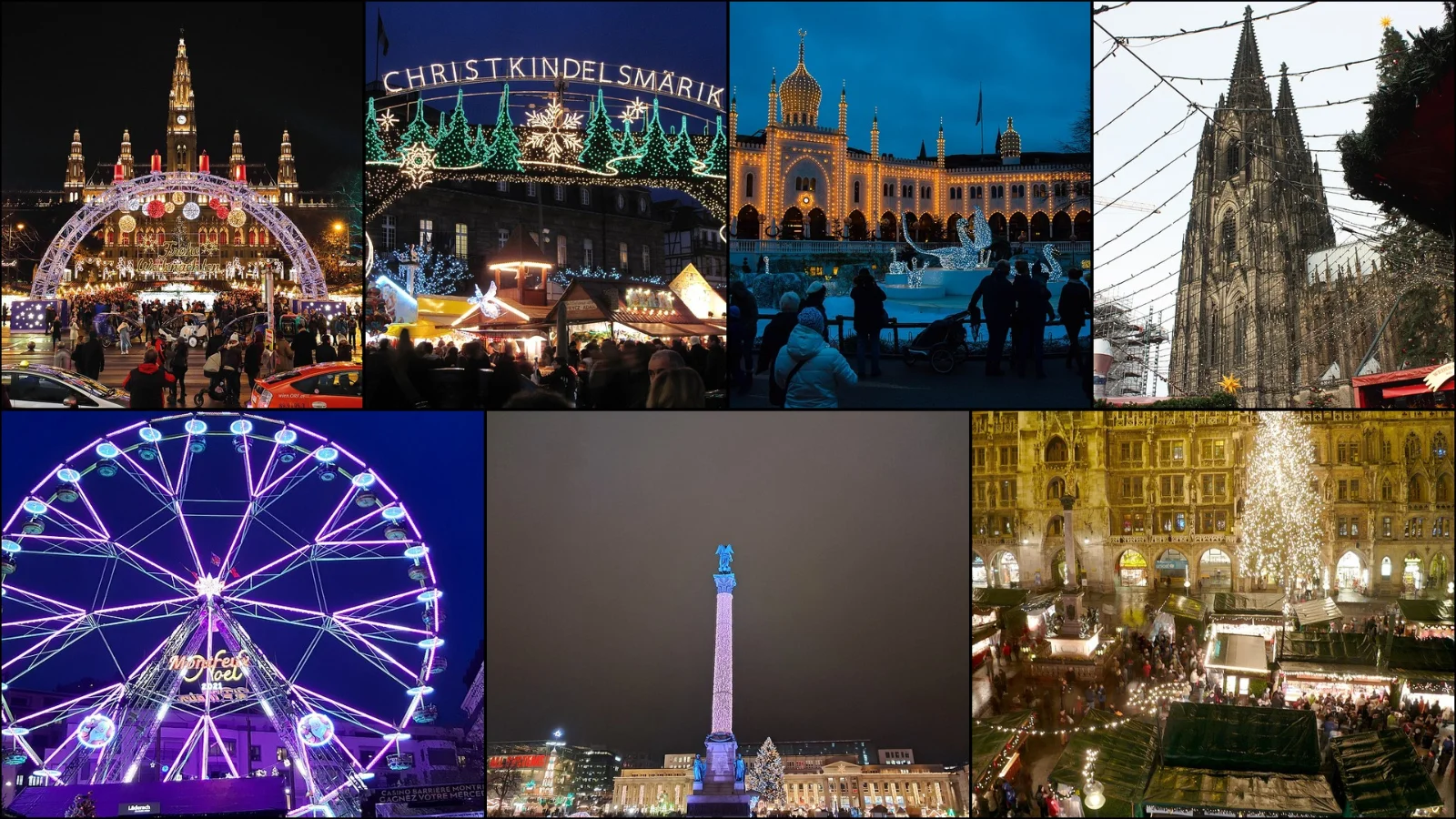
- Best Documented Accessible Facilities: Vienna Rathausplatz, Austria. Confirmed wheelchair-accessible tables, lowered ATMs, and Eurokey restrooms on paved park paths. Main limitation: The adjacent U2 Rathaus subway station has no elevator access until 2030.
- Best Confirmed Ramp Infrastructure: Munich Wittelsbacherplatz, Germany. Documented DIN 18040 Part 1 compliance with a maximum 6% ramp slope and lowered vendor counters. Main limitation: The larger Marienplatz market operates under separate city infrastructure rules without uniform chalet ramps.
- Best Accessible Restroom Provision: Stuttgart, Germany. Features a permanent 24-hour municipal "Toilet for All" with an adult changing bench and ceiling hoist behind City Hall. Main limitation: Heavy weekend crowds along Schlossplatz require daytime visits for smooth rolling.
- Best Step-Free Waterfront Layout: Montreux Noël, Switzerland. Flat lakeside platforms and adapted toilets at every market zone, located 200 meters from the rail station. Main limitation: The slope between the elevated train station and the lakeside requires using station lifts rather than steep side streets.
2026 Accessible European Christmas Markets Comparison
No historic European winter market is 100% barrier-free. This comparison table pairs the confirmed accessibility strengths of each market with its primary practical limitation for 2026 flyers and rail travelers.
| City & Market | 2026 Official Dates | Surface & Layout | Accessible Toilet | Main Limitation to Note |
|---|---|---|---|---|
| 1. Vienna (Rathausplatz) | Nov 13 to Dec 26, 2026 | Paved Park Lanes | Yes (Eurokey units on-site) | U2 Rathaus station has stairs only until 2030; use Schottentor or trams. |
| 2. Munich (Wittelsbacherplatz & Marienplatz) | Nov 20 to Dec 24, 2026 | 6% Max Ramps (Medieval) | Yes (30m from Wittelsbacherplatz) | Strict DIN 18040 ramp specs apply to Wittelsbacherplatz, not every Marienplatz stall. |
| 3. Stuttgart (Schlossplatz) | Nov 25 to Dec 23, 2026 | Mostly Paved Alleys | Yes (24h Hoist Unit at Eichstr. 7) | The "Toilet for All" is a fixed facility behind City Hall, not inside the stall rows. |
| 4. Montreux (Quais du Léman) | Nov 20 to Dec 24, 2026 | Flat Lakeside Quays | Yes (At each market sector) | Hillside grade between SBB station and lakefront requires following the lift route. |
| 5. Cologne (Cathedral / Roncalliplatz) | Nov 16 to Dec 23, 2026 | Paved Square / Mixed Old Town | Yes (At Köln Hbf & City Toilets) | Cathedral organizer publishes limited stall-level access data; Alter Markt has cobbles. |
| 6. Copenhagen (Tivoli Gardens) | Nov 13, 2026 to Jan 3, 2027 | Paved Park Paths | Yes (Multiple park & dining units) | Glyptoteket entrance and its hoist toilet face temporary construction closures. |
| 7. Strasbourg (Broglie & Kléber) | Nov 27 to Dec 24, 2026 | Mapped PRM Routes | Yes (Mapped PRM cabins) | Historic cobblestones and tight crowds in Petite France require sticking to mapped routes. |
Market-by-Market Accessibility Breakdown
Each breakdown below separates confirmed infrastructure (What works), realistic obstacles (What doesn't), and essential pre-trip checks (Before you go).
1. Vienna, Austria: Christkindlmarkt at Rathausplatz
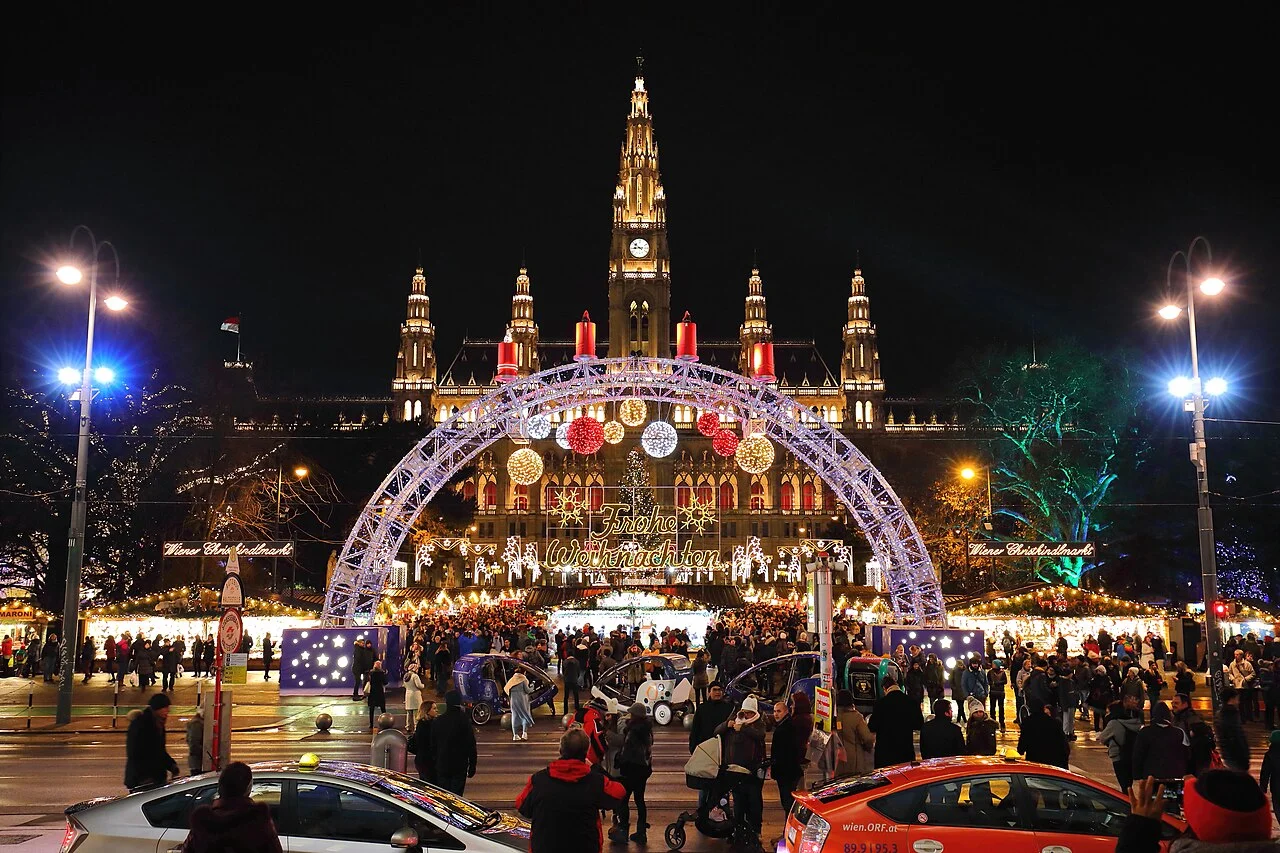
Vienna publishes clear municipal accessibility documentation for its flagship Christkindlmarkt in front of City Hall (official Vienna Christkindlmarkt visitor guide).
- What works: The market paths through Rathauspark run on paved park lanes. The organizer provides designated wheelchair-accessible standing/dining tables, accessible ATMs, and step-free access into the ground floor of City Hall (via the Felderstrasse and Lichtenfelsgasse entrances). Accessible Eurokey restroom facilities are positioned directly on the market grounds.
- What doesn't: The nearest underground stop, U2 Rathaus, is strictly inaccessible to wheelchair users due to long-term line construction and has no working elevator until 2030. In addition, evening crowds after 5:00 PM on weekends make turning a large power chair difficult near the food alleys.
- Before you go: Bypass U2 Rathaus completely. Ride the U2 to Schottentor, take the U3 to Volkstheater, or board low-floor Ringstrasse trams (Lines 1, 2, D, or 71) to disembark at Rathausplatz/Burgtheater. Bring a personal Eurokey for immediate restroom access.
Best for: Wheelchair users seeking verified accessible dining tables, lowered ATMs, and low-floor tram access.
Main limitation: U2 Rathaus subway station has no elevator service until 2030.
Skip if: You plan to visit only on a Friday or Saturday night after 6:00 PM in a wide power wheelchair, when Rathauspark pathways become tightly packed.
2. Munich, Germany: Wittelsbacherplatz Medieval Market & Marienplatz
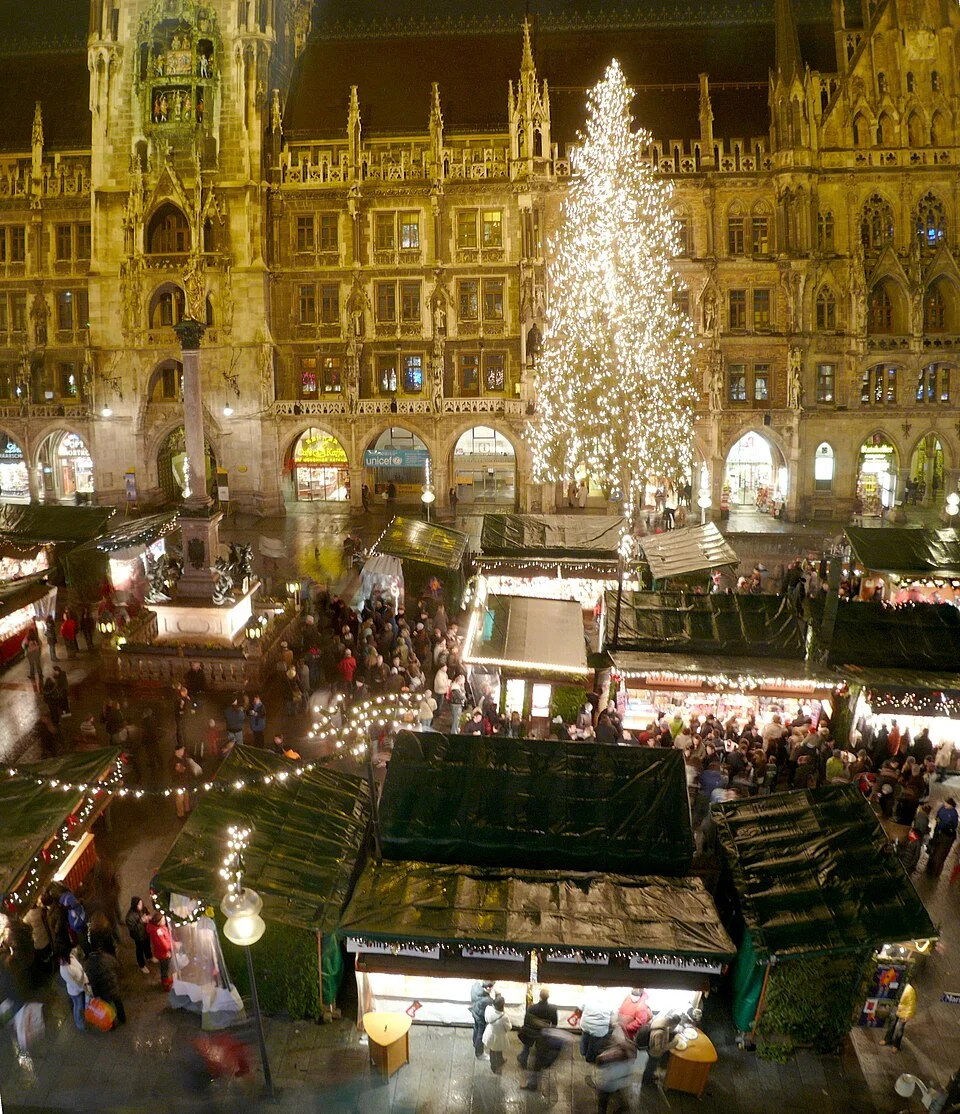
In Munich, it is essential to distinguish between the main municipal market at Marienplatz (official Munich Christkindlmarkt portal) and the nearby Mittelaltermarkt (Medieval Market) at Wittelsbacherplatz (official Wittelsbacherplatz barrier-free specifications).
- What works: Wittelsbacherplatz (Brienner Strasse 6 to 10) provides some of the most detailed technical accessibility engineering in Europe, developed with the Munich Disability Advisory Council. Its custom ramps comply with German DIN 18040 Part 1 standards at a maximum 6% incline, stalls include lowered service windows and wheelchair-under-clearance tables, and heated dual-transfer accessible toilets sit 30 meters from the market (open 11:00 AM to 9:00 PM). Meanwhile, Marienplatz sits on a flat pedestrian zone directly above the step-free Marienplatz U-Bahn/S-Bahn hub.
- What doesn't: Do not assume Wittelsbacherplatz's 6% ramp rule applies to every private vendor hut at Marienplatz or smaller neighborhood markets. Marienplatz relies on general pedestrian paving and public station restrooms rather than uniform custom chalet ramps.
- Before you go: Review our complete local transit and elevator audit in Can You Really Explore Munich in a Wheelchair? to plan your step-free route between Marienplatz and Odeonsplatz (the nearest station to Wittelsbacherplatz).
Best for: Travelers who prioritize documented ramp gradients (6% max at Wittelsbacherplatz) and heated accessible toilets.
Main limitation: Technical ramp guarantees apply specifically to Wittelsbacherplatz rather than citywide across all Munich markets.
Skip if: You need on-site accessible toilets after 9:00 PM at Wittelsbacherplatz, as the dedicated heated unit closes at 21:00.
3. Stuttgart, Germany: Schlossplatz, Marktplatz & Schillerplatz
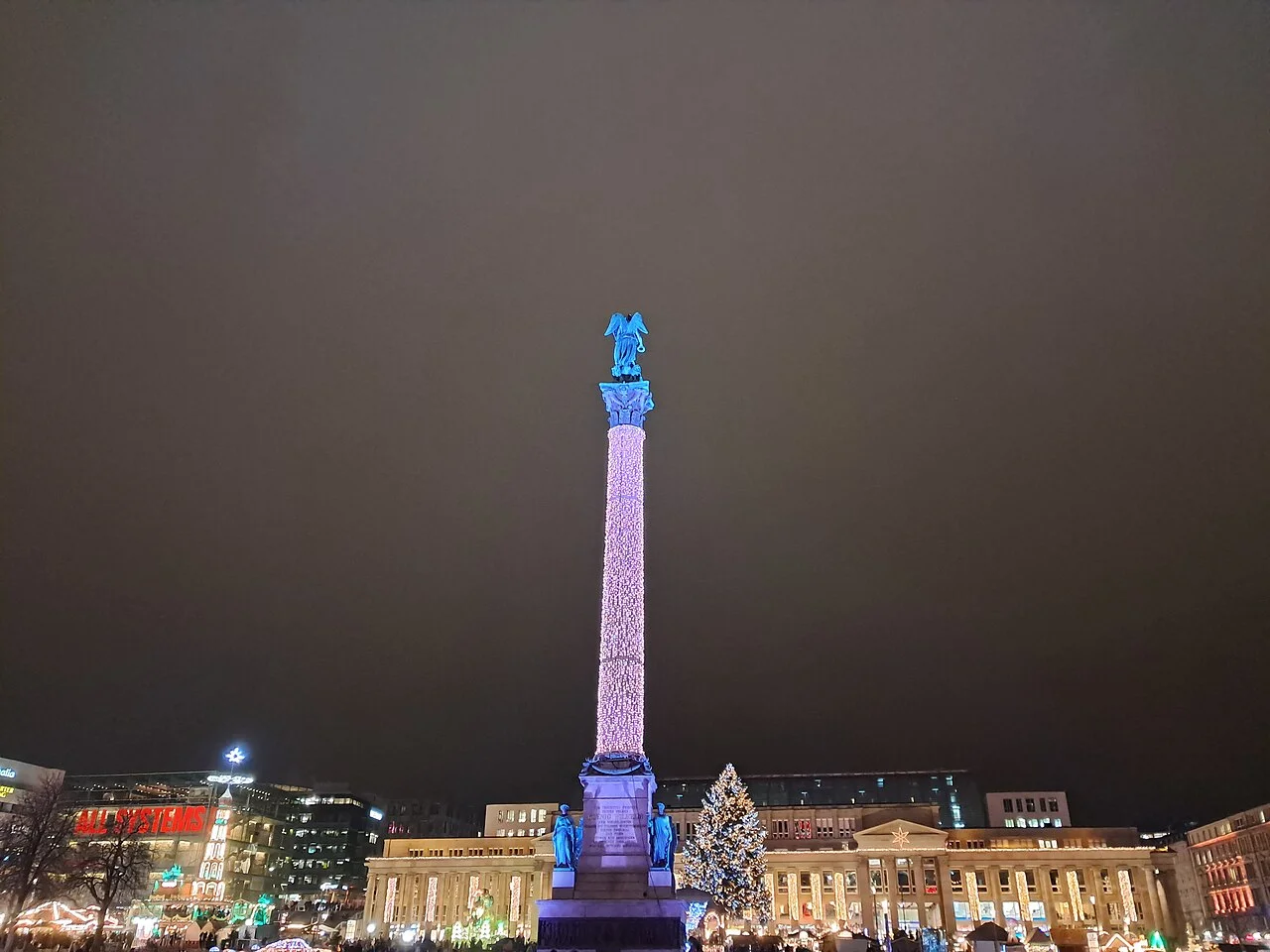
Stuttgart operates one of Germany's largest connected winter markets, and its official Stuttgarter Weihnachtsmarkt visitor information outlines clear paving, parking, and restroom locations.
- What works: Nearly all market lanes across Schlossplatz, Schillerplatz, and Marktplatz are paved and accessible at ground level without steps. Most importantly for travelers with complex personal care needs, the city provides a permanent 24-hour "Toilet for All" (Toilette für Alle) equipped with an adult changing couch and patient ceiling hoist located behind City Hall at Eichstrasse 7 (barrier-free entrance via Nadlerstrasse 19). Dedicated disabled parking bays are located on Bolzstrasse, Dorotheenstrasse, Eberhardstrasse, and Breite Strasse.
- What doesn't: Because the market spans nearly 300 stalls across three interconnected squares, the distance between Schlossplatz and the Eichstrasse/Nadlerstrasse hoist restroom is several hundred meters through dense crowds.
- Before you go: Pin Nadlerstrasse 19 on your phone map before entering the market so you know the exact route to the 24-hour hoist facility, and make sure you carry a Eurokey. If you are combining Stuttgart with other German cities, see our transit guides for Frankfurt in a Wheelchair (only 75 minutes away by high-speed ICE train) and Berlin in a Wheelchair.
Best for: Power and manual wheelchair users who require a full Changing Places / "Toilet for All" facility with a hoist and adult changing bench.
Main limitation: Large market footprint and heavy evening congestion between the three main squares.
Skip if: You have limited stamina for long distances and do not want to roll several hundred meters between Schlossplatz and the City Hall restroom.
4. Montreux, Switzerland: Montreux Noël on Lake Geneva
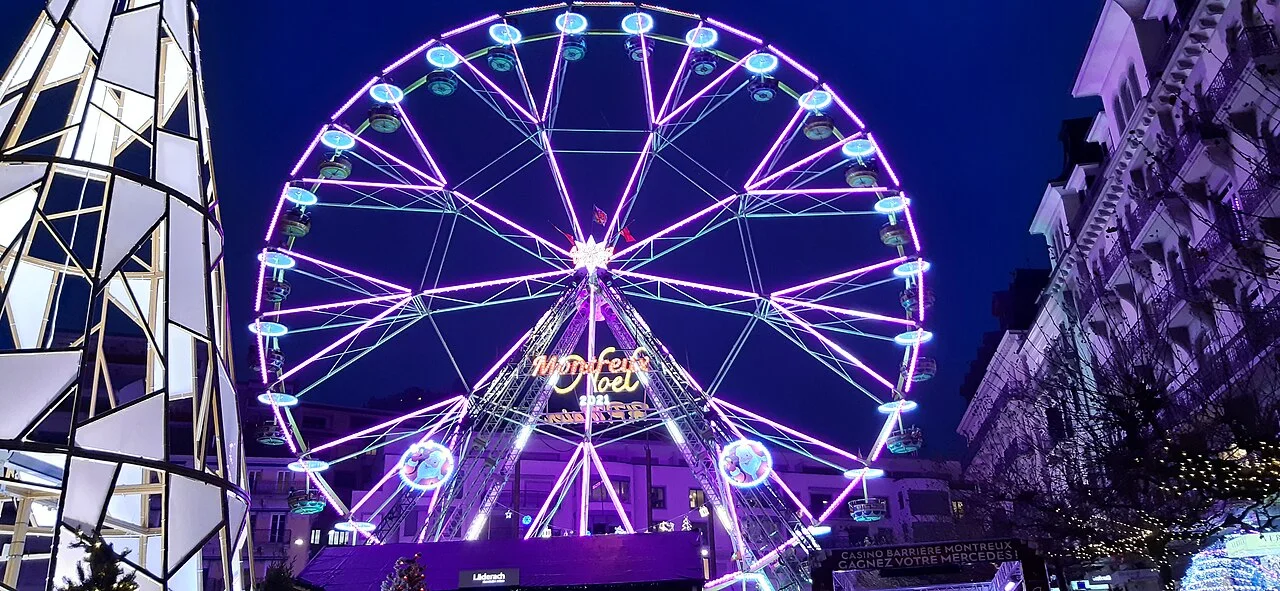
Montreux Noël stretches along the paved shores of Lake Geneva, and the organizer publishes a dedicated Montreux Noël PRM & Wheelchair Accessibility FAQ.
- What works: According to the official market specifications, the market platforms and lakeside promenade paths along the Quais du Léman are flat, and adapted accessible toilets are available at each site across the market zone. Montreux SBB railway station sits approximately 200 meters from the market area.
- What doesn't: While the lakeside promenade itself is flat, Montreux is built into a hillside above the water. Rolling down steep side streets from the train station level to the lakefront can be challenging for manual wheelchair users if you miss the public elevator connection.
- Before you go: Confirm the exact SBB station lift and pedestrian underpass/overpass route down to the Grand-Rue / lakeside level before exiting the station platforms, and dress for sharp lakeside wind chill after 4:00 PM.
Best for: A cobblestone-free lakeside roll with adapted toilets at each market sector.
Main limitation: Natural topography between the elevated rail line and the lakefront requires sticking to elevator-equipped transitions.
Skip if: You plan to explore Montreux's upper hillside streets in an unassisted manual wheelchair rather than staying along the flat lakefront promenade.
5. Cologne, Germany: Cathedral Market (Roncalliplatz) & Harbour Market
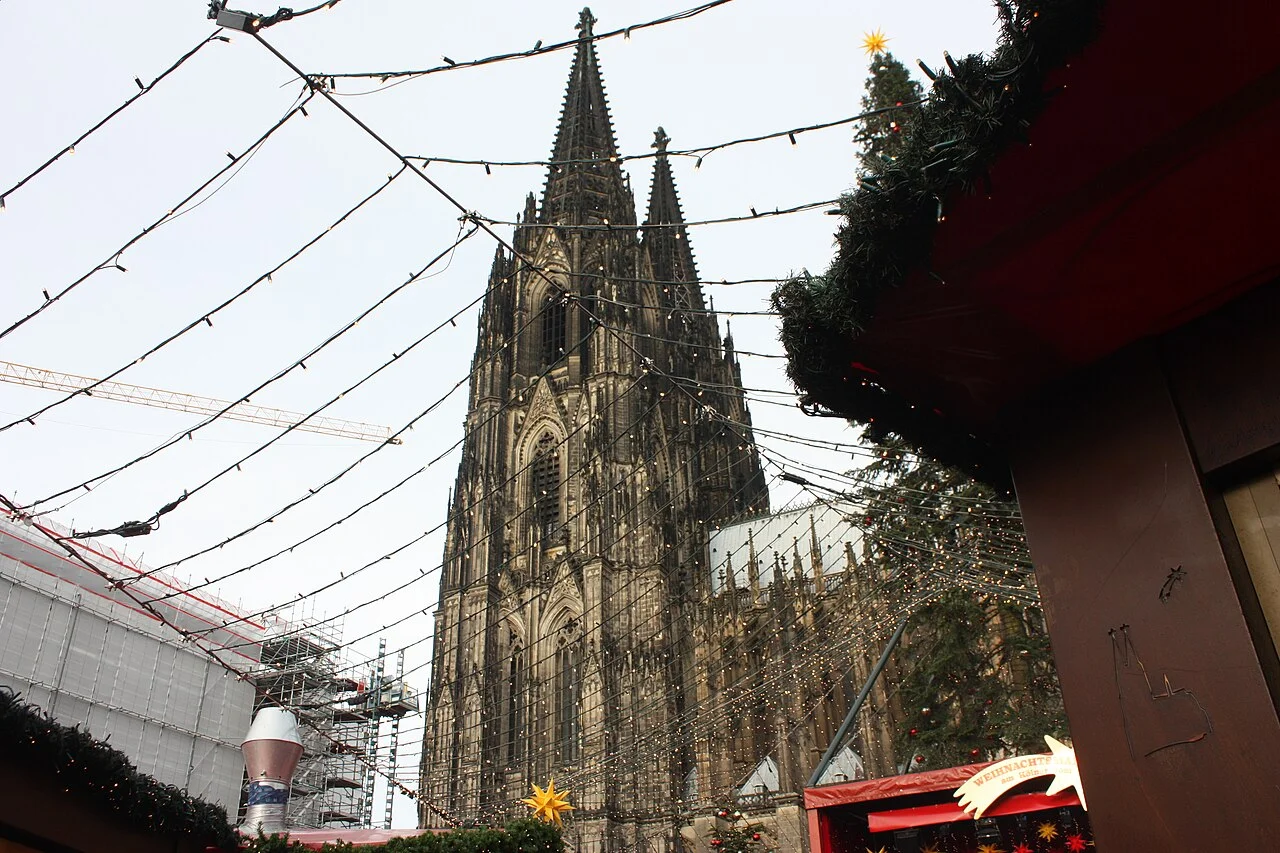
Cologne's flagship Cathedral Christmas Market sits on Roncalliplatz, immediately adjacent to Cologne Central Station (Cologne Tourism Official Christmas Markets Overview and Deutsche Bahn Köln Hbf Station Accessibility).
- What works: Arriving via Köln Hauptbahnhof puts you just a few minutes' roll from Roncalliplatz via step-free station elevators and level forecourt exits, and the station itself houses modern, staffed accessible restrooms. The city's municipal public toilet network (AWB Cologne Public Toilets) also provides accessible cabins that are free of charge for Eurokey holders.
- What doesn't: Transparency is mixed: the Cathedral market organizer publishes fewer stall-specific ramp details than Munich or Vienna, and periodic garage maintenance around Roncalliplatz can narrow pedestrian approaches. Furthermore, if you roll 5 minutes south to the Old Town market (Heinzels Wintermärchen), the historic Alter Markt section has uneven cobblestones compared to the flatter modern paving at Neumarkt and the Harbour Market (Schokoladenmuseum).
- Before you go: Use the accessible restrooms inside Köln Hbf before entering the Roncalliplatz crowds, and stick to the Roncalliplatz, Neumarkt, or Harbour Market zones if you want to avoid the rougher cobbles of Alter Markt.
Best for: Immediate rail-to-market proximity right outside Köln Hauptbahnhof.
Main limitation: Less official stall-level accessibility documentation from the Cathedral organizer, plus cobblestones in the adjacent Old Town (Alter Markt) area.
Skip if: You want guaranteed lowered counters at every chalet, which Munich's Wittelsbacherplatz documents much more thoroughly.
6. Copenhagen, Denmark: Christmas in Tivoli Gardens
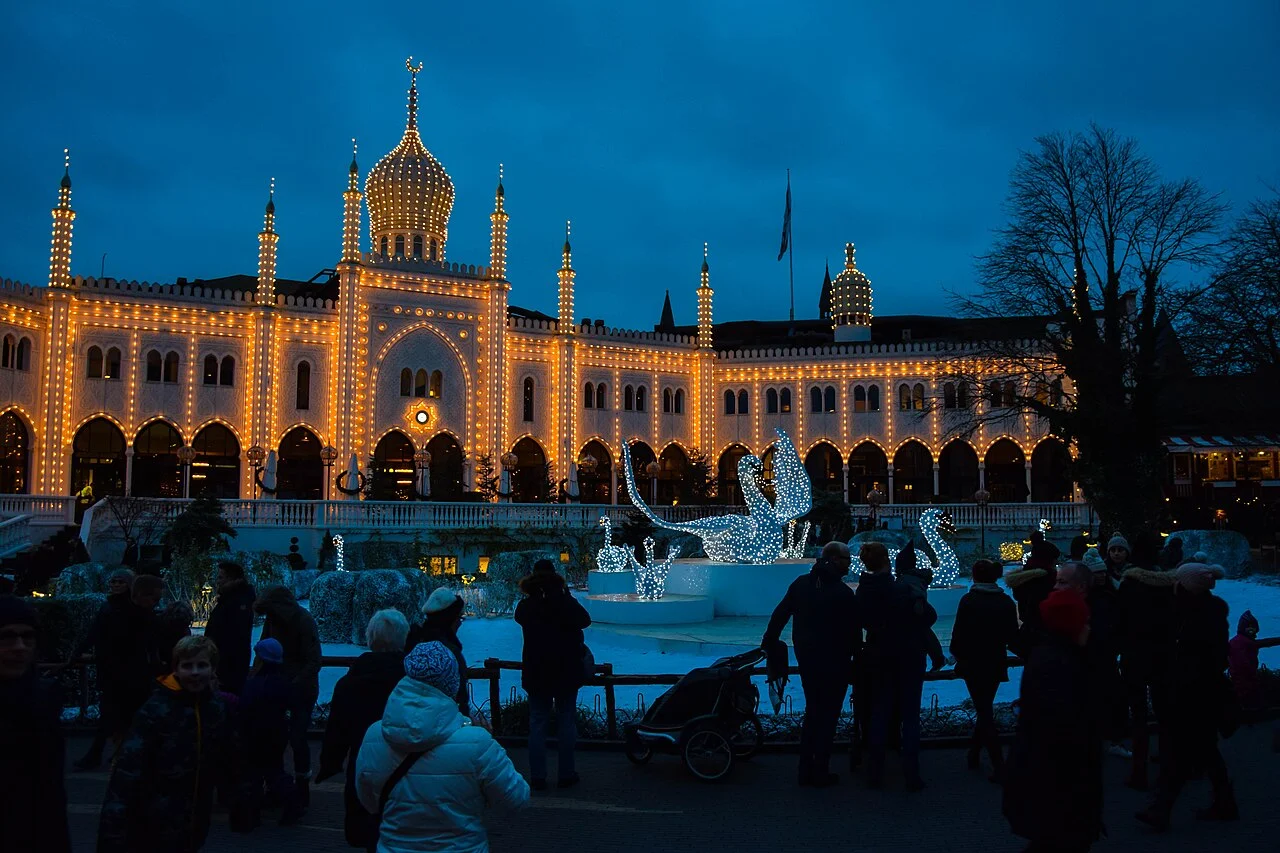
Tivoli Gardens offers a permanent amusement park setting across from Copenhagen Central Station (København H), backed by a detailed Tivoli Official Guests with Special Needs Guide.
- What works: Step-free, staffed wheelchair entry is available at the Vesterbrogade 3 (Main Entrance) and Bernstorffsgade gates. Paved pathways and ramps connect the upper and lower park terraces, and accessible toilets are located in the Tivoli Food Hall (basement via lift), by the Pantomime Theatre, between the Galley Ships and Vaffelbageriet, in the Concert Hall, and inside five park restaurants (including Grøften and Wagamama). Tivoli also operates an official Companion Scheme (allowing guests who present a recognized Companion Card to book a companion ticket and obtain a "Show Consideration" card at the Service Centre) and offers free manual wheelchair loans (booked in advance at +45 33 15 10 01 with a DKK 100 deposit).
- What doesn't: Due to ongoing construction, the Glyptoteket entrance and accessible parking on Vesterbrogade are currently unavailable, and the specialized accessible toilet with a ceiling lift and reclining bench near the Glyptoteket entrance has temporary access restrictions (you must contact a Garden Attendant on-site to use it). Additionally, Tivoli staff are not permitted to physically lift guests into rides.
- Before you go: Contact Tivoli Service Centre (+45 33 15 10 01) ahead of your visit to book disability and companion tickets (you will need to present or email a photo of your Companion Card) and use the Bernstorffsgade or Vesterbrogade entrances rather than Glyptoteket.
Best for: Paved permanent park paths, indoor restaurant restrooms, and post-Christmas dates (open until January 3, 2027).
Main limitation: Temporary construction closures at the Glyptoteket entrance and its ceiling-hoist restroom facility.
Skip if: You prefer free, unticketed street markets where you can roll in and out without advance companion ticket bookings.
7. Strasbourg, France: Place Broglie & Place Kléber
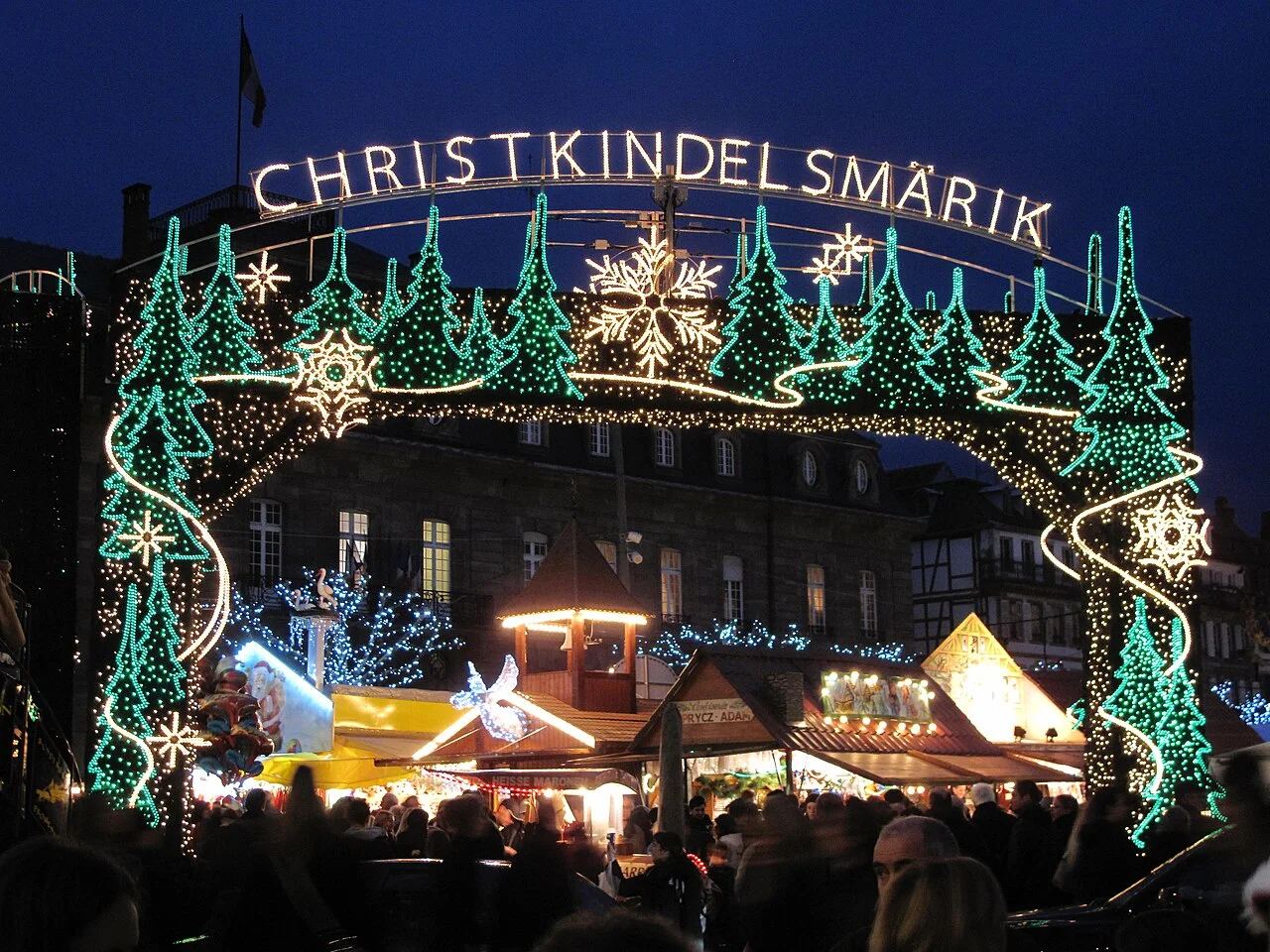
Strasbourg runs from November 27 to December 24, 2026, and the municipality provides an official Strasbourg Capitale de Noël Practical & Mobility Guide with downloadable accessibility maps.
- What works: The city's official disability map highlights recommended step-free pedestrian routes between the central squares, pinpoints accessible PMR (Persons with Reduced Mobility) toilet cabins, marks accessible security checkpoints, and lists free wheelchair loan services for visitors. The largest squares, Place Kléber and Place Broglie, are wide, flat, and directly connected to Strasbourg's low-floor CTS tram network.
- What doesn't: Historic cobblestones, narrow medieval sidewalks, and canal bridge gradients make the picturesque Petite France quarter difficult for manual wheelchairs, especially during weekend surges. Individual chalet counter heights also vary across the older markets.
- Before you go: Download the official Strasbourg PMR accessibility map before arriving, enter the island via the mapped tram stops (Homme de Fer or Broglie), and visit before 2:00 PM on a weekday if you want to roll through the historic core without wall-to-wall crowds.
Best for: Clear municipal PMR routing maps, low-floor tram access, and accessible public toilet cabins.
Main limitation: Cobblestones and tight crowd bottlenecks in the historic Petite France canal district.
Skip if: You use a small-caster manual chair without a front-wheel attachment and want to spend most of your time in the medieval lanes of Petite France.
3 Famous European Christmas Markets Where Wheelchair Users Need Extra Caution
Many travelers search for Europe's other famous holiday capitals, such as Nuremberg, Prague, and Dresden. While all three can be visited with advance preparation, they present specific terrain or crowd challenges that kept them out of our top seven:
- Nuremberg Christkindlesmarkt (Germany): While Hauptmarkt itself is relatively flat and offers accessible toilets nearby, the surrounding Old Town approaches up toward Nuremberg Castle involve steep gradients and historic cobblestones, and the narrow stall aisles inside Hauptmarkt become extremely tight for large power wheelchairs after mid-afternoon.
- Prague Old Town Square & Wenceslas Square (Czechia): Prague's markets are visually stunning, but the historic core is paved with uneven Bohemian cobblestones (kočičí hlavy) that cause heavy vibration for manual wheelchair users, and the central wooden viewing bridge at Old Town Square is accessed by stairs.
- Dresden Striezelmarkt (Germany): The newly renovated Altmarkt square is flat and step-free with accessible restrooms, making the main market area quite manageable. However, connecting to historic side markets near the Frauenkirche still requires navigating sections of older stone paving unless you follow the smooth pedestrian strips carefully.
Guidance by Mobility Aid, Rail Assistance & Eurokey Logistics
Match your winter market route to your mobility equipment and sort out cross-border rail assistance and restroom keys before departure:
- Manual Wheelchair Users (Surface & Gradients): Prioritize Montreux, Vienna Rathausplatz, and Munich Wittelsbacherplatz (where ramps are capped at a 6% slope). Avoid unmapped cobblestone side streets in Strasbourg's Petite France, Nuremberg's upper Old Town, and Cologne's Alter Markt.
- Power Wheelchair & Scooter Users (Route Width & Cold Weather): Stick to wide squares like Stuttgart's Schlossplatz and Vienna's Rathausplatz. Because freezing winter temperatures noticeably reduce battery range, start each outing at 100% charge, carry your charger in a daypack, and plan indoor warming breaks inside step-free station concourses or museum foyers.
- How to Get a Eurokey Before You Travel: Many municipal accessible restrooms in Germany, Austria, and Switzerland require a standardized Eurokey (Euro-WC-Schlüssel). You can order an official key prior to your trip through CBF Darmstadt (Club Behinderter und ihrer Freunde) or national disability organizations for approximately €25 to €30 (proof of qualifying disability required).
- Booking Step-Free Rail Assistance: If you are connecting between Christmas markets by train, book boarding lift assistance at least 24 to 48 hours in advance through Deutsche Bahn Mobilitätsservice-Zentrale (MSZ) in Germany, ÖBB Mobility Service in Austria, SBB Contact Center Handicap in Switzerland, or SNCF Accès Plus in France.
Planning a Bigger European Wheelchair Itinerary for 2026
If you are combining a Christmas market trip with broader European rail travel or a winter break in milder southern cities, explore our other destination guides on The Daily Front:
- Flying transatlantic with a wheelchair? Read The US DOT Airline Rule Pause Explained: Wheelchair Travel Guide 2026 to understand your gate-check and 24-hour delivery rights.
- Booking cross-border trains? Use our Europe Wheelchair Accessible Travel Guide and our city guide to Exploring London in a Wheelchair for Eurostar and step-free rail tips.
- Heading south to Italy for the holidays? Gubbio hosts the world's largest hillside Christmas tree installation; check our accessibility guide, Is Gubbio Wheelchair Accessible?, for public lift and lower-town piazza details.
- Comparing Italian towns by train and elevator access? See our detailed accessibility guides for Bergamo, Lucca, Orvieto, and Siena.
Frequently Asked Questions: Accessible European Christmas Markets
Which European Christmas markets are easiest to navigate in a wheelchair?
Vienna's Christkindlmarkt at Rathausplatz, Munich's Medieval Market at Wittelsbacherplatz, Stuttgart's Schlossplatz, and Montreux Noël in Switzerland are among the easiest to navigate. They combine flat paved surfaces or documented ramp gradients with on-site accessible restrooms and nearby step-free public transit.
Are wheelchair-accessible toilets available at European Christmas markets?
Yes, all seven markets in this guide provide wheelchair-accessible toilets either directly on the market grounds or in adjacent municipal buildings. Stuttgart also offers a permanent 24-hour "Toilet for All" with an adult changing couch and ceiling hoist behind City Hall at Eichstrasse 7 (access via Nadlerstrasse 19).
Do Christmas markets in Europe have step-free entrances?
Open-air square markets in Vienna, Munich, Stuttgart, Montreux, Cologne, and Strasbourg have step-free street-level entry from surrounding pedestrian zones. At Munich's Wittelsbacherplatz market, wooden stall platforms feature ramps capped at a 6% incline under DIN 18040 Part 1 standards. Ticketed park markets like Tivoli Gardens provide step-free staffed gates at Vesterbrogade and Bernstorffsgade.
How can wheelchair users avoid crowded Christmas markets?
Visit on a weekday between 11:00 AM and 3:00 PM. Pathways are far clearer for turning manual and power wheelchairs, and because winter sunset in Central and Northern Europe happens around 4:00 PM, you can still experience the festive lights before the dense evening rush begins.
Do I need a Eurokey to use accessible public toilets in Europe?
Some municipal accessible toilets in Germany, Austria, and Switzerland require a Eurokey (Euro-WC-Schlüssel) to unlock the door, including facilities in Vienna, Stuttgart, and Cologne. You can order an official Eurokey before your trip through CBF Darmstadt for around €25 to €30 with proof of disability.
Official municipal & accessibility sources:
- Vienna Christkindlmarkt Official Visitor & Accessibility Guide
- City of Munich Official Christkindlmarkt Portal
- Munich Wittelsbacherplatz Medieval Market Barrier-Free Specifications (DIN 18040)
- Stuttgarter Weihnachtsmarkt Official Visitor & Accessibility Information
- Montreux Noël Official PRM & Wheelchair Accessibility FAQ
- Cologne Tourism Official Christmas Markets Guide & AWB Cologne Public Toilets FAQ
- Tivoli Gardens Copenhagen Official Guests with Special Needs Guide
- Strasbourg Capitale de Noël Official Practical & Mobility Information
This guide is for informational planning purposes and is based on published 2026 municipal market schedules, transit elevator alerts, and official organizer accessibility guides. Temporary construction, weather conditions, and holiday hours on December 24 and 25 can change locally. Always confirm live station elevator status before travelling.
Discussion
No comments yet. Be the first to share your thoughts.
Leave a comment