


Author: Jaziba Luqman
Last updated: October 2026
Jaziba Luqman writes TheDailyFront's wheelchair-accessibility travel series, cross-checking tourism claims against official accessibility databases, operator listings, and traveler accounts.
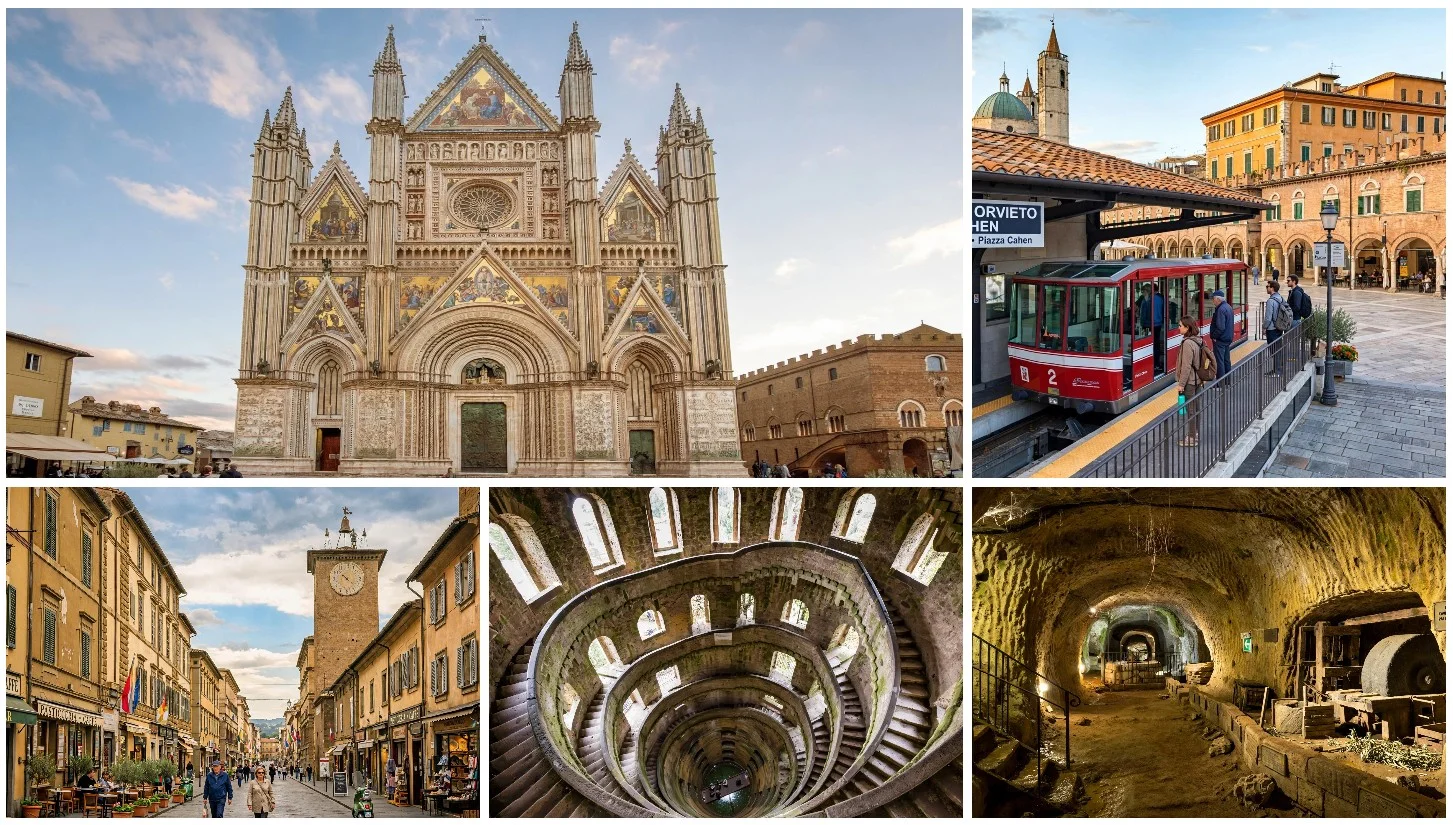
Orvieto sits on a flat-topped volcanic tuff cliff rising nearly 300 meters above the Umbrian valley floor. Looking up at its sheer vertical walls from the train station or the A1 motorway, the town looks impenetrable for a wheelchair user. Yet once you reach the top of the rock, the central spine is noticeably flatter than the steep approaches found in neighboring hill towns like Assisi or Montepulciano, even if side lanes, uneven paving, and individual building entrances still need checking. The real challenge in Orvieto isn't climbing endless steep alleys—it is figuring out which attractions sit on the flat plateau and which ones drop deep underground into carved caves and spiral shafts.
Quick answer: Getting up to the historic center is straightforward thanks to the Orvieto Funicular railway and the connecting minibus to Piazza del Duomo. The Duomo di Orvieto offers step-free access via a side ramp. At St. Patrick's Well (Pozzo di San Patrizio), wheelchair users can view the shaft from the entry bridge without descending the 248 steps. Do not expect wheelchair access inside the Orvieto Underground caves or to the top viewing deck of Torre del Moro.
In this guide: Orvieto Funicular · Duomo di Orvieto · Pozzo di San Patrizio · Orvieto Underground · Torre del Moro and Corso Cavour · Getting around · Verdict · Before you go · FAQ
At a Glance: Orvieto Wheelchair Access by Sight
How to read our verdicts:
🟢 Accessible according to the cited evidence.
🟡 Accessible with limitations or assistance.
🔴 Not wheelchair accessible for the described area.
| Attraction | Marketed As | Our Verdict |
|---|---|---|
| Orvieto Funicular (Station to Historic Center) | Listed as wheelchair accessible | 🟢 Accessible (step-free cabins; confirm minibus ramp with Busitalia) |
| Duomo di Orvieto — Cathedral & San Brizio Chapel | Mixed (some tours accessible, some not) | 🟢 Accessible via side ramp (nave and chapels flat) |
| Duomo di Orvieto — MODO Museum (Upper Floors) | Listed as partially accessible | 🟡 Ground floor accessible; upper rooms require lifts/staff assistance |
| Pozzo di San Patrizio (St. Patrick's Well) — Upper Bridge | Mixed (often tagged not accessible overall) | 🟡 Viewable from the ground-level entrance bridge |
| Pozzo di San Patrizio — Full Descent | Not wheelchair accessible | 🔴 Not accessible (248 wide steps with no lift) |
| Orvieto Underground (Guided Cave Tour) | Included on some "accessible" day tours | 🔴 Not accessible (stairs, narrow tunnels, uneven tuff floor) |
| Torre del Moro (Clock Tower) | Listed as having an elevator | 🔴 Not accessible to the top (stairs before and after the lift) |
| Corso Cavour (Main Pedestrian Spine) | Described as flat and step-free | 🟢 Accessible (gentle ridge gradient, wide basalt paving) |
Steep lanes and uneven stone are common across Italy's hill towns. If you are comparing routes across Umbria and Tuscany, see how accessible Siena and Assisi are for wheelchair users.
Booking platforms frequently bundle Orvieto into full-day itineraries with conflicting accessibility tags. One private day tour of Assisi and Orvieto on Expedia claims "All areas and surfaces are wheelchair accessible," even when itineraries include optional underground stops. Meanwhile, several walking tours on Viator mark Orvieto as "Not wheelchair accessible" because they finish inside the subterranean tunnels.
We reviewed five of Orvieto's major attractions using official municipal and regional transport information, venue accessibility details, booking-platform claims, and documented wheelchair-user accounts. This is desk research, not a physical accessibility audit. Where a sight works on wheels, we detail how to enter it.
Our methodology:
The claim: How booking engines (Viator, GetYourGuide, Expedia), tour operators, and general travel guides label each attraction.
The reality: We cross-referenced operator claims against official venue rules from the Opera del Duomo di Orvieto, the Municipality of Orvieto, Busitalia transport information, and documented wheelchair traveler reviews.
One caution: In Orvieto, surface-level sights and subterranean sights sit right next to each other. A tour tagged "wheelchair accessible" usually covers the vehicle transfer and the cathedral square, not the underground caves or wells located a few meters away.
Elevation vs. Depth: How Orvieto's Barriers Differ
Unlike Siena or Assisi, where steep street gradients are the primary obstacle, Orvieto's cliff top is a tableland. Here, vertical barriers happen when going up into medieval towers or down into volcanic rock:
Bars illustrate relative barrier severity across Orvieto's vertical transitions based on municipal and venue descriptions. Green indicates step-free or mechanical access; yellow indicates extended rolling distance or assistance; red indicates stair barriers.
1. Orvieto Funicular and Piazza Cahen: Wheelchair Access
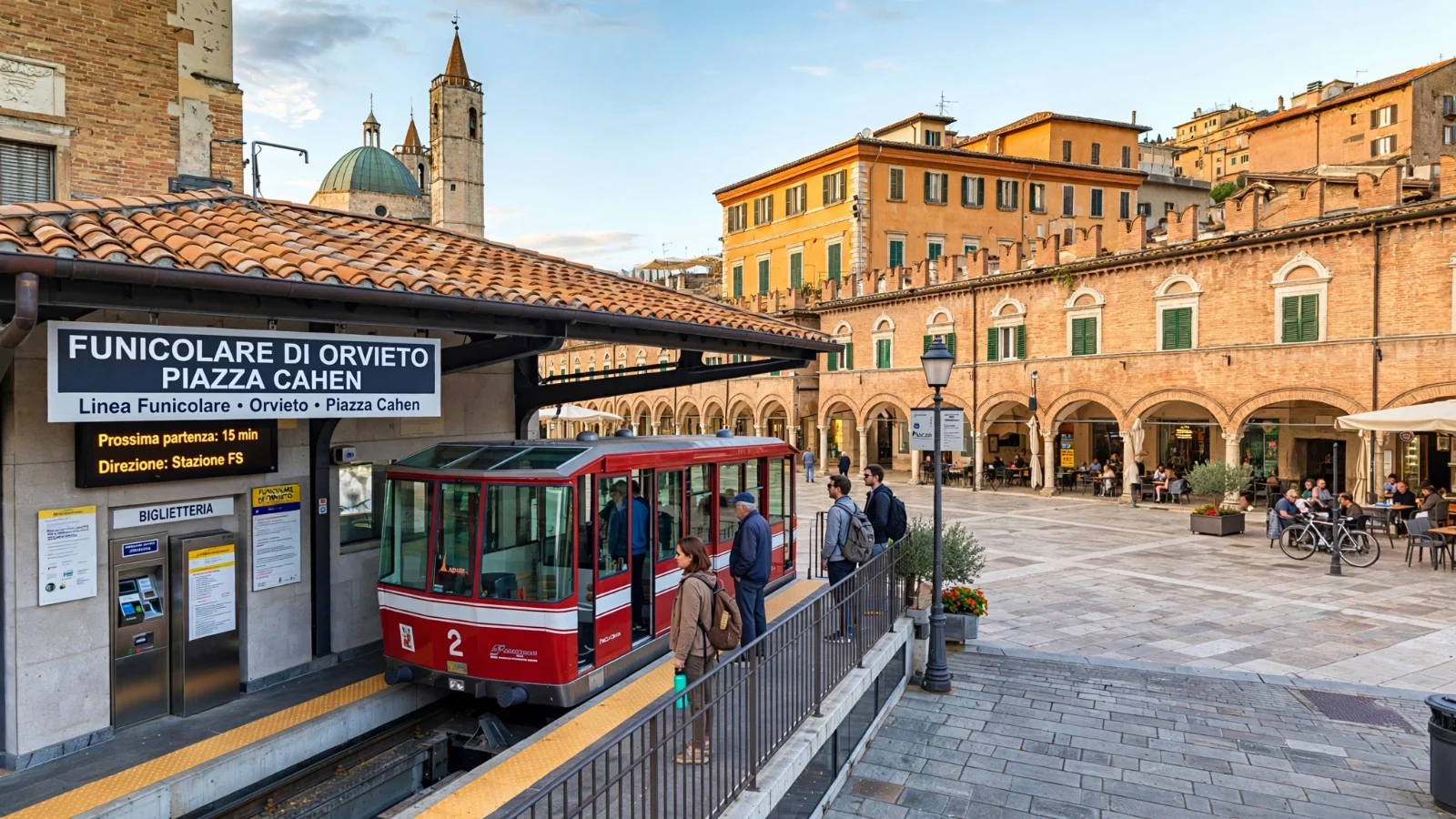
The Claim: Regional tourism pages and rail guides list the Orvieto Funicular (Funicolare Bracci) as accessible for passengers with reduced mobility. Independent Rome-to-Orvieto day-trip listings also rely on it as the primary step-free gateway into the old town.
The Reality: Built to carry passengers from the Piazza Matteotti railway station in the valley (Orvieto Scalo) up to Piazza Cahen on the cliff edge, the funicular handles the steep climb mechanically and avoids the winding road up the rock.
Access details:
- Lower station (Orvieto Scalo): Located right across from the main FS train station, connecting the station square to the funicular boarding area.
- Cabins and boarding: The funicular connects the valley station to the historic cliff top in a few minutes. Check official Busitalia information for current operating hours and assistance procedures for passengers with reduced mobility.
- Upper station (Piazza Cahen): Exits onto level ground at the eastern tip of the historic cliff, right beside St. Patrick's Well.
- Connecting bus to the Duomo: Outside the upper funicular exit, a local Busitalia minibus (Line A) connects Piazza Cahen with the historic center, including Piazza del Duomo. Confirm wheelchair boarding arrangements, ramp availability, and current departure times with Busitalia before traveling.
Our verdict:
🟢 Accessible: The funicular and its connecting minibus route provide the primary mechanical link from the valley train station to the upper town; confirm current minibus boarding details with Busitalia on arrival.
2. Duomo di Orvieto: Wheelchair Access
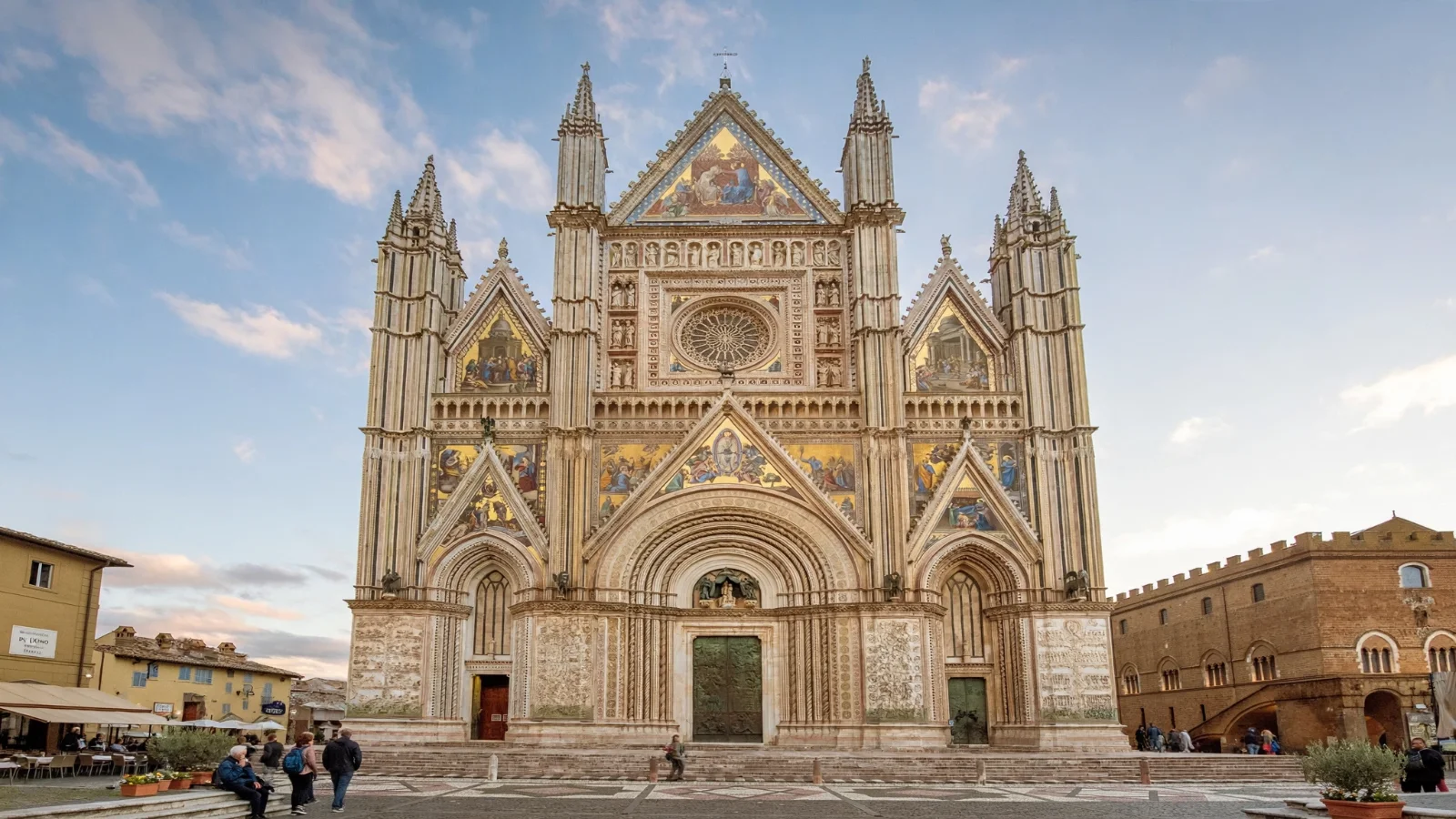
The Claim: Viator's attraction page for the Duomo di Orvieto states that the cathedral is wheelchair accessible. However, several group walking tours that feature the Duomo carry a blanket "Not wheelchair accessible" tag, leaving visitors unsure whether the steps across Piazza del Duomo block entry.
The Reality: The cathedral's official accessibility page confirms dedicated access routes for visitors with mobility requirements across the cathedral and museum complex, though you cannot enter through the main front doors on the mosaic facade because of the steps leading up to the parvis.
Access details:
- Cathedral entrance: Wheelchair users bypass the front steps and enter from the right side of the building (facing the ticket office on Piazza del Duomo), where a ramp leads through the side entrance (Porta di Postierla).
- Interior and chapels: Once inside, the central nave has flat stone flooring. The official accessibility portal recommends reporting special mobility requirements in advance (or at the ticket office on arrival) so staff can facilitate access to the cathedral and chapels, including the Chapel of San Brizio.
- Ticket office and contact: Located across the square at Piazza del Duomo (+39 0763 342477). Confirm current concession or free-entry rules for visitors with certified disabilities and companions when booking.
- MODO (Museo dell'Opera del Duomo): Located beside the cathedral inside the Papal Palaces. While ground-level areas have accessible routes, upper exhibition spaces involve level changes that require lifts and staff assistance.
Our verdict:
🟢 Duomo Interior: Accessible via the side entrance route, with flat flooring inside the nave.
🟡 Cathedral Museum (MODO) & Specific Chapels: Accessible with arrangements; contact the ticket office (+39 0763 342477) to confirm the current step-free entrance and museum lift access.
3. Pozzo di San Patrizio (St. Patrick's Well): Wheelchair Access
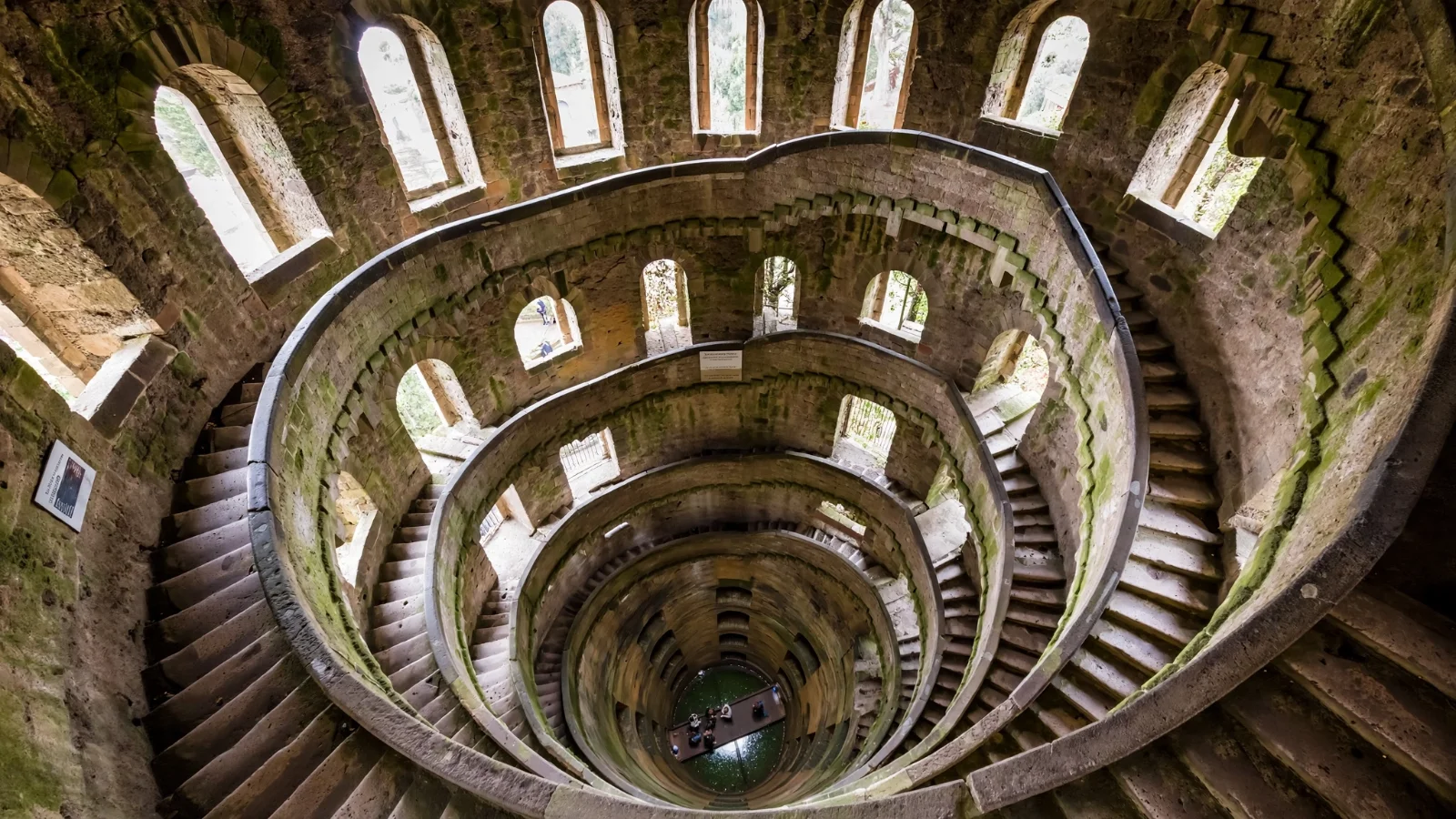
The Claim: Most booking sites label St. Patrick's Well as "Not wheelchair accessible." On the other hand, some regional travel guides mention that the well uses "ramps instead of stairs" (built for 16th-century pack mules carrying water), leading some travelers to wonder if a wheelchair or mobility scooter can roll down the spiral path.
The Reality: Those 16th-century "mule ramps" consist of 248 wide, shallow brick steps (cordowans) designed to give hooves grip. They are not smooth wheelchair ramps, and rolling a wheelchair down and back up 54 meters (177 feet) of stepped masonry is not possible. However, the upper entrance level still offers a look inside.
Access details:
- Location: Right next to the upper Funicular station at Piazza Cahen (Viale Sangallo).
- The Entrance Bridge (What you can see): The entrance sits near ground level. Visitors who cannot use stairs can ask staff at the entrance about viewing the illuminated brick cylinder from the upper bridge level at the top of the shaft.
- The Descent: 248 steps down one spiral, 248 steps up the other. No elevator exists, lighting is dim, and brick surfaces can be damp near the bottom.
- Ticketing: Check with the Piazza Cahen ticket desk regarding reduced or free admission for visitors with disabilities before entering.
Our verdict:
🟡 Upper Entry Bridge: Viewable from the top level without descending; confirm bridge threshold access with ticket staff on arrival.
🔴 Full Well Descent: Not accessible. The 248 mule steps cannot be navigated by wheelchair.
4. Orvieto Underground (Grotte di Orvieto): Wheelchair Access
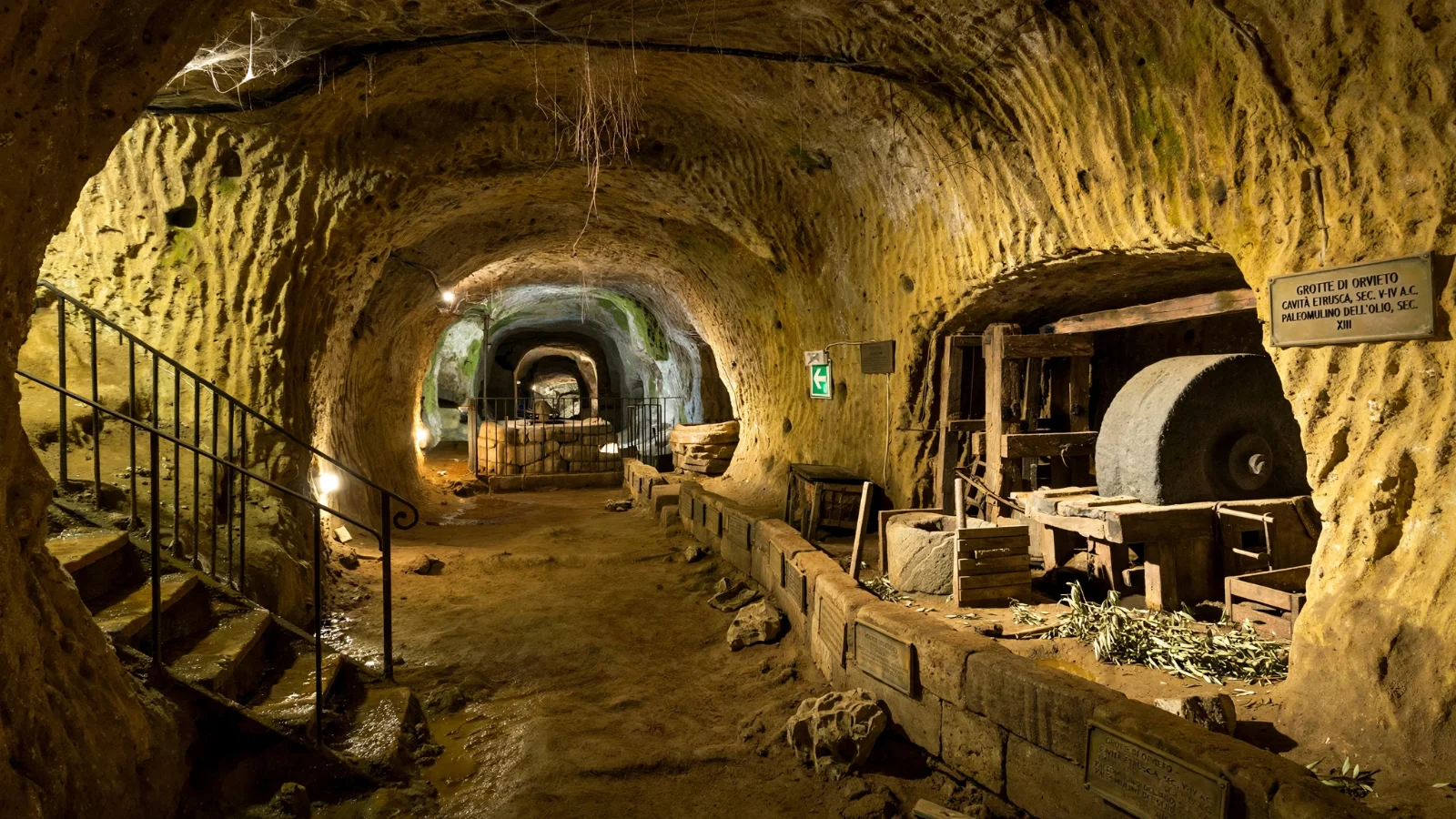
The Claim: Orvieto Underground's guided tour departs right from Piazza del Duomo—the main square in town. Because several private day tours from Rome include Orvieto Underground as a highlight while tagging the overall tour "Wheelchair accessible," travelers frequently ask if the caves have a step-free route.
The Reality: Tour listings and subterranean venue descriptions confirm that the guided underground cave route is not wheelchair accessible.
Access details:
- Why it isn't accessible: Over 1,200 artificial caves, tunnels, quarries, and Etruscan cisterns honeycomb the tuff cliff beneath Orvieto. The guided tour descends through flights of stairs, narrow rock corridors, and uneven earthen floors with no lift access.
- Alternative views of the rock: While subterranean labyrinths require stairs, the dramatic volcanic tuff cliffs can be viewed step-free from the outdoor cliff-edge belvedere near Piazza Cahen.
Our verdict:
🔴 Not accessible: Stairs, narrow rock passages, and uneven cave floors prevent wheelchair entry. Skip guided cave tours, even if a multi-stop day-trip listing carries an "accessible" badge.
5. Torre del Moro and Corso Cavour: Wheelchair Access
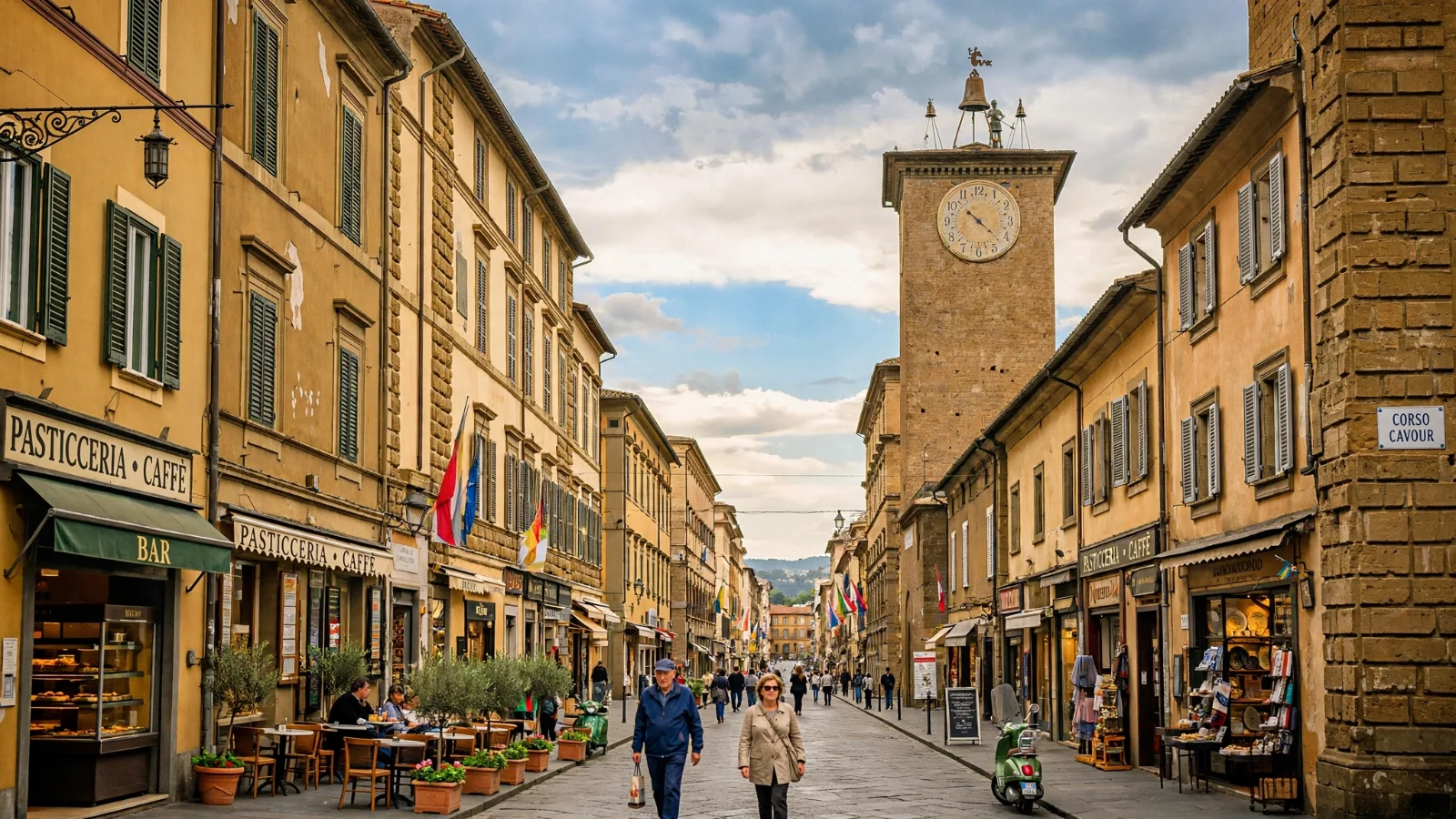
The Claim: Tourist descriptions of the 47-meter Torre del Moro (Moor's Tower) frequently mention an internal elevator, leading visitors to assume they can take a lift straight to the panoramic bell terrace. Meanwhile, walking guides describe Corso Cavour as one of Umbria's easier historic streets.
The Reality: One claim is misleading; the other is much more practical.
Access details:
- Torre del Moro (The Elevator Trap): While the tower has an internal lift through its middle section, it is not step-free. Visitors must climb an initial flight of stairs just to reach the ticket desk and elevator boarding level, and then climb a spiral staircase at the top to reach the viewing terrace. Wheelchair users cannot reach the summit.
- Corso Cavour (The Main Street): Running along the volcanic ridge from Piazza Cahen toward Piazza della Repubblica and the Duomo branch, Corso Cavour follows a much gentler gradient than the steep lanes found in most Umbrian hill towns. Paved with wide basalt slabs (basoli), it serves as the main step-free spine through the center.
- Shop thresholds: Similar to Matera and Siena, many small boutiques and restaurants along Corso Cavour have a single stone step at the doorway, though several cafes offer outdoor seating along the street and in Piazza della Repubblica.
Our verdict:
🔴 Torre del Moro: Not accessible. Despite having an internal elevator, stairs at both the bottom and top block wheelchair access.
🟢 Corso Cavour: Accessible along the main street spine, offering a gentler central route than neighboring hill towns.
Getting Around Orvieto in a Wheelchair
- Arriving by Train: Regional and Intercity trains from Rome and Florence stop at Orvieto station in the valley. The station connects across the square to the lower Funicular station.
- Arriving by Car: According to official Municipality of Orvieto transport information, Campo della Fiera parking (below the cliff) connects to the historic center through lifts and a mechanized pedestrian route. From the upper exit at Piazza Ranieri, Piazza del Duomo is about 800 meters away via Via Garibaldi, Corso Cavour, and Via del Duomo. Check the route's current operating status and street gradients before setting out, or look into designated disabled parking spaces near Piazza Cahen.
- Paving and Gradients: Stick to the central ridge (Corso Cavour, Via del Duomo, Piazza del Duomo, and Piazza della Repubblica). Peripheral medieval neighborhoods slope more noticeably toward the cliff walls.
Verdict: Is Orvieto Worth Visiting in a Wheelchair?
Yes—especially if you focus on its surface-level highlights. Because the Funicular and parking lifts handle the 300-meter cliff ascent mechanically, and because the central ridge along Corso Cavour and Piazza del Duomo is relatively gentle, you can experience an Umbrian cliff town without the 20% inclines found in Assisi.
You will need to skip the subterranean tours (Orvieto Underground and the bottom of St. Patrick's Well), as well as the top of Torre del Moro. But between riding the funicular up the cliff face, viewing the mouth of St. Patrick's Well at Piazza Cahen, rolling along Corso Cavour, and visiting the Duomo di Orvieto via its side ramp, Orvieto makes a rewarding half-day or full-day trip.
Planning more of Italy? See our wheelchair accessibility guides to Montepulciano and Alberobello.
Before You Go: Orvieto Wheelchair Checklist
- Check Funicular and Line A bus details: Review Busitalia's Umbria mobility page to confirm funicular hours and wheelchair boarding on the connecting minibus to Piazza del Duomo.
- Contact the Duomo ticket office: Call +39 0763 342477 or check the Duomo accessibility page to confirm the side ramp entrance (Porta di Postierla) and museum lift availability.
- Plan the 800m route if parking at Campo della Fiera: Remember that the parking lifts exit near Piazza Ranieri, leaving an 800-meter roll via Via Garibaldi, Corso Cavour, and Via del Duomo to reach the cathedral.
- Ignore "Elevator" claims at Torre del Moro: The tower's lift is flanked by stairs at the entrance and the top—enjoy the valley views from the flat belvedere at Piazza Cahen instead.
Orvieto Wheelchair Accessibility FAQ
Is the Orvieto Funicular wheelchair accessible?
The Orvieto Funicular provides mechanical transport between the valley railway station square and Piazza Cahen at the top of the cliff, avoiding the steep road ascent. Confirm current wheelchair boarding assistance and connecting Line A minibus ramp availability with Busitalia before traveling.
Can you enter the Orvieto Cathedral (Duomo) in a wheelchair?
Yes. While the main front facade has steps, the Opera del Duomo provides step-free access via a ramp on the right side of the cathedral into the flat central nave. Contact the ticket office (+39 0763 342477) in advance or on arrival for assistance with chapels and museum lifts.
Are the Orvieto Underground caves wheelchair accessible?
No. The guided tour of Orvieto Underground involves multiple flights of stairs, narrow rock-cut passages, and uneven cave floors, making it inaccessible for wheelchairs.
Is St. Patrick's Well (Pozzo di San Patrizio) wheelchair accessible?
The full descent is not accessible because it consists of 248 steps down and 248 steps up with no elevator. However, visitors can ask at the Piazza Cahen entrance about viewing the shaft from the upper bridge level.
Is Orvieto or Assisi easier to visit in a wheelchair?
Orvieto's central spine (Corso Cavour and Piazza del Duomo) is gentler once you reach the top via the funicular. Assisi has more accessible major basilicas, but its streets and approaches (reaching up to a 21% slope at the Upper Basilica) are steeper than Orvieto's central ridge.
Discussion
No comments yet. Be the first to share your thoughts.
Leave a comment