

Author: Jaziba Luqman
Last updated: October 2026
Jaziba Luqman writes TheDailyFront's wheelchair-accessibility travel series, cross-checking tourism claims against official accessibility databases, operator listings, and traveler accounts.
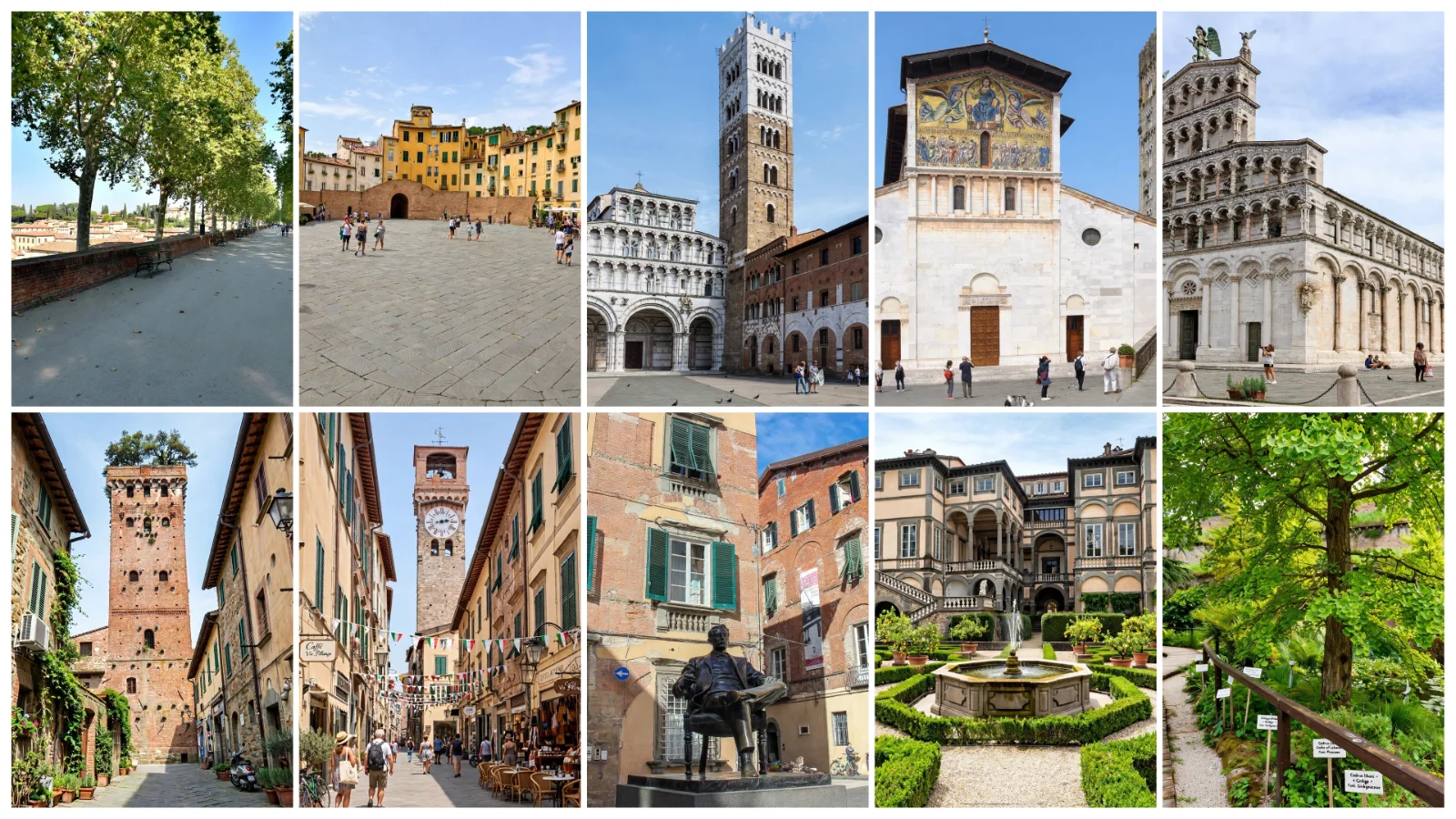
Is Lucca wheelchair accessible? Mostly on the ground, with notable ramp and tower limits. Unlike Tuscany's steep hill towns, Lucca sits on a flat plain with a 4.2 km paved rampart promenade reachable via the Casa del Boia lift or sloped bastion ramps. Basilica di San Frediano has a 10% ramp, while the Duomo churchyard ramp hits 25%, and Torre Guinigi (230 steps) and Torre delle Ore (207 steps) have no lifts.
Quick answer: Lucca is one of Tuscany's flattest historic cities and is largely wheelchair accessible along its central streets, Piazza dell'Anfiteatro, the Orto Botanico, and the Palazzo Pfanner baroque garden. You can roll atop the Renaissance Walls (Mura di Lucca) via the Casa del Boia elevator or with a companion on the bastion ramps. Enter the Duomo di San Martino, Basilica di San Frediano, and San Michele in Foro via their designated ramps, but note that the Duomo's churchyard ramp is particularly steep and may require companion assistance. Book the Puccini Museum stairlift at least two days ahead, and skip climbing Torre Guinigi, Torre delle Ore, and the church bell towers.
In this guide: 1. Mura di Lucca (Renaissance Walls) · 2. Piazza dell'Anfiteatro · 3. Duomo di San Martino & Museum · 4. Basilica di San Frediano · 5. San Michele in Foro · 6. Torre Guinigi · 7. Torre delle Ore · 8. Puccini Museum · 9. Palazzo Pfanner · 10. Orto Botanico · Getting around, ZTL & Events · Verdict · Before you go · FAQ
At a Glance: Is Lucca Wheelchair Accessible? Verdicts by Sight
How to read our verdicts:
🟢 Accessible according to the cited evidence.
🟡 Accessible with limitations or assistance.
🟠 Significant limitations: reachable only in part, or only with substantial help.
🔴 Not wheelchair accessible for the described area.
| Attraction | Marketed As | Wheelchair Accessible? Our Verdict |
|---|---|---|
| 1. Mura di Lucca (Renaissance Walls) | Turismo Lucca & Viator: accessible via ramps and lift | 🟡 Top 4.2 km path is smooth asphalt; Casa del Boia has a lift, while bastion ramps require companion help and underground vaults are unconfirmed |
| 2. Piazza dell'Anfiteatro | AAA & tour operators: flat, pedestrian-only and accessible | 🟢 Step-free through all 4 gates; outer ring tilts toward the center with some stone slab joint vibration |
| 3. Duomo di San Martino & Cathedral Museum | Turismo Lucca: cathedral and museum accessible | 🟡 Churchyard ramp is steep (25% slope, companion needed); Museum has an 11–12% ramp and lift to rooms 1, 2, 3, 5, 8 and the Oratory of St. Joseph; Campanile (217 steps) and excavations not accessible |
| 4. Basilica di San Frediano | Turismo Lucca: accessible via right-side ramp | 🟡 Measured 751 cm ramp (10% slope, 119 cm wide) with handrail; Campanile not accessible |
| 5. San Michele in Foro | AAA & Disabled Accessible Travel: church accessible via ramp | 🟡 Third-party sources confirm a left-side entrance ramp for the church; Campanile (wooden stairs) is 🔴 not accessible |
| 6. Torre Guinigi | Included on accessible-tagged audio tours; Turismo Lucca: No | 🔴 Not accessible (230 steps across 25 flights of stairs, no elevator) |
| 7. Torre delle Ore | Included on accessible-tagged audio tours; Turismo Lucca: No | 🔴 Not accessible (207 steep wooden steps, no elevator) |
| 8. Puccini Museum (Casa Natale) | Turismo Lucca: accessible via stairlift with advance booking | 🟡 Stairlift reaches the 2nd floor (must book 2 days ahead); 2 rooms inaccessible, covered by a free tablet virtual tour |
| 9. Palazzo Pfanner | Official site: garden accessible; tour listings: interior not accessible | 🟢 Baroque garden is accessible (gravel paths) with an accessible restroom; 🟠 1st-floor museum sits up a monumental staircase with no confirmed lift |
| 10. Orto Botanico (Botanical Garden) | Turismo Lucca: accessible route on wooden platforms | 🟢 Dedicated wooden plank pathway over the gravel and tactile sensory route; weekend reservations required |
While most Tuscan itineraries force wheelchair travelers to tackle steep hill towns—as we documented in our San Gimignano wheelchair accessibility guide, our Siena step-free breakdown, and our Montepulciano accessibility review—Lucca sits completely flat in a river valley. For a broader look at how Italian cities compare across the continent, check our Europe Wheelchair Accessible Travel Guide.
Even in a flat city, however, booking platforms and official municipal data frequently clash. For example, a self-guided Lucca Walking Tour with Audio Guide on Viator carries a "Wheelchair accessible" tag while scheduling a 45-minute stop at Torre Guinigi and a 30-minute stop at Torre delle Ore—two medieval towers that require climbing more than 200 stairs each. Similarly, a Walking Ramparts Tour on Viator is labeled "Surfaces are wheelchair accessible" even though the itinerary goes inside the underground vaults and galleries of the walls, and Viator's main Walls of Lucca attraction page bizarrely displays an accessibility note for a Navy Planetarium rather than the ramparts.
We audited Lucca's 10 primary sights against municipal tourism records, Regione Toscana technical measurement sheets, and first-hand wheelchair traveler reports to separate marketing tags from physical reality.
Our methodology:
The claim: How tour aggregators on Viator and Expedia, cruise-ship shore excursions, and general travel guides label Lucca's historic landmarks.
The reality: We cross-checked every stop against four primary local sources: the official Turismo Lucca Accessible Lucca portal, the municipal Lucca Accessibile (Gonfalone Rosa) barrier audits and A Ruota Libera project (by Fondazione Serono), and Regione Toscana's measured Cultural Site Accessibility Fact Sheets published via Visit Tuscany. We also incorporated first-hand wheelchair traveler accounts from Sage Traveling, power-chair blogger Curb Free with Cory Lee, and Italian accessible travel guide Comunque in Viaggio.
Verified slopes and door clearances: Standard international ramp guidance (such as the 1:12 US ADA benchmark) recommends a maximum slope of about 8%, and accessible restroom or lift doors generally start at 80 to 90 cm. Here are the exact measurements documented in Lucca Accessibile and Regione Toscana's technical sheets:
Slope bars are scaled to 25%; door-width bars are scaled to 100 cm. Ramps above 8–10% can be challenging for many manual wheelchair users, depending on ramp length, surface, chair configuration and individual strength. A companion may be needed.
1. Is Mura di Lucca (The Renaissance Walls) Wheelchair Accessible?
Short answer: Yes, with route planning. The 4.2 km top path is wide and paved in smooth asphalt, reachable step-free via the Casa del Boia elevator or with companion assistance up the sloped bastion ramps.
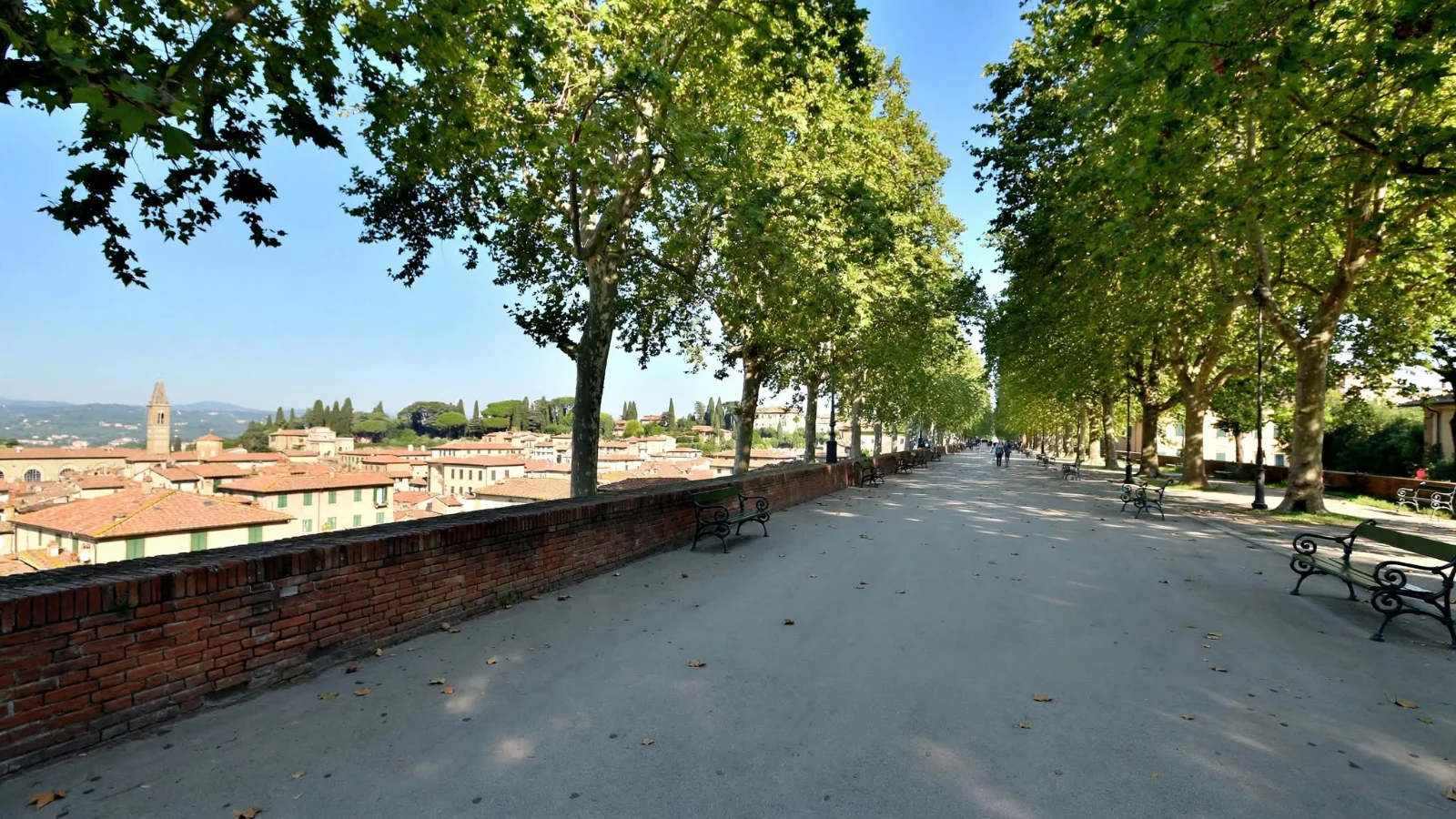
The Claim: Turismo Lucca's official Mura FAQ states that the Renaissance walls are freely accessible to everyone via internal gate stairs and sloped vehicular/pedestrian ramps, while accessible operators like Sage Traveling and Disabled Accessible Travel rate the rampart promenade as a 5-star wheelchair highlight.
The Reality: Once you are on top of the walls, the circular 4.2-kilometer tree-lined avenue (Passeggiata delle Mura) is wide, flat, and paved in smooth asphalt. Wheelchair traveler John Sage notes that the upper surface has almost no cobblestones, making it far smoother than average Italian streets. However, getting up onto the ramparts—and choosing which tour you book—requires paying attention to specific physical details:
- The step-free elevator (Casa del Boia): If you want to avoid pushing up a long incline, Lucca Accessibile's Gonfalone Rosa route documents an elevator at the ex Casa del Boia on Via dei Bacchettoni (about 300 meters from Porta Elisa on the eastern side of town), opened in 2014, which lifts wheelchairs directly to the Passeggiata delle Mura level.
- The bastion ramps: Wide ramps lead up to the walls at roughly six points around the ring. While Comunque in Viaggio notes that the ramp gradients are medium-low—identifying the Via Vittorio Veneto (Baluardo Santa Maria) ramp as the easiest climb—Lucca Accessibile advises that manual wheelchair users will still need a companion's help on the ascent. Notice that while private guides from Sage Traveling will assist with pushing a manual chair up the ramp, major cruise lines like Holland America forbid tour guides from pushing wheelchairs, so bring an able-bodied companion.
- Skip the train station "sortite" tunnel: Turismo Lucca's FAQ explicitly warns that the narrow brick sortita (sally port) tunnel located 200 meters in front of the train station is not accessible for visitors with motor disabilities.
- Underground vaults and sightlines: Although Viator's "On and Inside the Ramparts" tour (operated by Turislucca) and its Expedia equivalent carry "wheelchair accessible" tags, the tour descends into the underground vaults and galleries inside the walls. We found no official confirmation or first-hand wheelchair review verifying step-free access inside the underground casemates, so verify directly with Turislucca before booking. Also note that one Tripadvisor reviewer (5'5" tall) pointed out that the outer brick parapet wall reaches shoulder height, which can partly block direct downward views when seated in a wheelchair.
Our verdict:
🟡 Accessible with a companion on the ramps, or independently via the Casa del Boia elevator. Stick to the Via Veneto ramp or the elevator, avoid the station sortita tunnel, and double-check before booking tours that enter the underground vaults.
2. Is Piazza dell'Anfiteatro Wheelchair Accessible?
Short answer: Yes. All four vaulted archways are step-free, though the outer stone slabs tilt slightly toward the center and cause mild joint vibration.
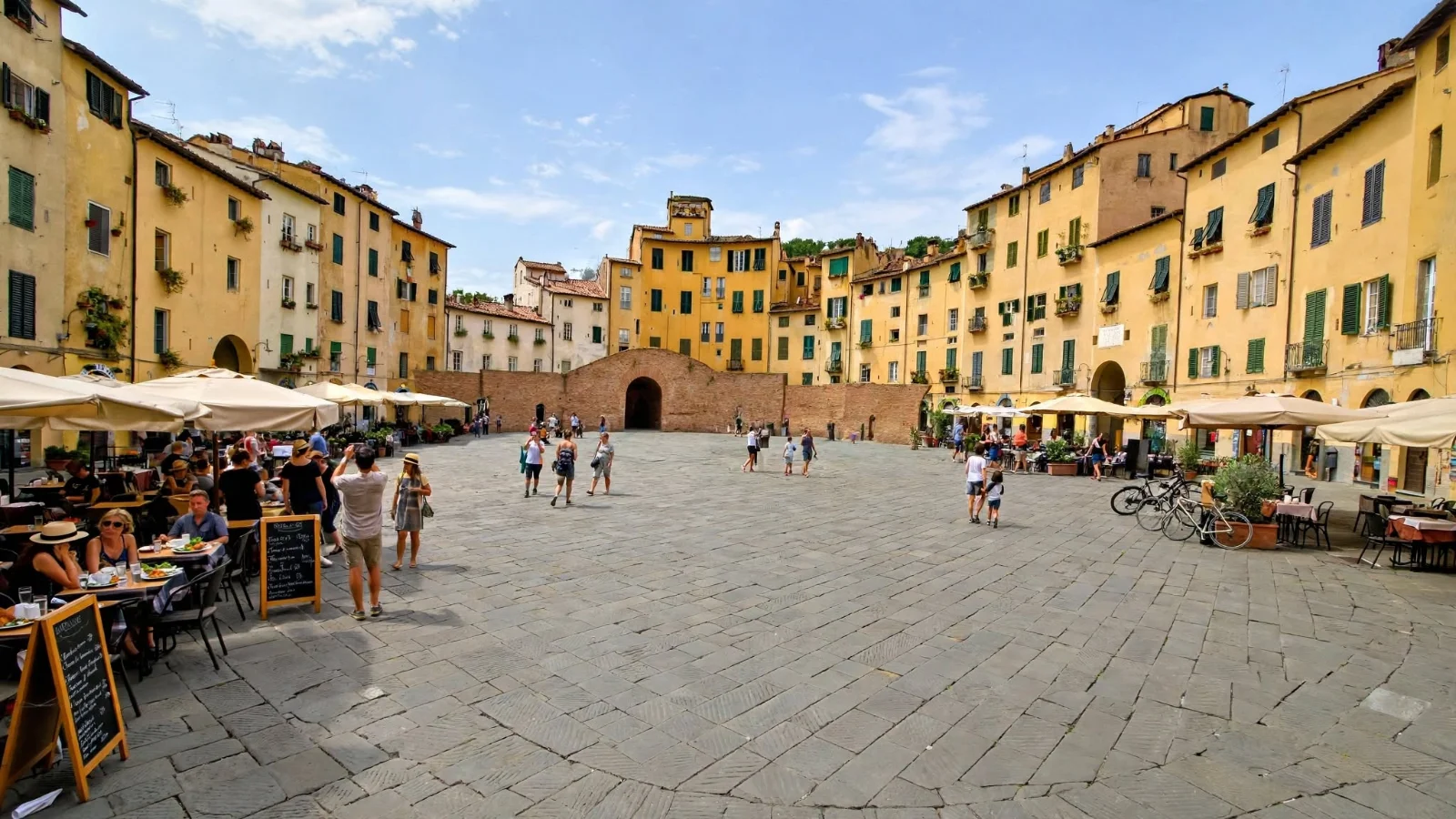
The Claim: AAA's attraction guide and Disabled Accessible Travel list the oval Roman Amphitheater square as flat, pedestrian-only, and easy to navigate in a wheelchair. (By contrast, one generic aggregator, TheAbroadGuide, claims access is limited without giving any details.)
The Reality: Piazza dell'Anfiteatro is completely step-free and open to wheelchairs through all four of its vaulted entrance gates, as confirmed by Lucca Accessibile's A Ruota Libera audit (developed with Fondazione Serono) and power-chair blogger Cory Lee, who found Lucca's flagstone streets very manageable.
The only nuance is the stonework underfoot: the A Ruota Libera guide notes that the outer perimeter of the square tilts slightly inward toward the middle, and the gaps between the historic stone paving slabs can transmit noticeable vibration to small front caster wheels. Rolling across the center of the oval rather than hugging the outer cafe ring gives you the smoothest ride.
Our verdict:
🟢 Accessible. It is flat, pedestrianized, and step-free; just keep toward the middle of the piazza to minimize vibration from the stone joints.
3. Are Duomo di San Martino and the Cathedral Museum Wheelchair Accessible?
Short answer: Partly. The Cathedral has an accessible restroom and ramps, but one measured churchyard ramp hits a steep 25% slope. The Museum has a gentler 11–12% ramp and an elevator to five rooms (1, 2, 3, 5, and 8) plus the Oratory of St. Joseph, while the Campanile (217 steps) is off-limits.
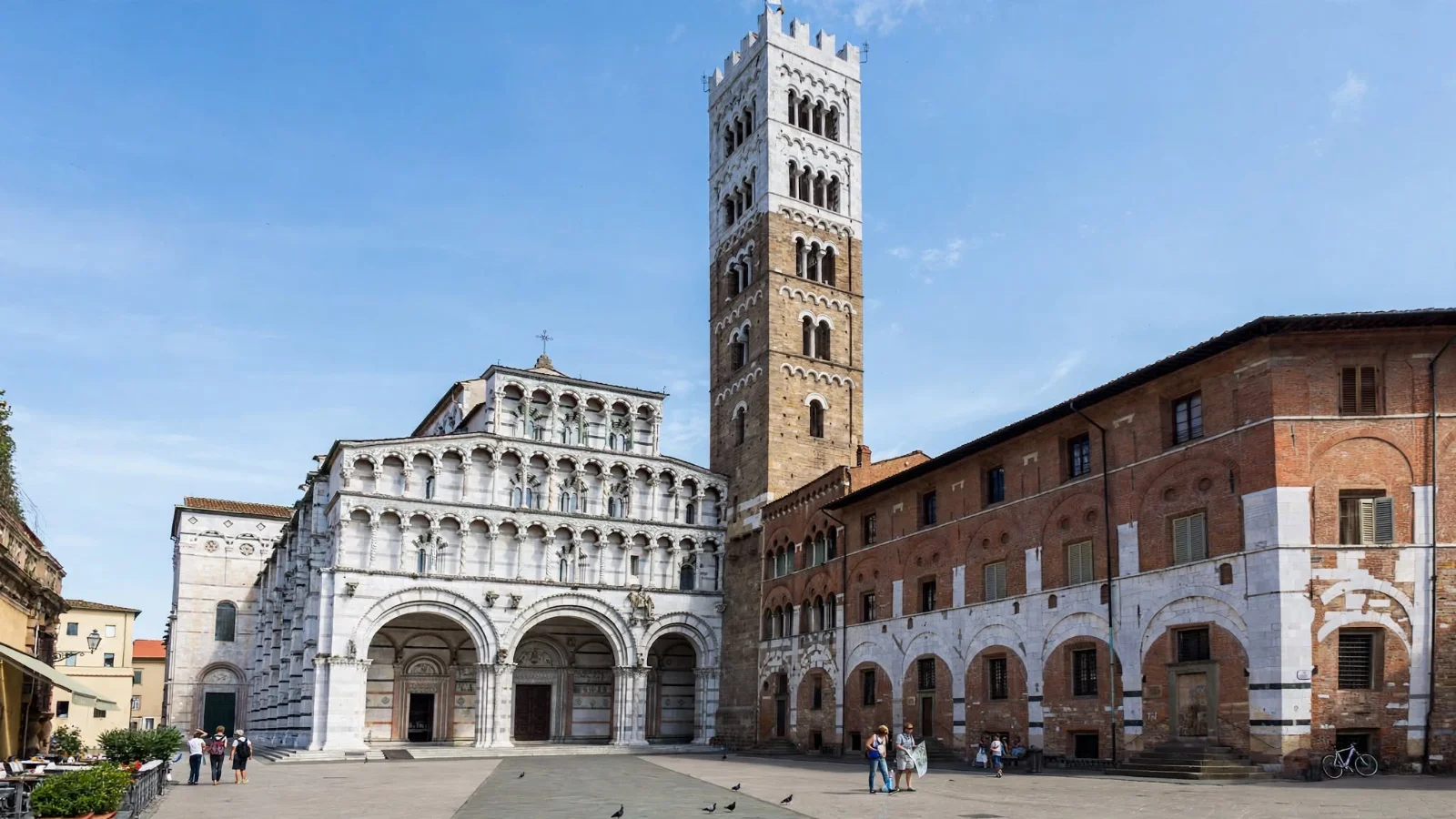
The Claim: Turismo Lucca and AAA state that both the Cathedral of San Martino and the nearby Church of San Giovanni e Santa Reparata have wheelchair ramps, and that the Cathedral Museum has an elevator.
The Reality: The cathedral complex is well equipped compared to many Italian churches—and Provincia di Lucca confirms that entry is free for disabled visitors and a companion—but the ramp gradients at the cathedral entrance make a companion essential.
Here is what the official Cathedral Complex accessibility page (updated October 2026) and Regione Toscana's measured technical sheets verify:
- Duomo di San Martino ramps: While an older Lucca Accessibile note estimated the temporary ramp at 18%, Regione Toscana's measured fact sheet for the Cathedral records that the four steps into the churchyard (12, 10, 10, and 10 cm high) are bridged by a 220 cm long, 125 cm wide ramp with a steep 25% slope. At the doors, the main entrance ramp is 130 cm long and the exit ramp is 115 cm long (both 120 cm wide, with a small 3 cm internal lip), alongside a shorter 80 cm internal ramp at a 15.5% slope. Bring a companion to help on the 25% incline.
- Cathedral restrooms: Although Regione Toscana's older undated PDF claimed the nearest accessible toilet was 350 meters away on Via Pescheria, the Cathedral Complex's current October 2026 accessibility page explicitly confirms that accessible restrooms are available inside the cathedral—simply ask the sacristans on duty for access.
- Cathedral Museum (Museo della Cattedrale): According to Regione Toscana's Museum fact sheet, the three entrance steps are bypassed by a smooth stone ramp (390 cm long, 90 cm wide, 11 to 12% slope) leading through an 80+ cm glass door, followed by a 60 cm porphyry ramp (12% slope) to the ticket desk. Inside, an elevator provides access to five museum rooms (1, 2, 3, 5, and 8), as well as the Oratory of St. Joseph (an upgrade over older regional sheets that only listed the ground floor).
- San Giovanni e Santa Reparata & the Campanile: According to Regione Toscana's sheet for San Giovanni e Reparata, the church nave is reachable via a moderate ramp with safety curbs on both sides and has an accessible toilet (90+ cm door). However, the underground archaeological excavations require stairs, and the Cathedral Campanile (217 steps) has no lift.
Our verdict:
🟡 Accessible with a companion. The cathedral interior, sacristan-assisted restroom, and five rooms (1, 2, 3, 5, and 8) plus the Oratory of St. Joseph in the Cathedral Museum are reachable, but you will need help on the 25% churchyard ramp, and the bell tower and archaeological crypt are not accessible.
4. Is the Basilica di San Frediano Wheelchair Accessible?
Short answer: Yes. A measured 751 cm ramp on the right side of the facade climbs at a manageable 10% slope with a handrail and safety curb.
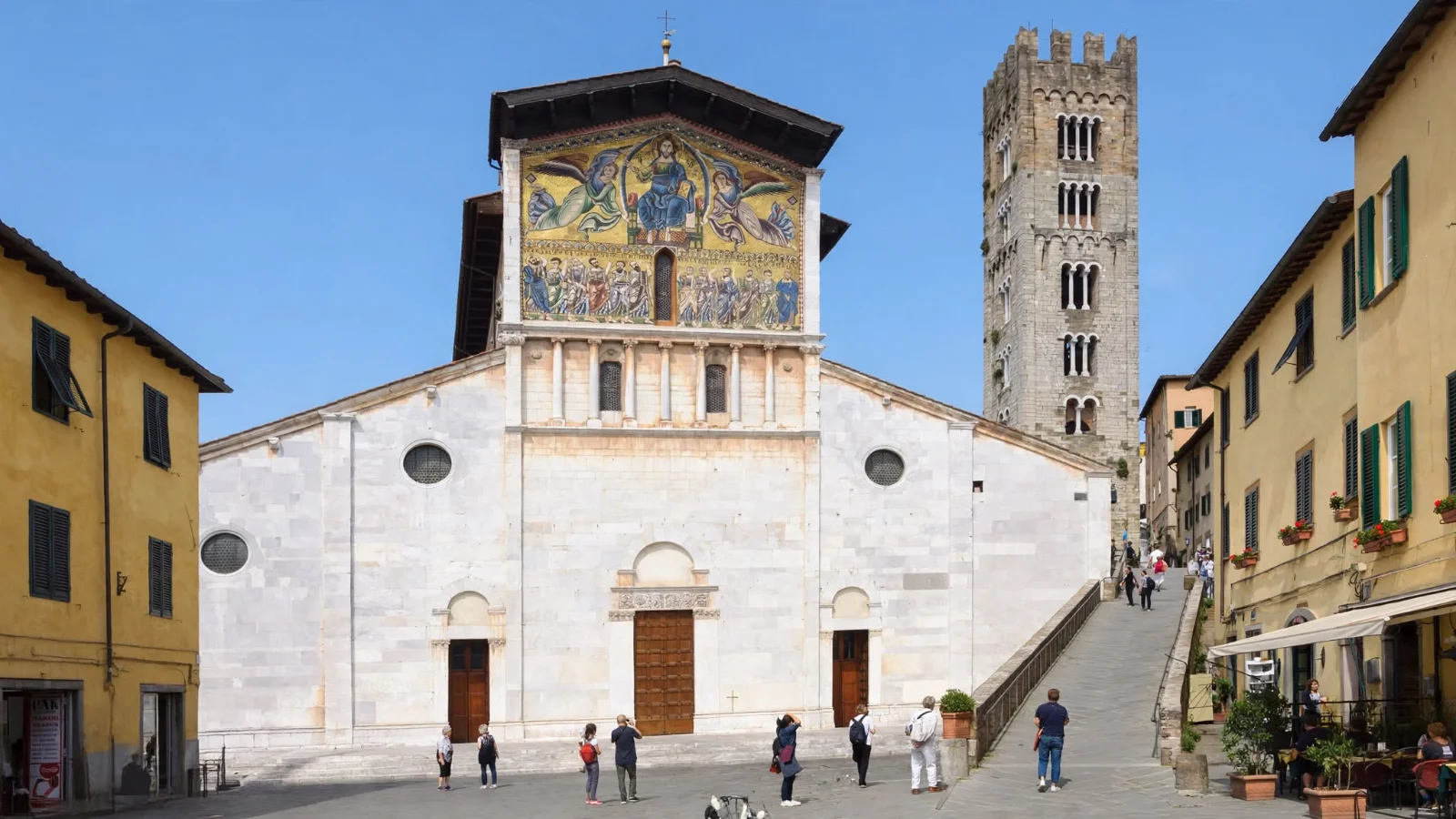
The Claim: Turismo Lucca confirms that the basilica is wheelchair accessible via a ramp on the right side of the facade, while automated pages like Komoot vaguely warn that there "may be steps at the entrance."
The Reality: Ignore the generic Komoot warning—San Frediano has one of the best-documented church ramps in the city. While the front portal has four 16 cm marble steps, Lucca Accessibile's technical audit measured the permanent ramp on the right side of the facade at 751 cm long and 119 cm wide, with a steady 10% slope, fitted with both a handrail and a protective side curb.
Inside, the nave is flat and open, allowing step-free viewing of the 12th-century carved baptismal font and the Chapel of Santa Zita. According to the basilica's official visitor rules (sanfredianolucca.com), admission is free for disabled visitors and their companion. Only the bell tower (campanile) is off-limits due to stairs.
Our verdict:
🟡 Basilica accessible via the 10% right-side ramp (some manual chair users may want a light push on the 7.5-meter incline); bell tower not accessible.
5. Is San Michele in Foro Wheelchair Accessible?
Short answer: Yes for the church via a left-side entrance ramp, according to three independent sources; No for the newly reopened bell tower, which has wooden stairs.
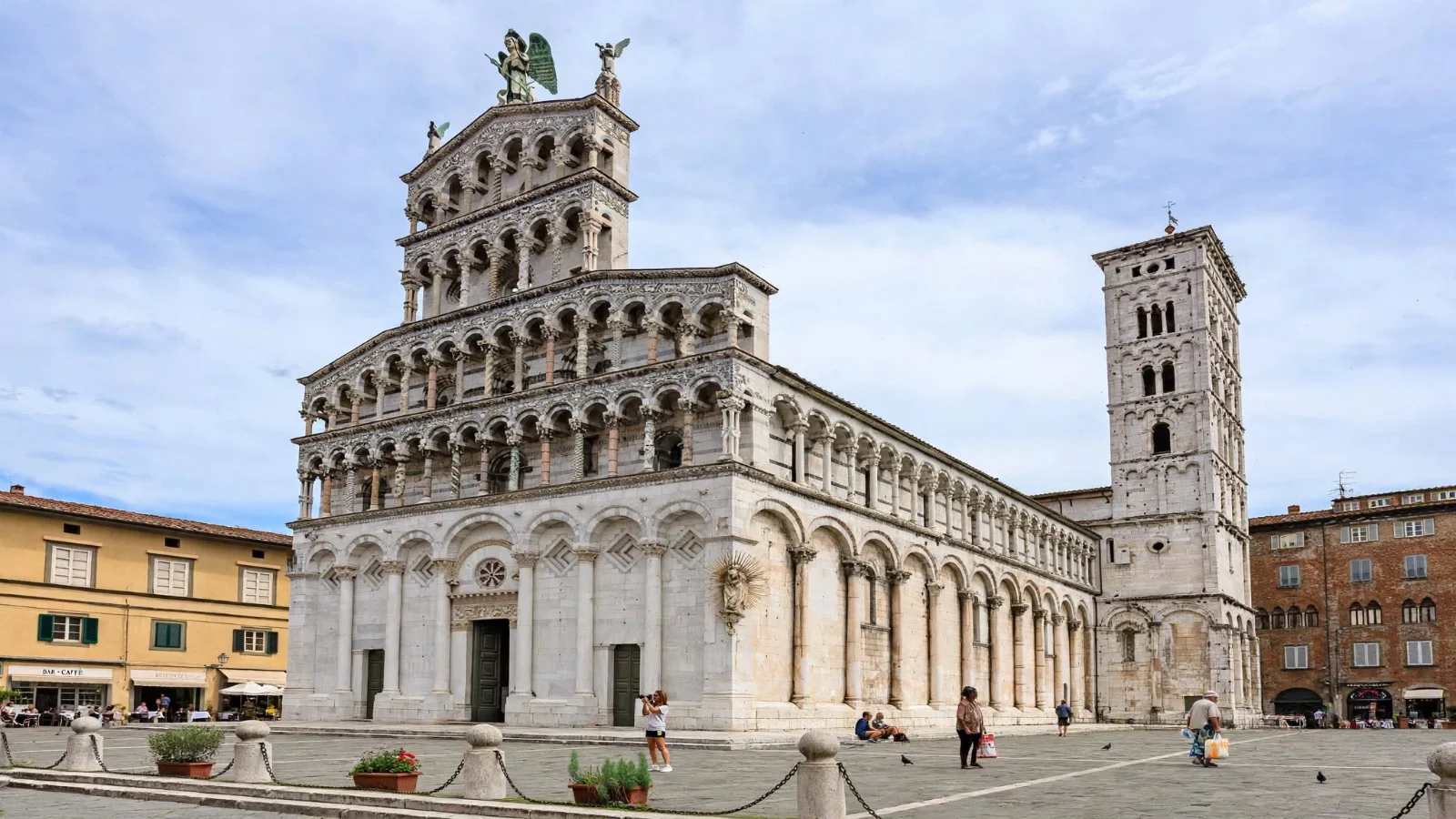
The Claim: Wheelchair tour operator Disabled Accessible Travel and AAA / Viator list the Church of San Michele in Foro as wheelchair accessible via an entrance ramp.
The Reality: Curiously, Turismo Lucca's October 2026 page for San Michele only mentions accessibility for the bell tower—stating that the campanile (which reopened on 29 September 2026 after a year of restoration, as reported by Lucca in Diretta) has wooden stairs and no elevator.
For the church interior itself, three independent third-party sources fill in the gap: Disabled Accessible Travel, AAA, and first-hand reports from Comunque in Viaggio and visitor GDP Cleary all confirm that wheelchair users can enter the church via a ramp on the left side of the building after reaching the front terrace. When rolling across Piazza San Michele toward the church, Lucca Accessibile warns that a few meters of stone slabs along Via Calderia right in front of the church are slightly disconnected, so take care with your front casters.
Our verdict:
🟡 Church interior is accessible via the left-side ramp (confirmed by tour operators and visitor reports, though exact slope figures are not published online); 🔴 the Campanile is not accessible.
6. Is Torre Guinigi Wheelchair Accessible?
Short answer: No. Reaching the rooftop holm-oak garden requires climbing 230 steps up 25 flights of stairs with no elevator.
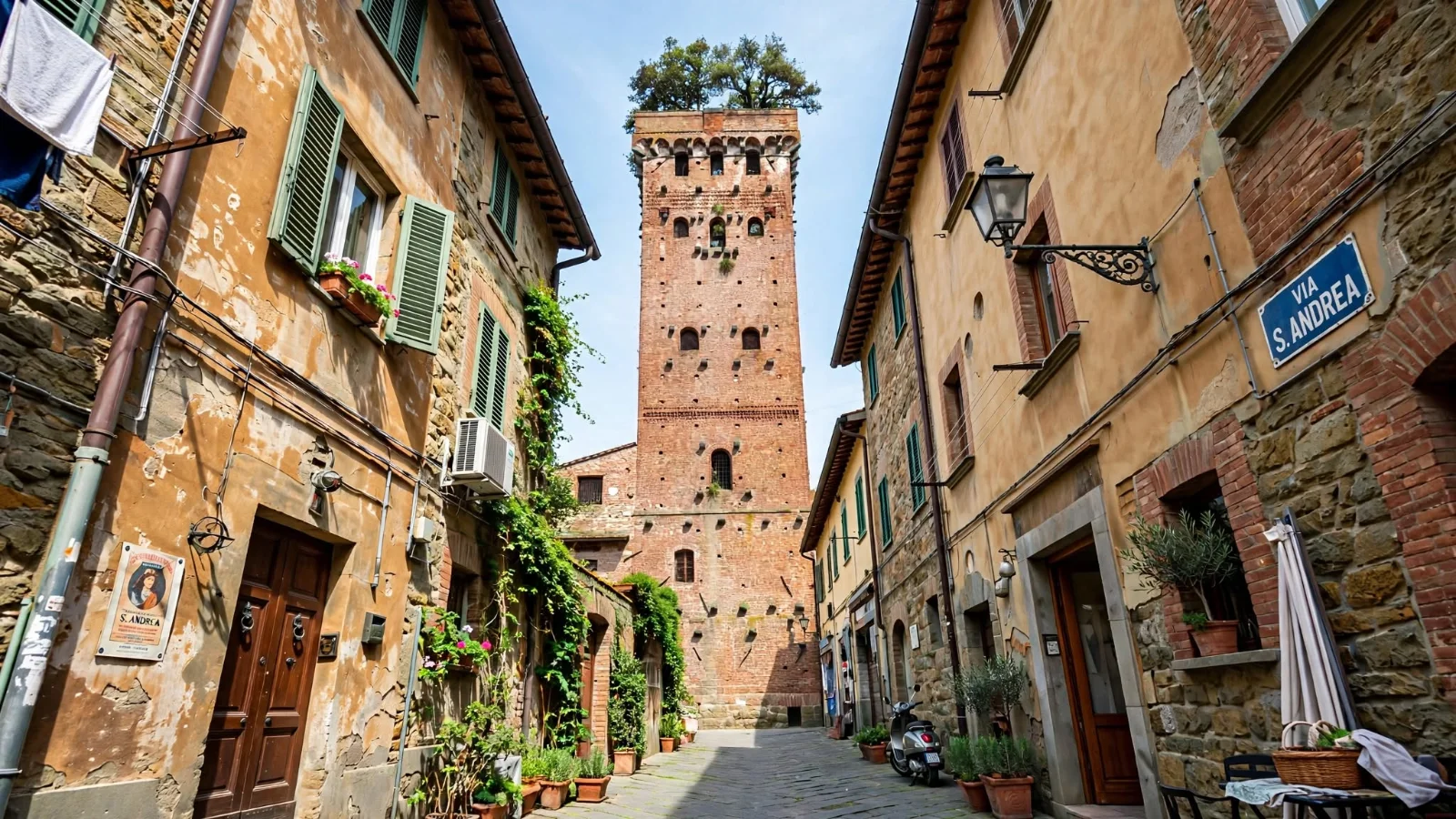
The Claim: Viator's Lucca Walking Tour with Audio Guide is tagged "Wheelchair accessible" and includes a 45-minute stop at Torre Guinigi.
The Reality: Do not be misled by the walking tour's umbrella accessibility tag. Turismo Lucca's official Torre Guinigi page, Viator's dedicated Guinigi Tower attraction listing, and GetYourGuide's ticket page all state plainly that the medieval tower has no elevator and is not accessible to visitors with motor disabilities. Reaching the famous rooftop garden with its seven holm-oak trees requires climbing 230 steps across 25 flights of stairs, with the upper flights narrowing into steep internal metal staircases.
As Holland America's accessible shore excursion accurately notes, wheelchair users can only view Torre Guinigi from the outside along Via Sant'Andrea and Via delle Chiavi d'Oro.
Our verdict:
🔴 Not accessible. Admire the tree-topped tower from the street below and use the elevated Mura di Lucca promenade for step-free panoramic views instead.
7. Is Torre delle Ore (The Clock Tower) Wheelchair Accessible?
Short answer: No. Climbing to the 18th-century clock mechanism and bell chamber requires 207 steep wooden steps with no elevator.
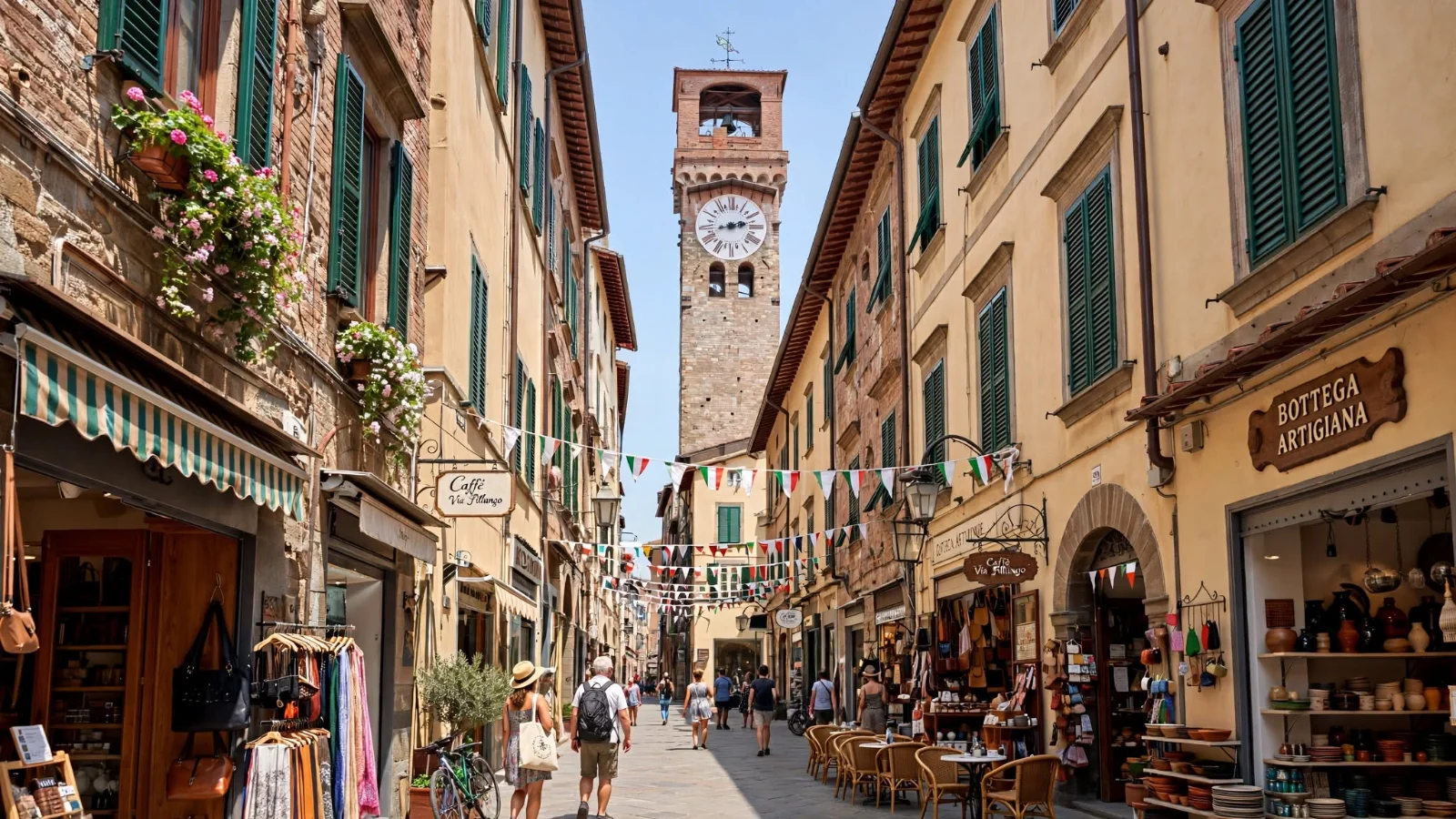
The Claim: Like Torre Guinigi, Torre delle Ore is included as a 30-minute stop on Viator's accessible-tagged Lucca audio walking tour, and an automated listing on Access Travel contradicts itself by claiming wheelchair access on the same page that mentions stairs.
The Reality: Turismo Lucca's official page for Torre delle Ore confirms that Lucca's tallest medieval tower (50 meters high on Via Fillungo) has no lift and is not accessible to wheelchair users. Reaching the hand-wound 1754 clockwork and panoramic belfry requires climbing 207 steep, narrow wooden stairs, which Expedia's visitor guide notes is challenging even for ambulatory seniors.
For another example of an Italian city where historic clock towers require stairs while surrounding squares remain rollable, see our Orvieto wheelchair accessibility guide.
Our verdict:
🔴 Not accessible. Enjoy the tower facade while rolling along Via Fillungo, Lucca's flat main shopping street.
8. Is the Puccini Museum (Casa Natale) Wheelchair Accessible?
Short answer: Partly, with mandatory advance booking. A stairlift carries wheelchairs to the second-floor apartment, but you must book it at least 2 days ahead, and two rooms are viewed via a free tablet tour.
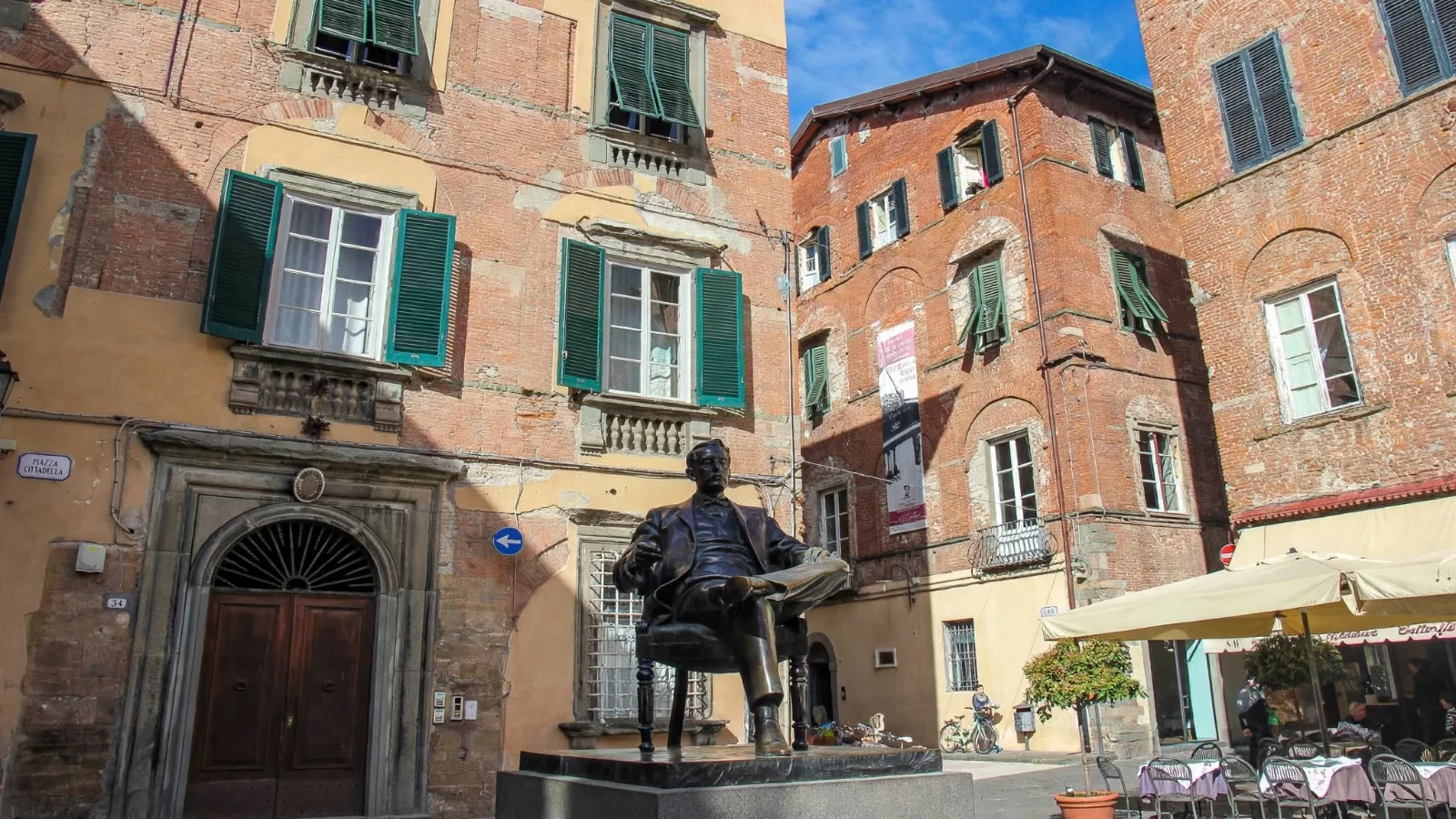
The Claim: Third-party guides like Audiala label the museum unconditionally "wheelchair accessible," while AAA and Puccini Lands note that access relies on an approved stairlift.
The Reality: Composer Giacomo Puccini's birthplace apartment sits on the second floor of a historic building in Piazza Cittadella. According to Turismo Lucca, Regione Toscana's Puccini Museum accessibility sheet, and the Puccini Museum's official accessibility page, wheelchair users can visit under two strict operational conditions:
- Book the stairlift 2 days in advance: The building does not have a conventional cabin elevator; instead, staff operate a stairlift (servoscala) up to the second floor. Both Turismo Lucca and the museum state that you must reserve the stairlift with the ticket office at least 2 days before your visit so trained staff are on hand to operate it. (A manual museum wheelchair is also available on request.)
- Two rooms are not accessible: Because of internal architectural barriers in the historic apartment, Puccini Museum's visit page notes that two rooms cannot be entered in a wheelchair. To compensate, the museum provides a free tablet at reception offering a virtual tour of those two rooms.
Our verdict:
🟡 Accessible with advance booking. Contact the ticket office at least 48 hours ahead to reserve the stairlift, and check the stairlift's weight/dimension compatibility if you use a heavy motorized chair.
9. Is Palazzo Pfanner Wheelchair Accessible?
Short answer: The baroque garden is accessible and has a dedicated disabled restroom, though its paths are gravel. The first-floor museum sits atop a monumental staircase with no confirmed elevator.
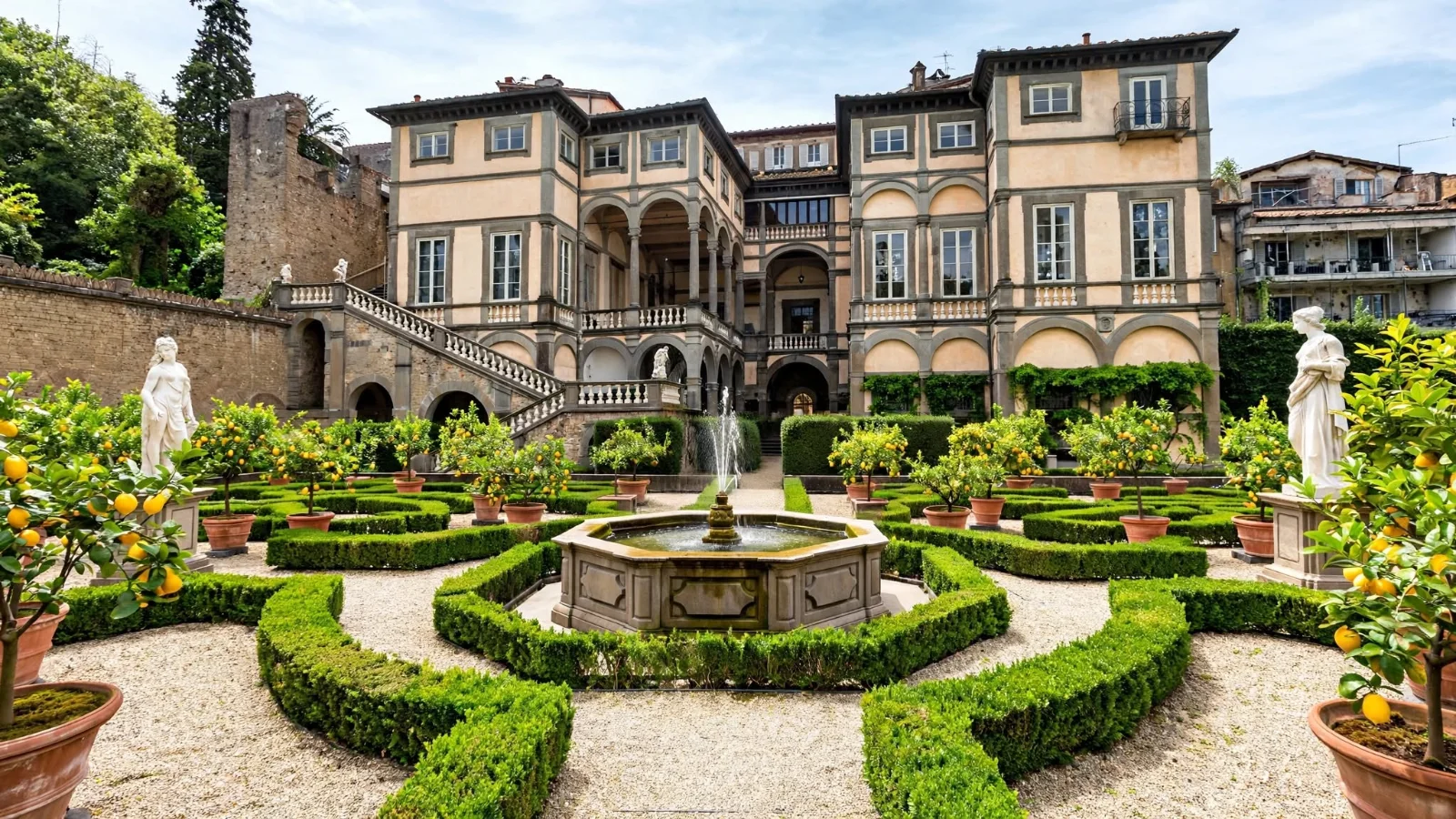
The Claim: Palazzo Pfanner's official accessibility page (updated June 2025) states that the garden is accessible to visitors with motor impairments and is equipped with a dedicated restroom, while an older undated blog post on Disabili.com claimed two entrance steps blocked garden access.
The Reality: Palazzo Pfanner splits sharply between its famous 18th-century garden and its upper-floor residence:
- The Baroque Garden (🟢 Accessible, gravel surface): We prioritize the palace's updated June 2025 official statement over the undated blog post: the ground-level garden is open to visitors with motor disabilities and includes a dedicated accessible restroom. However, as TourismAttractions notes, the wide, flat paths around the central octagonal fountain and lemon trees are surfaced in unpaved gravel (bajri), which can require extra pushing effort for narrow manual wheelchair tires.
- The Palace Museum / Piano Nobile (🟠 Unconfirmed / Likely No): Palazzo Pfanner's official museum page states that the museum occupies the entire first floor above the monumental staircase (scalone), as also described by InTheNet, and makes no mention of a lift or stairlift. Furthermore, a guided Palazzo Pfanner tour on Tripadvisor and Expedia explicitly states that the garden is wheelchair accessible while the interior of the palazzo is not. If you want to verify whether any temporary lifting aid exists for the upper halls, call Palazzo Pfanner directly at +39 0583 952155.
Our verdict:
🟢 Garden accessible (with an accessible toilet, on flat gravel paths); 🟠 Museum interior on the first floor has no documented lift and is listed by tour operators as not accessible.
10. Is the Orto Botanico (Lucca Botanical Garden) Wheelchair Accessible?
Short answer: Yes. A dedicated wooden-plank walkway runs over the gravel paths alongside a tactile and olfactory sensory trail, though weekend reservations are required.
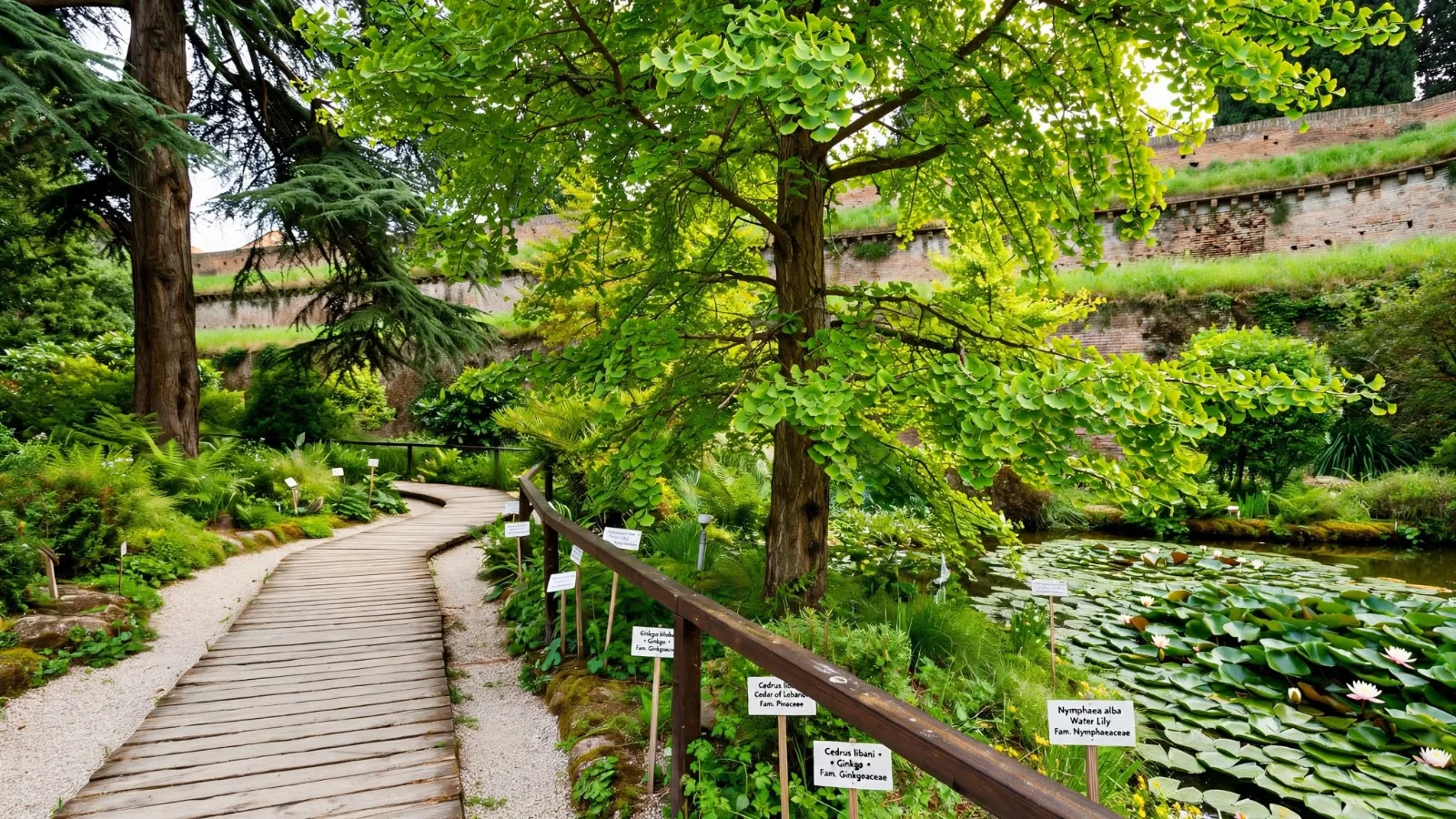
The Claim: Turismo Lucca's official Orto Botanico page and Nomads Travel Guide state that the 1820 botanical garden provides an accessible route on a stable platform surface, plus a tactile and olfactory path with handrails and Braille signage for visitors with visual impairments.
The Reality: Tucked into the southeastern corner of the historic center near the ramparts, the two-hectare Orto Botanico is one of Lucca's best-adapted outdoor spaces. While natural garden paths in Italy are often deep gravel, Comunque in Viaggio confirms that Lucca installed a continuous pathway of wooden planks (passerella in legno) laid directly over the gravel so wheelchairs and walkers can roll smoothly without sinking.
Seasonal hours and booking rule to note: According to Turismo Lucca, advance reservation is recommended on weekdays and mandatory on weekends and public holidays. In winter (from 3 November to 28 February), the garden opens only on Fridays, Saturdays, and Sundays from 11:00 to 16:00.
Our verdict:
🟢 Accessible via the wooden-plank boardwalk, with strong sensory accessibility features. Just remember to book ahead if visiting on a weekend.
Getting Around Lucca: Surfaces, Restrooms, ZTL and Major Events
Compared to steep Italian hill towns like Perugia or Assisi, rolling across Lucca's historic center inside the walls is refreshingly flat. Here is what to keep in mind for smooth ground logistics:
- Street surfaces inside the walls: Most of Lucca's pedestrian core—including Via Fillungo, Piazza Napoleone, Piazza San Michele, and Piazza San Frediano—is paved in large rectangular stone flagstones (lastricato) rather than rough river cobblestones. As power-chair traveler Cory Lee and multiple Tripadvisor forum reports note, the ride is not glass-smooth due to mortar joints between slabs (especially a short stretch of Via Calderia near San Michele and the outer ring of Piazza dell'Anfiteatro), but it is very doable for both manual and power chairs.
- Train station to the historic center: Lucca FS station sits just outside the southern walls near Porta San Pietro. When rolling from the station toward the walls, do not follow pedestrians into the narrow brick sortita tunnel opposite the station, which Turismo Lucca confirms is inaccessible to wheelchairs; instead, use the main street-level gates (such as Porta San Pietro) to enter the old town on the flat.
- Verified Accessible Restrooms: Based on our official site audits, you can find confirmed accessible restrooms inside Duomo di San Martino (ask the sacristans for access), inside the church of San Giovanni e Santa Reparata (90+ cm door width), in the ground-floor garden of Palazzo Pfanner, and at the public restroom facility on Via Pescheria (350 meters from the Cathedral, noted on Regione Toscana's sheet).
- Major Event Warning (Lucca Comics & Games): During Lucca Comics & Games, usually held in late October or early November, the historic center becomes extremely crowded and temporary event structures can affect accessible routes and parking. Check the official event dates and accessibility arrangements before travelling.
So, Is Lucca Wheelchair Accessible? Our Verdict
Yes—for a historic walled city in Tuscany, Lucca is one of the easiest and most rewarding destinations you can visit in a wheelchair. Because the entire historic core sits on flat valley ground and the 4.2-kilometer Renaissance ramparts are paved in smooth asphalt, you can spend a full day rolling through medieval piazzas and shaded park paths without facing the sustained steep climbs common in Tuscany's hilltop towns, although some individual attractions still have challenging ramps.
For a smooth, step-free one-day route, enter the walled center through Porta San Pietro or Porta Elisa, take the Casa del Boia elevator (or the gentle Via Vittorio Veneto ramp with a companion) onto the Mura di Lucca, and roll along the tree-lined ramparts above the rooftops. Descend near Palazzo Pfanner to see its baroque garden and use its accessible restroom, then head to Basilica di San Frediano (using its 10% right-side ramp) and roll through the center of Piazza dell'Anfiteatro. Continue down flat Via Fillungo past Torre delle Ore to San Michele in Foro (left-side ramp), and finish at Duomo di San Martino and the Cathedral Museum (or the Orto Botanico boardwalk).
Before You Go: Lucca Wheelchair Checklist
- Use the Casa del Boia lift or Via Veneto ramp for the Walls: To reach the top of the Mura di Lucca without steep pushing, use the elevator at Casa del Boia on Via dei Bacchettoni (300 m from Porta Elisa) or the gentle ramp at Baluardo Santa Maria (Via Vittorio Veneto).
- Avoid the station sortita tunnel: The 200-meter brick pedestrian tunnel in front of the train station is not wheelchair accessible; enter the walled city through the main vehicle/pedestrian gates instead.
- Book the Puccini Museum stairlift 48 hours ahead: If you want to tour Giacomo Puccini's second-floor birth home, contact the museum ticket office at least 2 days in advance to reserve the staff-operated stairlift.
- Bring a companion for the Duomo churchyard ramp: While Basilica di San Frediano's right-side ramp has a gentle 10% slope (751 cm long) and the Cathedral Museum ramp is 11 to 12%, the 4-step ramp into the Duomo di San Martino churchyard climbs at a steep 25% slope.
- Reserve the Orto Botanico on weekends: Booking ahead is mandatory on weekends and holidays for the Botanical Garden, and winter hours (3 November to 28 February) run Friday to Sunday only, 11:00 to 16:00.
- Skip tower tickets: Torre Guinigi (230 steps), Torre delle Ore (207 steps), the Duomo Campanile (217 steps), and the San Michele Campanile have no elevators—even if a third-party audio tour tagged "wheelchair accessible" includes them on its route.
Lucca Wheelchair Accessibility FAQ
Are the Walls of Lucca (Mura di Lucca) wheelchair accessible?
Yes. The 4.2-kilometer pathway along the top of the Renaissance Walls is wide, flat, and paved in smooth asphalt. Wheelchair users can reach the upper level step-free using the elevator at the ex Casa del Boia on Via dei Bacchettoni (about 300 meters from Porta Elisa) or via the sloped bastion ramps, though manual chair users usually need a companion's help on the ramps.
Can a wheelchair go up Torre Guinigi or Torre delle Ore?
No. Neither medieval tower has an elevator. Reaching the rooftop oak trees of Torre Guinigi requires climbing 230 steps across 25 flights of stairs, and Torre delle Ore requires climbing 207 steep wooden steps. Even though some self-guided walking tours tagged wheelchair accessible include them as stops, wheelchair travelers can only view both towers from street level.
Is Duomo di San Martino (Lucca Cathedral) wheelchair accessible?
Yes, with a companion. According to Regione Toscana's measured accessibility sheet, the four steps into the churchyard are bridged by a 220 cm ramp with a steep 25% slope, followed by gentler entrance ramps into the flat nave. Accessible restrooms are available inside the cathedral by asking the sacristans, and the adjacent Cathedral Museum has an elevator that serves five museum rooms (1, 2, 3, 5 and 8), as well as the Oratory of St. Joseph.
How do you enter Basilica di San Frediano and San Michele in Foro in a wheelchair?
At Basilica di San Frediano, use the permanent ramp on the right side of the facade, which Lucca Accessibile measured at 751 cm long and 119 cm wide with a 10% slope, handrail, and curb. At San Michele in Foro, three independent travel sources confirm a wheelchair ramp on the left side of the church, though its bell tower is stairs-only.
Is the Puccini Museum in Lucca wheelchair accessible?
Partly, with advance notice. The museum sits on the second floor of Puccini's birth house and is equipped with a staff-operated stairlift, which you must book with the ticket office at least two days before your visit. Two rooms inside the apartment cannot be entered by wheelchair, so the museum provides a free tablet virtual tour for those spaces.
Is Piazza dell'Anfiteatro easy to roll across in a wheelchair?
Yes. Piazza dell'Anfiteatro is pedestrian-only and step-free through all four of its vaulted entrance archways. Because the outer perimeter of the square tilts slightly toward the middle and the joints between the stone slabs can vibrate small front caster wheels, Lucca Accessibile's A Ruota Libera guide recommends rolling across the center of the piazza for the smoothest ride.
Are Palazzo Pfanner and the Lucca Botanical Garden wheelchair accessible?
The Orto Botanico (Botanical Garden) is wheelchair accessible via a wooden-plank boardwalk laid over the gravel and includes a sensory trail, though weekend reservations are mandatory. At Palazzo Pfanner, the ground-level baroque garden is accessible (on flat gravel paths) and has an accessible restroom, but the first-floor museum sits up a monumental staircase with no confirmed elevator.
Discussion
No comments yet. Be the first to share your thoughts.
Leave a comment