
Author: Jaziba Luqman
Last updated: November 2026
Jaziba Luqman writes TheDailyFront's wheelchair-accessibility travel series, cross-checking tourism claims against official accessibility records, specialist physical audits, operator information, and traveler accounts.
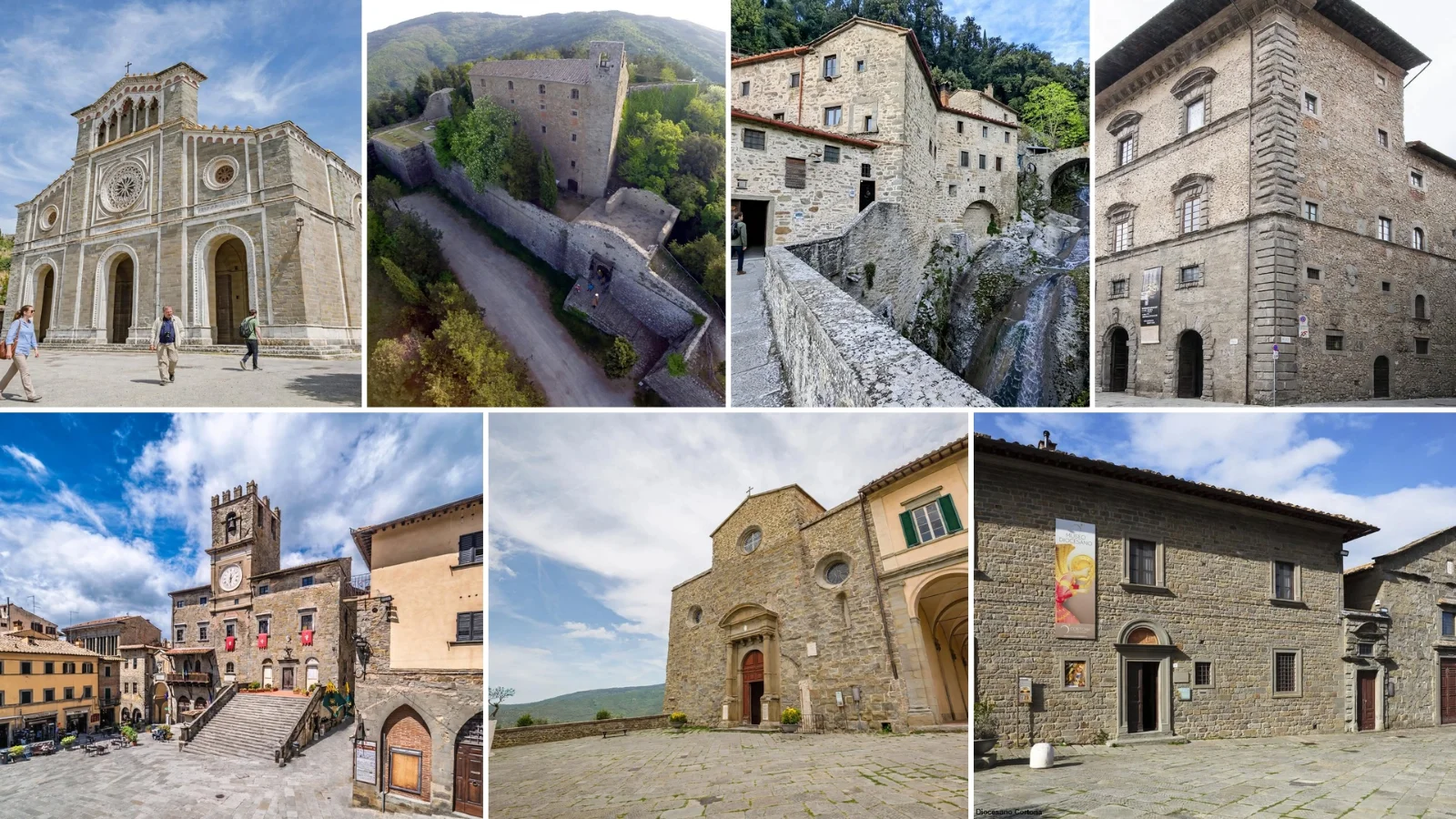
Is Cortona wheelchair accessible? Partly. Made famous by Under the Tuscan Sun, Cortona overlooks the Valdichiana valley from a steep hillside. The main museum has a documented lift, and Via Nazionale is a genuine help because it is level, but the climb between sights is real. The famous public escalators from the lower parking area are not a wheelchair route, and one Franciscan hermitage is officially listed as unsuitable for wheelchairs.
The claims are not consistent. Discover Tuscany says the MAEC museum can be visited using lifts, while the museum's own accessibility page lists galleries reachable only by stairs. A local hotel guide presents the escalators as the practical way to avoid the climb, but escalators do not carry wheelchairs. And the municipality's own page for the Le Celle hermitage praises its setting while stating it is not suitable for wheelchair users.
Quick answer: Cortona is wheelchair accessible at selected sights, but it is not a step-free town. The MAEC museum has a documented lift to most of its galleries, and Via Nazionale is the one level street in the center. The Basilica of Santa Margherita is reported to have ramps and has its own parking. However, the Spirito Santo escalators do not carry wheelchairs, the Cathedral has stepped entrances, the Diocesan Museum is ground floor only, and Le Celle is listed as unsuitable. Plan the car, the zone permit and the climbs before you plan the sights.
Top 3 to prioritize
- MAEC (Etruscan Academy Museum): a 2024 audit records lifts and an accessible restroom. Ask staff which galleries are step-free.
- Via Nazionale: described by Michelin as completely flat, the easiest place to enjoy the town.
- Basilica of Santa Margherita: a promising car-accessible stop. A visitor reports ramps and an adjacent accessible restroom, but confirm both with the sanctuary first.
Top 3 to skip or confirm first
- Eremo Le Celle: the municipality lists it as not suitable for wheelchair users.
- The Cathedral's main door: a visitor reports several steps, with a side entrance that still has one step.
- Fortezza del Girifalco: a festival operator asks disabled visitors to book at least two days ahead for assisted access.
In this guide: At a Glance · Methodology · Documented Access Snapshot · The Escalator Question · 1. Piazza della Repubblica & Via Nazionale · 2. MAEC Museum · 3. Cathedral · 4. Diocesan Museum · 5. Santa Margherita · 6. Girifalco Fortress · 7. Le Celle · Getting around Cortona · One-Day Route · By Chair Type · Cortona vs Other Hill Towns · Verdict · Before you go · FAQs
At a Glance: Is Cortona Wheelchair Accessible? Verdicts by Sight
How to read the verdicts:
🟢 Accessible according to the cited evidence.
🟡 Accessible with limitations or assistance.
🟠 Significant limitations: reachable only in part, or only with substantial help.
🔴 Not wheelchair accessible for the described area.
| Attraction | Marketed As | Wheelchair Accessible? Our Verdict |
|---|---|---|
| 1. Piazza della Repubblica and Via Nazionale | Michelin calls Via Nazionale completely flat, a rarity in the city. | 🟡 Via Nazionale is level, but the Town Hall has an entrance staircase, the side streets climb and the area is a restricted-traffic zone. |
| 2. MAEC Museum (Palazzo Casali) | Discover Tuscany, in a guide last updated in 2018, says the museum can be visited with lifts. | 🟡 A February 2024 audit records lifts and steps at the entrance; a few galleries are stairs-only. |
| 3. Cathedral (Santa Maria Assunta) | Tourism pages present it as a standard visit; none we found describes wheelchair access. | 🟠 A visitor reports several main-door steps and one step at a side entrance; no measurement was found. |
| 4. Diocesan Museum | Musement says only the ground floor is accessible for wheelchairs. | 🟡 The museum's official page agrees: ground floor only, with no lift. |
| 5. Basilica of Santa Margherita | Tourism pages promote the hilltop sanctuary; none we found describes wheelchair access. | 🟡 A visitor reports ramps and an accessible restroom; no measurements were found, so confirm first. |
| 6. Fortezza del Girifalco | Presented as a hilltop fortress and events venue. | 🟠 Assisted access by advance booking is the documented route; independent step-free access is not established. |
| 7. Eremo Le Celle | The municipal page describes a place of spiritual retreat in a notable natural setting. | 🔴 The same municipal page says it is not suitable for wheelchair users. |
The Claim vs. The Reality: How We Checked Cortona
The Claim: What tourism pages, ticket resellers, hotel guides and festival operators say about each sight.
The Reality: What the Itinera accessibility sheet for MAEC, official museum and municipal pages, the municipality's traffic rules, press reports on the escalator works and dated visitor reviews actually say.
This guide is research-based. We did not physically test these routes with a wheelchair; we reviewed official information, one specialist audit and dated visitor reports. Cortona is also thinner on measured data than some towns in this series: only the MAEC museum has a specialist audit sheet that we could find. For the other sights we rely on official statements and clearly labeled visitor reviews, and we do not invent ramp percentages or door widths.
That distinction matters. An official accessibility sheet is not the same as a ticket reseller's label, and a single visitor review is not a wheelchair measurement. Where a source is one review, we say so.
Documented Access Snapshot: Key Measurements and Coverage in Cortona
Because only the MAEC museum has a published specialist audit sheet, Cortona offers fewer centimeter-by-centimeter measurements than towns with full municipal barrier surveys. The visual snapshot below summarizes the verified figures and structural access limits documented across official sources.
Bars illustrate documented measurements and level coverage from the 2024 Itinera audit for MAEC, the Diocesan Museum's official access statement, and Comune di Cortona records. Always confirm entrance step arrangements and lift dimensions for wide chairs before visiting.
The Escalator Question: Parking, Lifts and the Climb to Piazza Garibaldi
Short answer: Cortona's public escalators link the lower parking area to Piazza Garibaldi, but escalators are not a wheelchair route. We found no lift, platform or step-free ramp described beside them, and they have been closed for works since 28 August 2026.
The Claim: A local hotel visitor guide presents the escalators from the Spirito Santo parking area to Piazza Garibaldi as the practical way to reach the center without the long walk uphill.
The Reality:
- They are escalators. Standard escalators are not designed to carry wheelchairs, so we would not plan a wheelchair visit around them.
- No lift was found. In the municipal notices, press coverage and visitor guides reviewed for this article, none describes a lift or platform beside the escalators. The municipality's works notices say access to Piazza Garibaldi stays available through the existing pedestrian avenue, but we found no published gradient or surface description for it.
- The system has a single and a double flight. The same works notices describe covering both, and the works began on 20 April 2026.
- They are currently shut. Local press reported the escalators closed from Friday 28 August 2026 for the final phase of the roof-covering works. On 7 October the mayor said, according to Arezzo Notizie, that the works were due to finish by the end of October and that reopening was expected in early November after authorizations and tests. We found no reopening notice as of 6 November 2026, so confirm the current status with the municipality.
- Older forum posts mention steps near the lot. A Tripadvisor thread about nine years old describes a staircase between the parking lot and the street that leads to the escalators. We could not confirm whether that is still true, so check before relying on the lower parking area.
Parking context: A 2019 accessibility listing records no reserved disabled bays in the Spirito Santo lot or in the other three public lots it covers. Cortona On The Move's visitor page (2025) says Spirito Santo and Piazza Mazzini are paid, while Piazza del Mercato and Porta Bifora are free. The museum MAEC lists accessible parking in the center: two spaces in Piazza Signorelli, one in Piazza Franciolini and two in Piazza del Duomo.
Our verdict:
🔴 Do not treat the escalators as the wheelchair solution to Cortona's hill. Plan instead around a vehicle that can reach the upper town under the zone rules below, or ask the municipality about the pedestrian route's slope and surface.
1. Are Piazza della Repubblica and Via Nazionale Wheelchair Accessible?
Short answer: Via Nazionale is the level street in the center and a real asset. Piazza della Repubblica next to it has a staircase at the Town Hall, and the streets that climb away from both are steep.
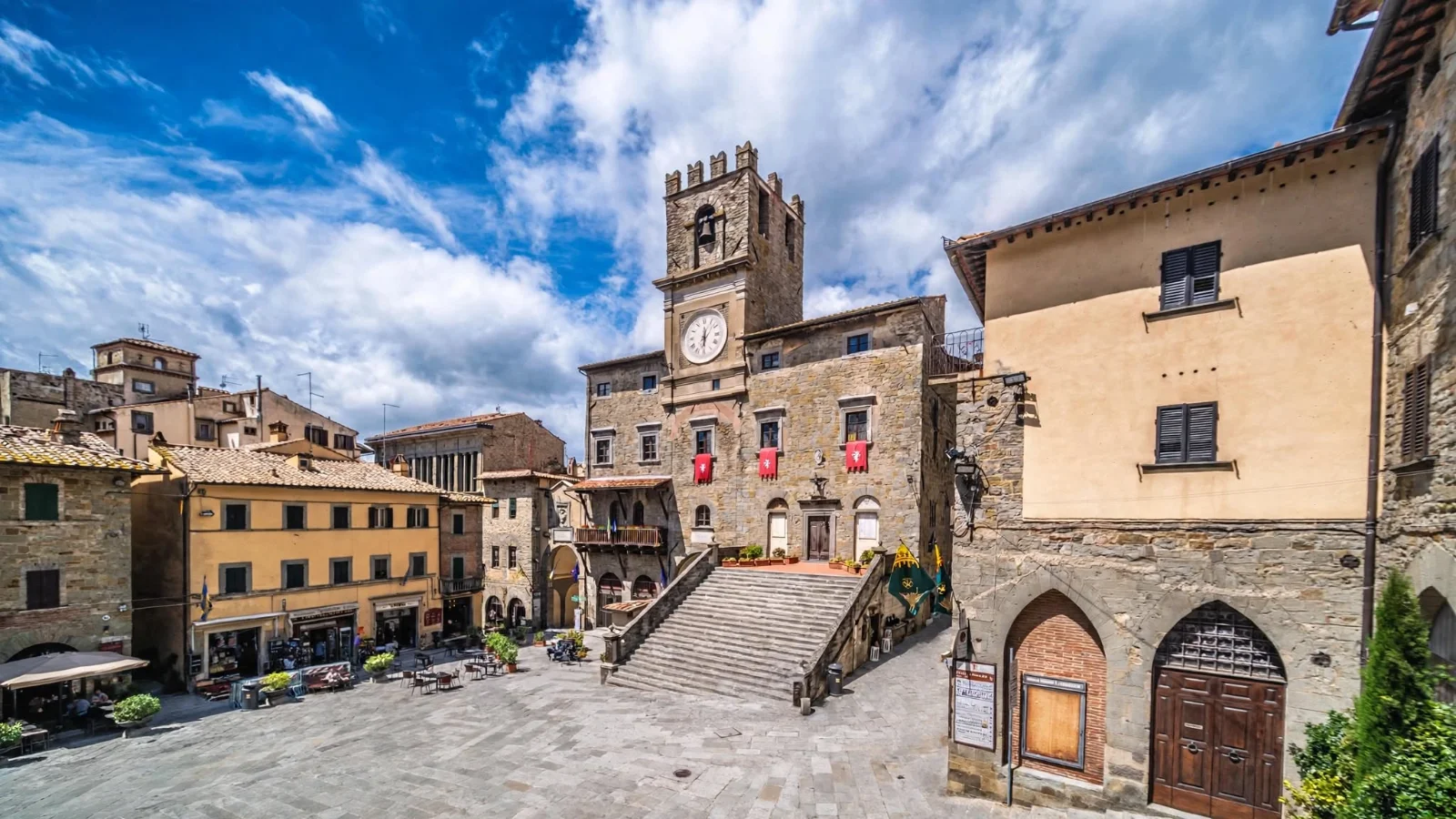
The Claim: Michelin says Via Nazionale has the advantage of being completely flat, a rarity in the city.
The Reality: That description applies to the street itself, not to the routes that reach it. The same Michelin entry adds that the small streets along it are in reality very steep stairways. The tourism site TurisCortona likewise calls Via Nazionale one of the few streets in Cortona that are not uphill, and notes the entrance staircase of the Town Hall on the square.
Two practical points apply. First, Via Nazionale and the main squares sit inside the restricted-traffic zone described in the getting-around section. Second, the municipality has been renewing the center's paving, and its October 2026 update mentions a second stage of work on Via Nazionale with access guaranteed, so surfaces and diversions can change. No published slope measurement for the square was found, so we do not assign it a made-up percentage, and we found no wheelchair information for the Town Hall interior.
Our verdict:
🟡 Via Nazionale is the best place to roll in Cortona. Reaching it is the effort, so treat this as a conditional visit: plan the approach first, and expect the Town Hall staircase and the side streets to need a companion or a power chair.
2. Is the MAEC Museum (Palazzo Casali) Wheelchair Accessible?
Short answer: Mostly, with a plan. A February 2024 audit records lifts and an accessible restroom, but also steps at the entrance, and the museum lists a few galleries that are reachable only by stairs.
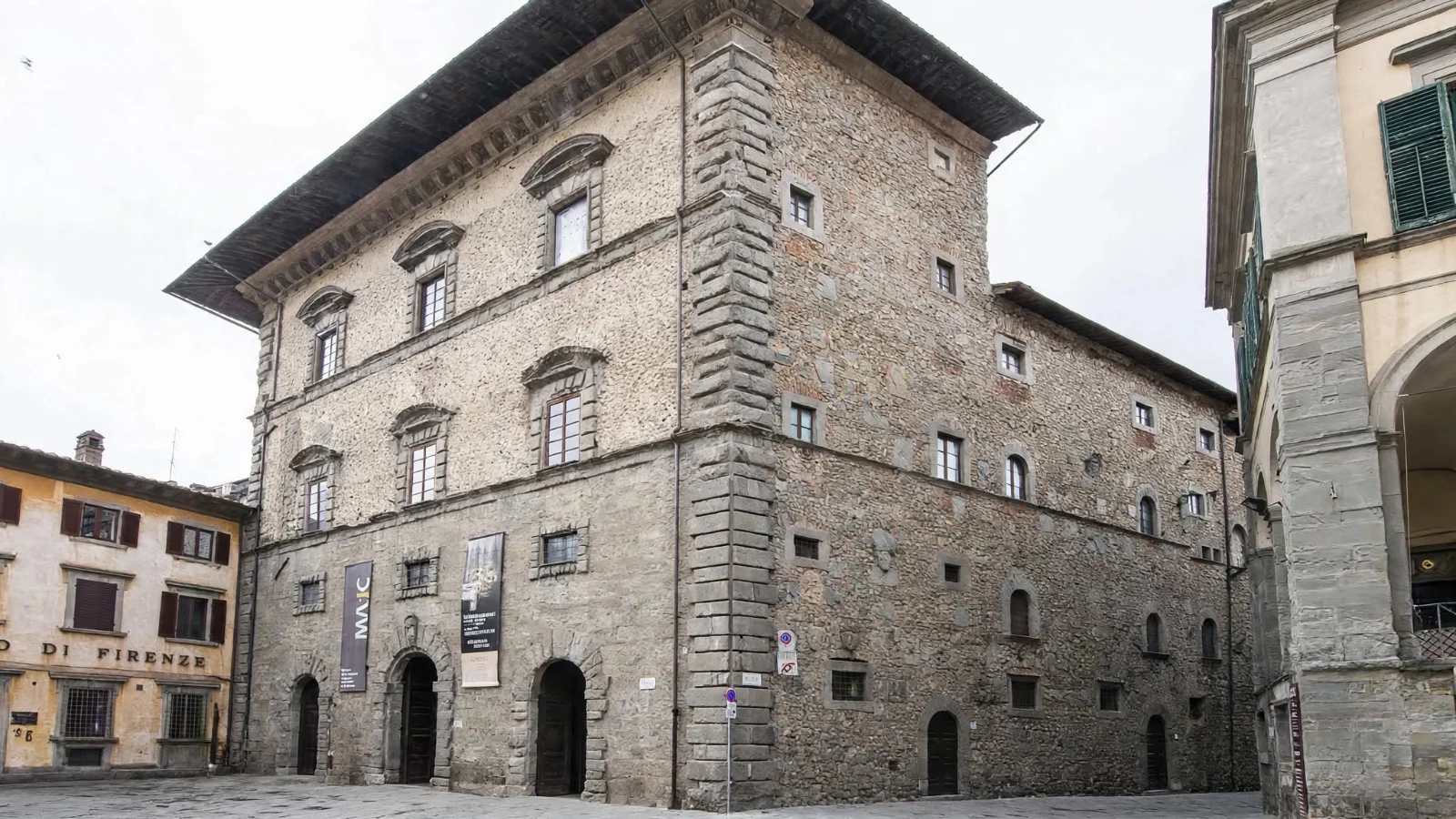
The Claim: Discover Tuscany, in a guide last updated in August 2018, says the museum is accessible and that visitors with disabilities can use the lift and small lifts to move between floors.
The Reality: The Itinera accessibility sheet, dated 12 February 2024 and published through Visit Tuscany, records steps at the entrance, lifts in the building, a walkway from parking that is only partly accessible and an accessible restroom on level -2 with an 85 cm door. It does not publish the entrance step height or lift dimensions.
The museum's own accessibility page is more specific. Galleries on level 2 (16 to 23 and 26 to 29) are reached by a wheelchair-accessible lift, and rooms 1 to 14 on levels -1 and -2 are reached by lift with staff assistance. Room 15 on level 1 and rooms 24 and 25 on level 3 are accessible only by stairs.
Visitor reports are mixed in emphasis rather than in substance. In a September 2024 Tripadvisor review, Fede M calls the museum almost completely wheelchair accessible thanks to two lifts and several ramps. Another reviewer in October 2025, not describing wheelchair use, warns that you need to be comfortable with a lot of stairs.
Our verdict:
🟡 This is Cortona's best-documented indoor option, but the entrance steps and the stairs-only rooms mean you should call ahead, confirm how the entrance is handled and ask for the lift to be ready.
3. Is Cortona Cathedral Wheelchair Accessible?
Short answer: Doubtful without help. A visitor reports several steps at the main entrance and one step at a side entrance, and we found no official accessibility statement or measurement.
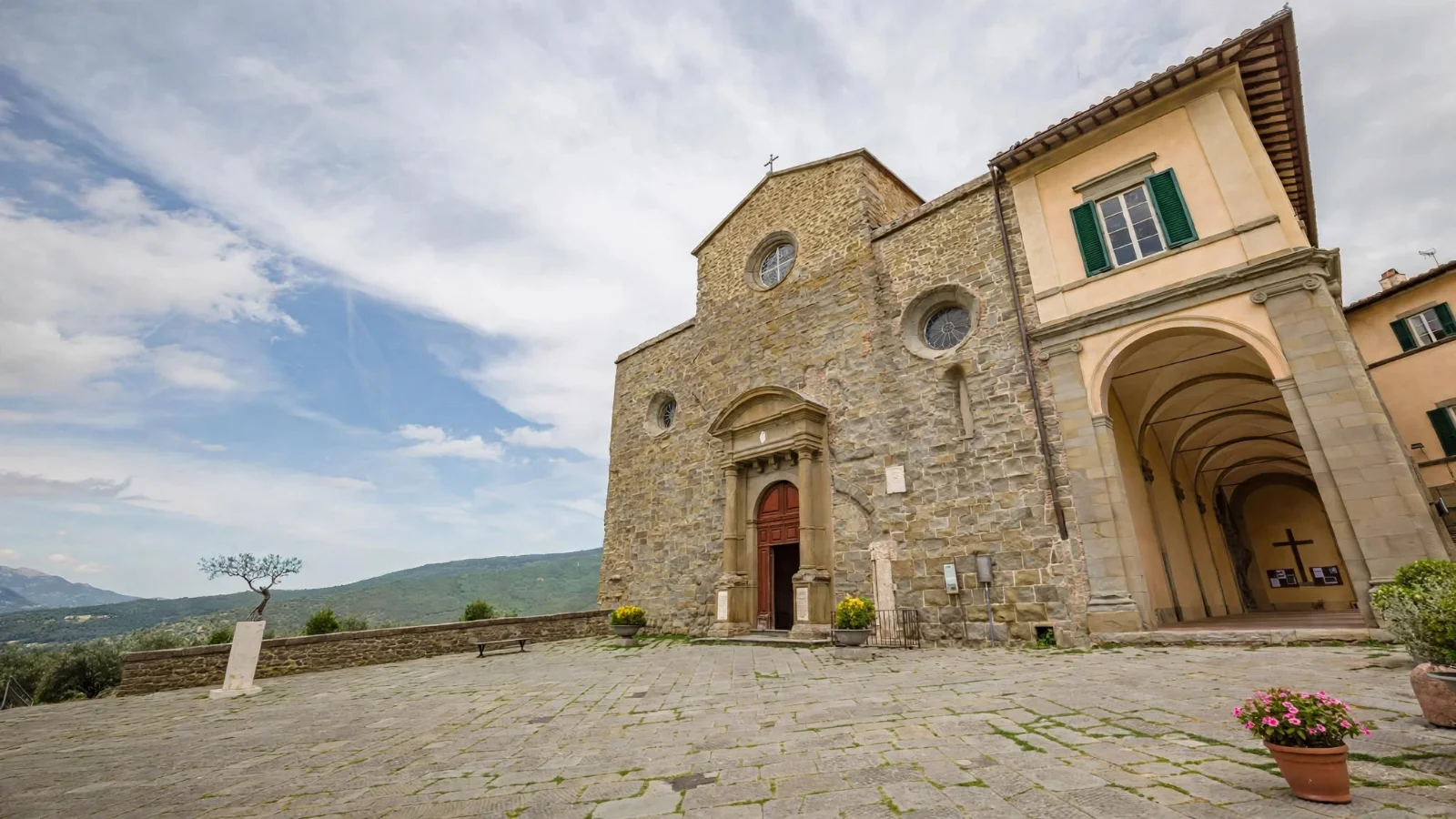
The Claim: Tourism pages list the Cathedral as a standard visit and do not describe wheelchair access.
The Reality: In a September 2024 Tripadvisor review, Fede M reports several steps at the main entrance and says wheelchair users could try the side entrance, which has only one step, perhaps with help. The same review mentions several disabled parking spaces in the square, and MAEC's page counts two accessible spaces in Piazza del Duomo.
This is a single visitor report, not an audit, and no step height was given. The official visitor information page lists the Cathedral's opening hours but does not describe wheelchair access, so ask staff how to enter before you go.
Our verdict:
🟠 Independent step-free entry is not established. A companion or staff help is likely to be needed at the side entrance, and you should confirm that route in advance.
4. Is the Diocesan Museum Wheelchair Accessible?
Short answer: Only on the ground floor. The museum, a ticket reseller and a 2024 press review all point the same way: ground floor yes, no lift, lower oratory out of reach.
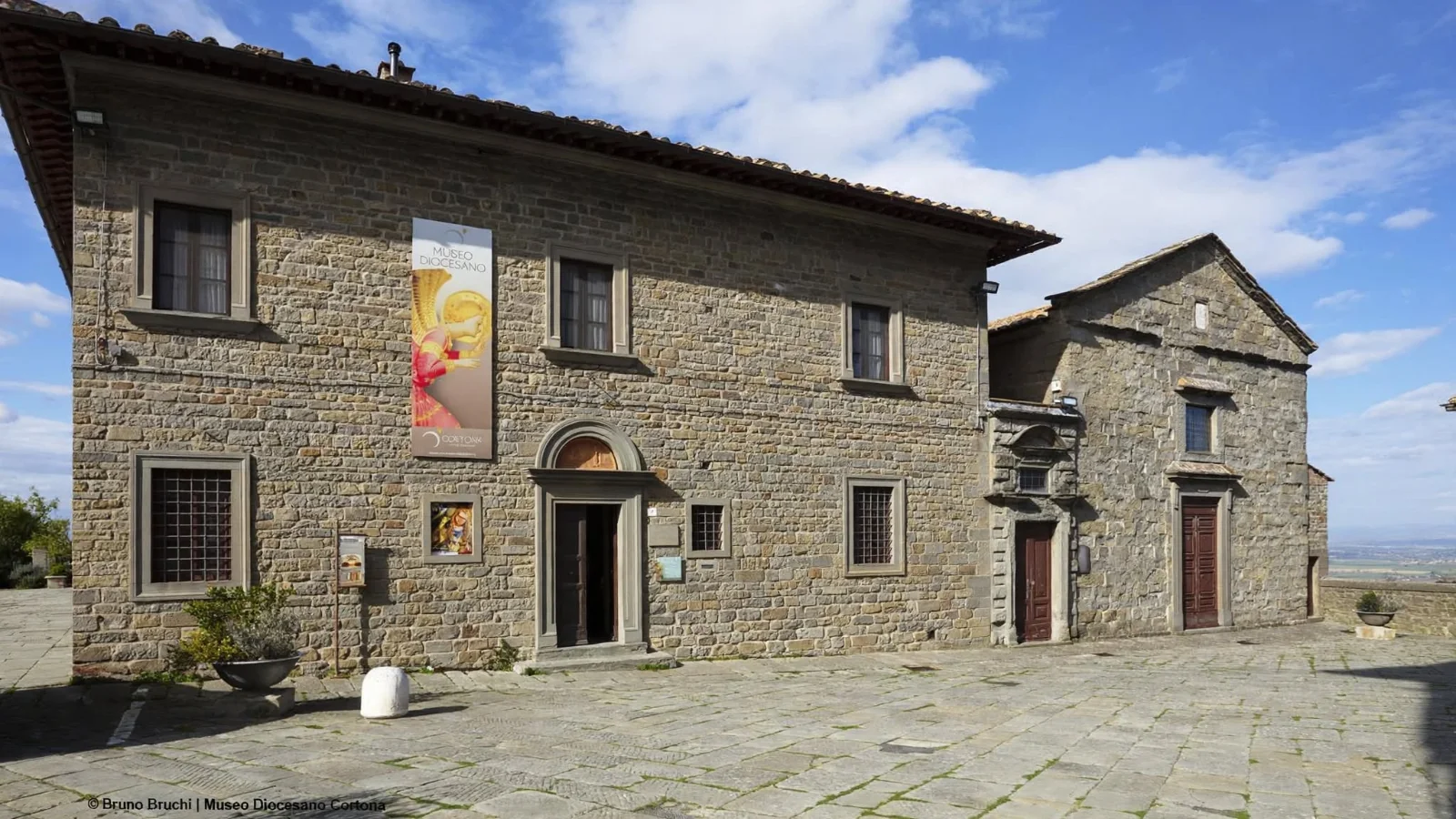
The Claim: Musement tells ticket buyers that only the ground floor is accessible for pushchairs and wheelchairs.
The Reality: The official information page says access for visitors with disabilities is limited to the ground floor, and that a disabled visitor and one companion enter free. Il Giornale dell'Arte, reviewing a July 2024 visit, reports that there is no lift and that the lower oratory is excluded for visitors who cannot use stairs.
The famous Annunciation by Fra Angelico is displayed in Room III, according to the Italian Wikipedia entry, which also describes the oratory as reached by going down a staircase. The Giornale dell'Arte review places that room on the ground-floor level. We found no published measurement of the entrance threshold, so confirm that the room is reachable before you buy a ticket.
For winter, the official page lists Friday to Sunday opening from 10:00 to 17:00 between 2 November 2026 and 28 March 2027. Check it before you plan a weekday visit.
Our verdict:
🟡 The headline altarpiece appears to be on the step-free level, but the lower oratory is out of reach and the entrance has not been measured. Confirm both with the museum.
5. Is the Basilica of Santa Margherita Wheelchair Accessible?
Short answer: Possibly, and it is easier by car than on foot. A visitor reports ramps and an adjacent accessible restroom, and other visitors mention ample parking in front, but no measurements were found.
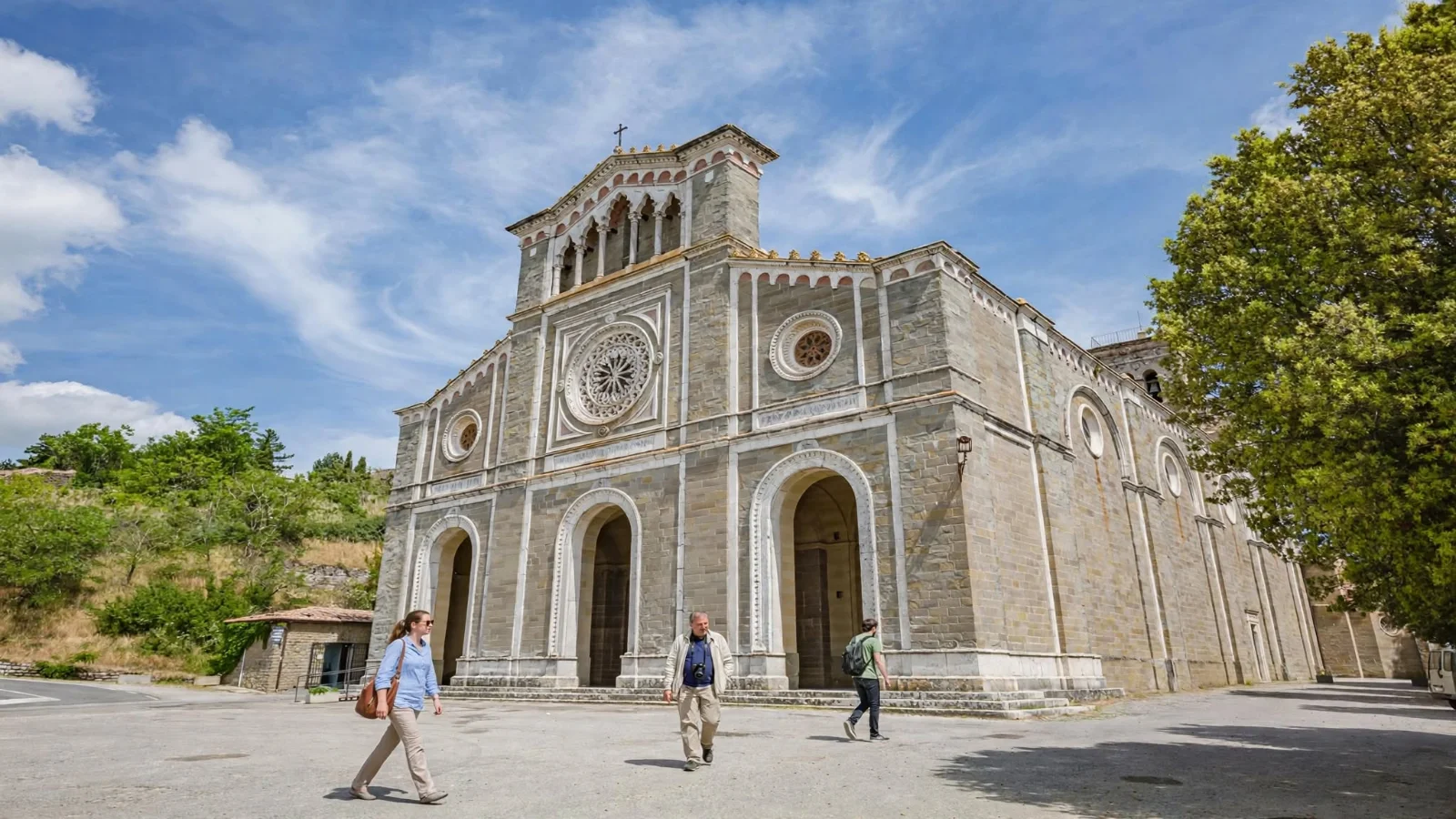
The Claim: Tourism pages present the hilltop sanctuary as a major pilgrimage stop; none we found describes wheelchair access.
The Reality: In a September 2024 Tripadvisor review, Fede M says the church is wheelchair accessible thanks to a pair of ramps and notes an adjacent disabled restroom. Other reviewers on the same page mention ample parking in front of the basilica. This is a visitor report without ramp measurements, so treat it as a lead to confirm, not as an audit.
The surrounding streets are the obstacle: the climb from the center to the sanctuary is steep, which is why driving up is the realistic option for most wheelchair users.
Our verdict:
🟡 A promising car-accessible stop, subject to confirming the reported ramps and restroom with the sanctuary. Avoid the steep walk up from the town.
6. Is the Fortezza del Girifalco Wheelchair Accessible?
Short answer: Only with assistance. The documented route is advance booking with volunteer help, and independent step-free access is not established.
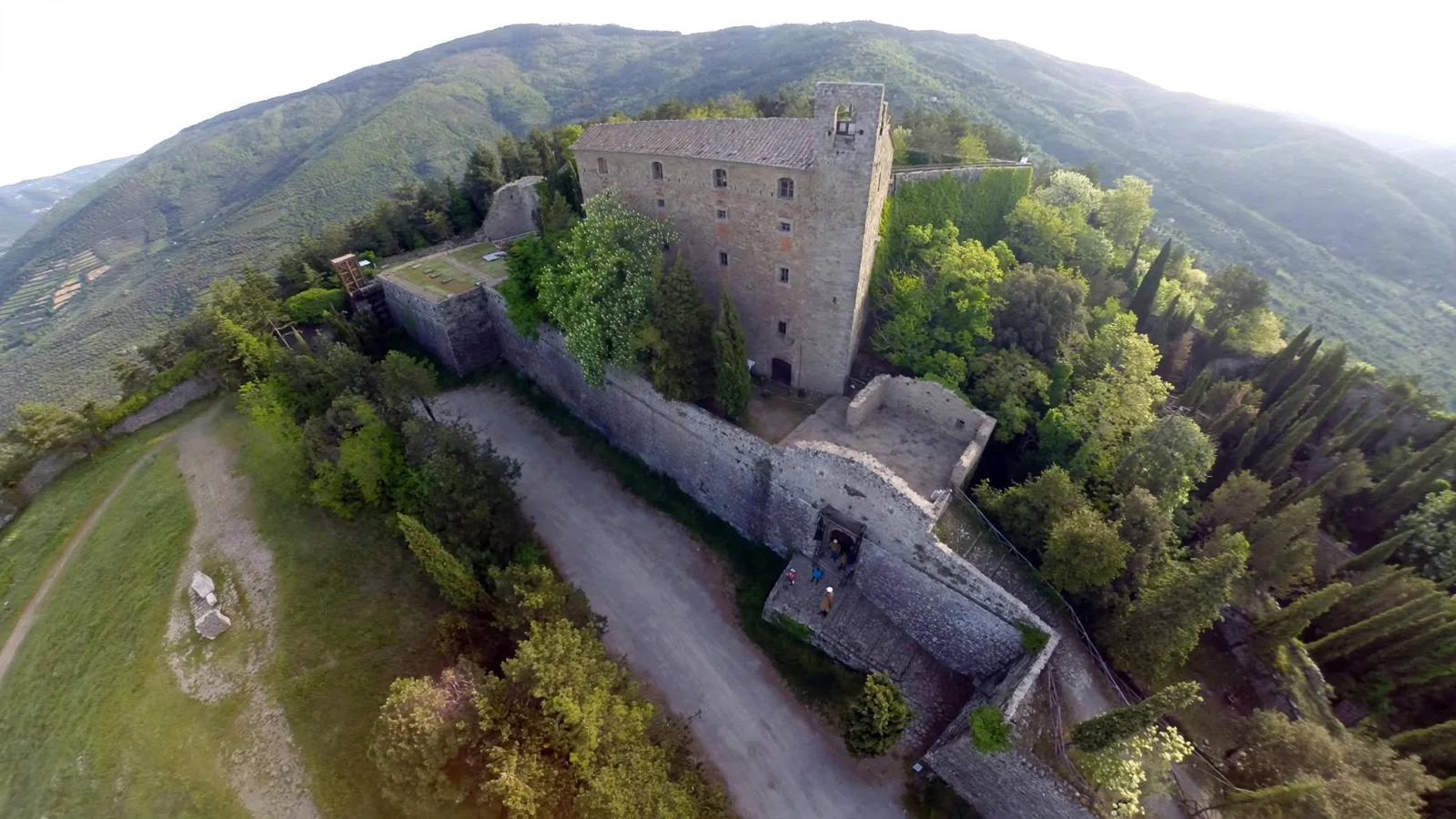
The Claim: The fortress is presented as a hilltop venue for exhibitions and events.
The Reality: Cortona On The Move, which used the fortress as a festival venue until 1 November 2026, says its exhibitions can be visited by people with disabilities with at least two days' advance booking, with accompaniment and assistance arranged with the local Red Cross. That describes festival arrangements, not a permanent audit.
The Italian Ministry of Culture's Art Bonus project page lists the spaces open to the public: the entrance area (the former guardhouse), the Palazzo del Capitano, the Santa Maria Nuova bastion, the outer courtyard and the San Giusto bastion. It records an external lift installed at the Santa Maria Nuova bastion in 2010 and improvements to the accessibility of the central keep, and it lists restoration of the main entrance as work in progress. The fortress's own works page describes the stepped approach to the entrance as badly uneven, though that page is undated.
The Art Bonus page also says the fortress is open from the third weekend of April to the first weekend of October, and on weekends between November and March, with daily opening from 23 December to 6 January. Confirm the current calendar before you go.
Our verdict:
🟠 Contact the fortress before going and ask which works are finished, which spaces are open and whether assistance can be arranged. Do not assume a step-free entrance or a working lift.
7. Is Eremo Le Celle Wheelchair Accessible?
Short answer: No. The municipality's own page lists the Franciscan hermitage as not suitable for wheelchair users.
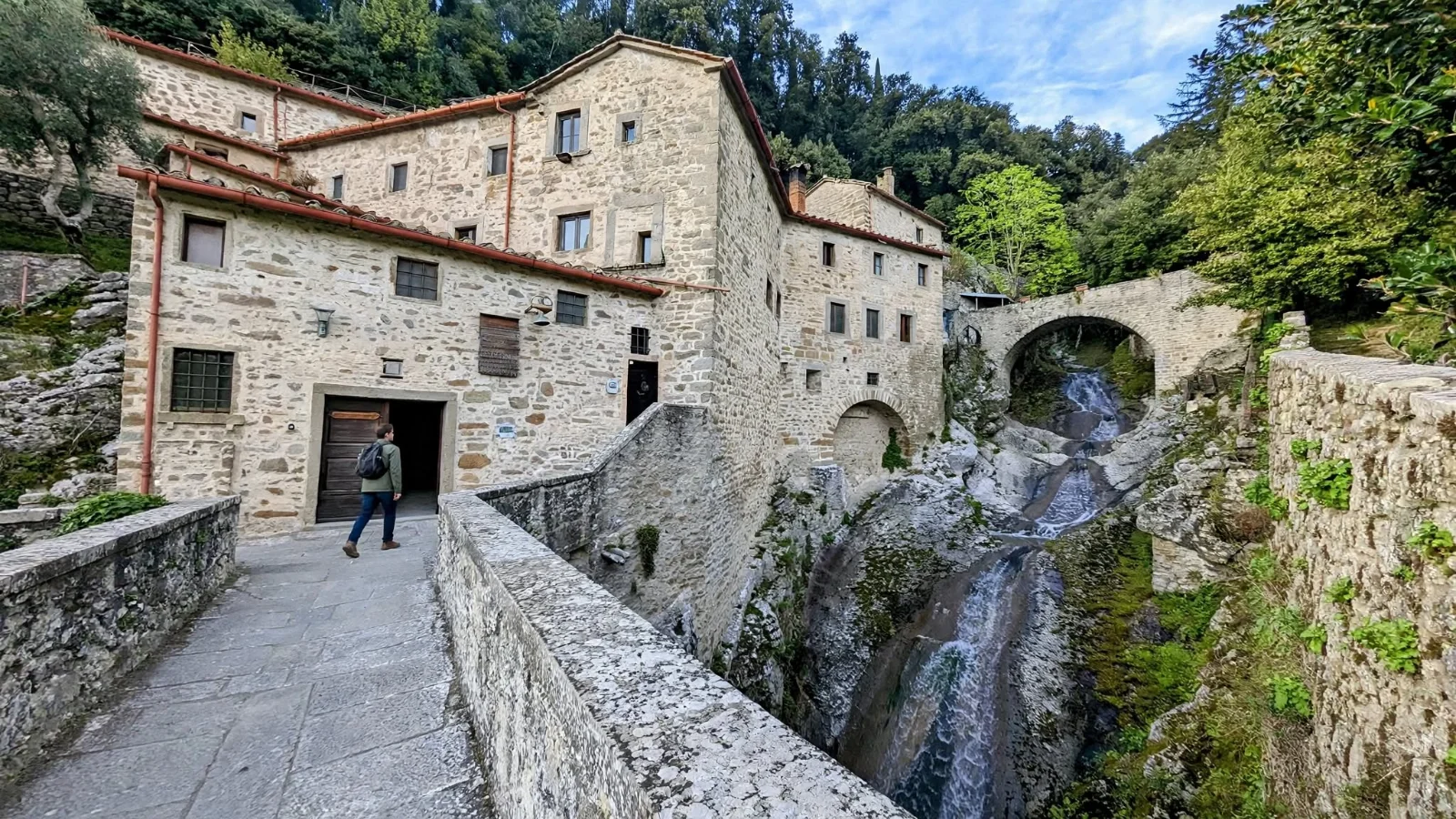
The Claim: The Comune di Cortona page describes the hermitage as one of the first Franciscan settlements and a place of spiritual retreat in a remarkable natural setting, and visitors are welcomed.
The Reality: The same page, last updated in September 2024, states in its access section that the site is not suitable for wheelchair users. It also lists free parking and recommends everyday or light sports footwear, which suggests uneven ground.
Our verdict:
🔴 Skip Le Celle if you use a wheelchair. A drive to the valley may still give a view of the setting, but the hermitage itself is not wheelchair accessible according to the municipality.
Getting Around Cortona in a Wheelchair
Cortona's biggest accessibility challenge is not one museum entrance; it is the hillside between the lower parking and the upper town. Michelin calls the one level street a rarity in the city, and the climbs between sights are real.
ZTL: check the restricted-traffic zone before you drive up
Cortona's historic center is a restricted-traffic zone monitored by cameras. The municipality's official zone regulation divides it into a red and a yellow zone and lists the streets in each; Via Nazionale and the main squares are inside the restricted area.
- Hours in that regulation: the red zone is restricted from 10:00 to 20:00 in winter (1 October to 30 April) and from 10:00 to 04:00 in summer. The yellow zone has shorter restricted windows. This is a 2019 consolidated text, so confirm the current hours.
- Disabled-badge vehicles: the regulation allows vehicles serving badge holders to register their plate within 48 hours after passing the gate. Cortona On The Move's 2025 visitor page instead says to show the card and communicate the plate to the local police 36 hours before arrival. The two sources differ, so the safe approach is to contact the police before you drive in.
- Who to ask: Cortona On The Move lists the municipal police on +39 0575 637225 and polizia@comune.cortona.ar.it, open Monday to Saturday 08:00 to 20:00 and on Sunday 08:30 to 13:30 and 15:00 to 20:00.
Parking
- Spirito Santo (lower town): the lot where the escalators start. A 2019 listing records no reserved disabled bays there, and the lot is paid. Confirm bays on site.
- Piazzale del Mercato: described by Cortona On The Move as free parking and by the 2019 listing as about 190 spaces next to Porta Sant'Agostino, with no reserved disabled bays recorded.
- Centro storico bays: MAEC's page lists two accessible spaces in Piazza Signorelli, one in Piazza Franciolini and two in Piazza del Duomo. Piazza Signorelli is inside the restricted zone, so register the vehicle first.
- Santa Margherita: visitors report ample parking in front of the basilica, which is the practical choice for that sight.
Buses, shuttle and trains
Cortona's railway connection is at the stations in the valley, not in the town. Cortona On The Move says a taxi or bus takes about 10 minutes from Camucia-Cortona station to Piazza Garibaldi and about 30 minutes from Terontola-Cortona. La Nazione reported in June 2026 that the Tiemme shuttle between Camucia and Piazza Garibaldi gained two extra evening runs. We could not verify whether every shuttle vehicle has a wheelchair ramp.
For regional buses, Autolinee Toscane's booking page asks wheelchair users to request a ramp-equipped bus at least 48 hours before travel. It lists limits on wheelchair size and weight, and says drivers do not provide boarding assistance. Confirm both stops before you set out.
Accessible restrooms to plan around
- MAEC: an accessible restroom is recorded on level -2, with an 85 cm door.
- Basilica of Santa Margherita: a visitor reports an adjacent accessible restroom; no measurements were found.
- Diocesan Museum: a 2024 review describes a single shared restroom, so ask about it before you rely on it.
These are reports from different dates, not a guarantee that facilities remain open or unchanged.
What We Could Not Verify
We did not assign accessibility verdicts to the Church of Santa Maria delle Grazie al Calcinaio, the Etruscan tombs at Sodo, the Tanella di Pitagora, the Church of San Francesco, the Teatro Signorelli or the Palazzo Comunale interior. The sources we found did not provide dependable wheelchair information for them, so their access should not be assumed either way.
A Realistic One-Day Wheelchair Route in Cortona
This route assumes a car and treats uncertain stops as optional. Check opening days first: in winter the Diocesan Museum is open Friday to Sunday, and MAEC's winter closing day should be confirmed.
- Before you travel: contact the municipal police about the zone and plate registration, ask MAEC to prepare the lift and confirm the status of the escalators if you plan to use them.
- Santa Margherita: drive to the forecourt first. Ask staff to confirm the ramps and the accessible restroom, and visit while you have the most energy.
- Piazza del Duomo: use one of the two accessible spaces. Check the Cathedral's side entrance with staff before committing, and add the Diocesan Museum on a Friday to Sunday.
- MAEC: park in Piazza Signorelli with the plate registered. Confirm the entrance arrangement and which galleries the lifts reach.
- Via Nazionale: end the day on the level street, with its cafes and shops, away from the steep side streets.
- Optional: Girifalco only if the fortress confirms assisted access. Skip Le Celle.
Check each step with the venue first, because ramps, lifts and opening arrangements can change.
Which Cortona Sights Suit Your Wheelchair Type?
| Chair type | Best-fit sights | Plan carefully |
|---|---|---|
| Power or power-assist chair | Via Nazionale, MAEC, Santa Margherita | Confirm the MAEC entrance steps and lift size, and ask the municipality about the pedestrian route's slope. |
| Manual chair with a companion | MAEC, Santa Margherita by car, Via Nazionale | Plan help on the Town Hall staircase side and any steep street, and drive to the upper sights rather than walking. |
| Manual chair, traveling solo | Via Nazionale only | Keep to one or two close stops and confirm each entrance. Steep climbs and stepped doorways may be beyond independent use. |
| Wide or large powered chair | Confirm each sight before booking | MAEC did not publish lift or entrance dimensions, so ask for measurements before you travel. |
Cortona vs Other Hill Towns
Cortona sits on the Tuscany and Umbria border, so it is natural to compare it with the towns on either side. Our Montepulciano review covers its Tuscan neighbor, and our Assisi guide and Perugia guide cover the Umbrian ones.
Per our other guides, San Gimignano records no elevator at the Town Hall museums or Santa Chiara museums, while Volterra documents lifts at the Guarnacci Museum and the Pinacoteca complex but ramps of 8.5% to 15%. For a flatter center, see our Lucca guide. Our Siena breakdown and Orvieto guide cover two more hill cities.
Cortona's particular twist is that its best-known transport aid, the escalators, helps visitors who can stand but not those who use a wheelchair. Compare the measurements in each guide rather than the verdict labels alone, since the sources differ.
So, Is Cortona Wheelchair Accessible? Our Verdict
Cortona is partly wheelchair accessible. MAEC has the strongest documented indoor access, Via Nazionale gives a genuinely level stretch, and the Basilica of Santa Margherita is a promising car-accessible stop. The Diocesan Museum is ground floor only, the Cathedral and Girifalco need confirmation and help, and Le Celle is listed as unsuitable.
The bigger obstacle is the hill. Realistically, a wheelchair visit depends on a vehicle, the zone permit and a short, planned list of stops. Our one-day route and chair-type table turn these findings into a plan.
Before You Go: Cortona Wheelchair Checklist
- Check the escalators: they were closed from 28 August 2026 for works, with reopening expected in early November and no reopening notice found by 6 November. Even when open, they are not a wheelchair route.
- Register your vehicle for the zone: contact the municipal police and confirm the current procedure, the deadline and the hours for the red and yellow zones.
- Confirm MAEC's lifts and entrance: ask how the entrance steps are handled and which galleries the lifts reach.
- Confirm the Cathedral's side entrance: ask staff about the single step reported there.
- Check Diocesan Museum days: the winter opening is Friday to Sunday, and access is ground floor only.
- Call Santa Margherita: confirm the ramps and the accessible restroom before you drive up.
- Contact Girifalco: ask about assisted access, completed works and winter opening before you go.
- Skip Le Celle: the municipality lists it as not suitable for wheelchair users.
- Arrange buses in advance: Autolinee Toscane asks wheelchair users to request a ramp-equipped bus at least 48 hours ahead.
- Ask about free admission: the Diocesan Museum lists free entry for a disabled visitor and one companion; confirm the documentation for other sights when booking.
Cortona Wheelchair Accessibility FAQ
Is Cortona wheelchair accessible overall?
Cortona is partly wheelchair accessible, not step-free. MAEC has documented lifts and Via Nazionale is level, but the town sits on a steep hillside, the escalators do not carry wheelchairs and several sights have steps. Plan your route and vehicle access before you plan the sights.
Can wheelchair users use the Cortona escalators?
Do not plan on it. Standard escalators are not designed to carry wheelchairs, and we found no lift or platform beside them in the municipal notices, press coverage or visitor guides reviewed. They have also been closed for works since 28 August 2026, with reopening expected in early November, so confirm the current status.
Is Cortona flat or hilly for wheelchair users?
Hilly. Michelin calls Via Nazionale completely flat but a rarity in the city, and says the small streets along it are very steep stairways. A vehicle, a power chair or a companion makes a large difference.
Is the MAEC museum wheelchair accessible?
Mostly, with a plan. A February 2024 audit records lifts, steps at the entrance and an accessible restroom on level -2 with an 85 cm door. The museum lists room 15 and rooms 24 and 25 as stairs-only, so ask which rooms you can reach and how the entrance is handled.
Can wheelchair users visit the Diocesan Museum and Fra Angelico's Annunciation?
Probably, on the ground floor. The museum's official page limits disabled access to the ground floor, and the Annunciation is displayed in Room III, which a 2024 review places on that level. There is no lift, so the lower oratory is out of reach. Confirm the entrance and room with the museum.
Is Cortona Cathedral wheelchair accessible?
A visitor reports several steps at the main entrance and one step at a side entrance, but we found no official statement or measurement. Treat independent step-free entry as unconfirmed and ask staff about the side entrance before you go.
Is Eremo Le Celle wheelchair accessible?
No. The Comune di Cortona lists the hermitage as not suitable for wheelchair users.
Can disabled badge holders drive into Cortona's ZTL?
Often yes, but do not assume the badge alone is enough. The municipality's regulation lets badge-holder vehicles register their plate within 48 hours after passing the gate, while a 2025 visitor page says to notify the police 36 hours before arrival. The sources differ, so contact the municipal police before you drive in.
Where should wheelchair users park in Cortona?
MAEC lists accessible spaces in Piazza Signorelli (two), Piazza Franciolini (one) and Piazza del Duomo (two). Visitors report ample parking in front of the Basilica of Santa Margherita. A 2019 listing records no reserved disabled bays in the public lots, including the Spirito Santo lot at the escalators.
Can you visit Cortona in a day in a wheelchair?
Yes, with a focused plan and a vehicle. Start at Santa Margherita, add MAEC and the Piazza del Duomo sights if their entrances are confirmed, and finish on Via Nazionale. Treat Girifalco as conditional and skip Le Celle.
Explore More Wheelchair-Accessible Tuscany and Umbria Guides
For the wider picture beyond Cortona, use our Europe Wheelchair Accessible Travel Guide, or read the nearby hill-town guides:
Discussion
No comments yet. Be the first to share your thoughts.
Leave a comment