

Author: Jaziba Luqman
Last updated: October 2026
Jaziba Luqman writes TheDailyFront's wheelchair-accessibility travel series, cross-checking tourism claims against official accessibility databases, operator listings, and traveler accounts.
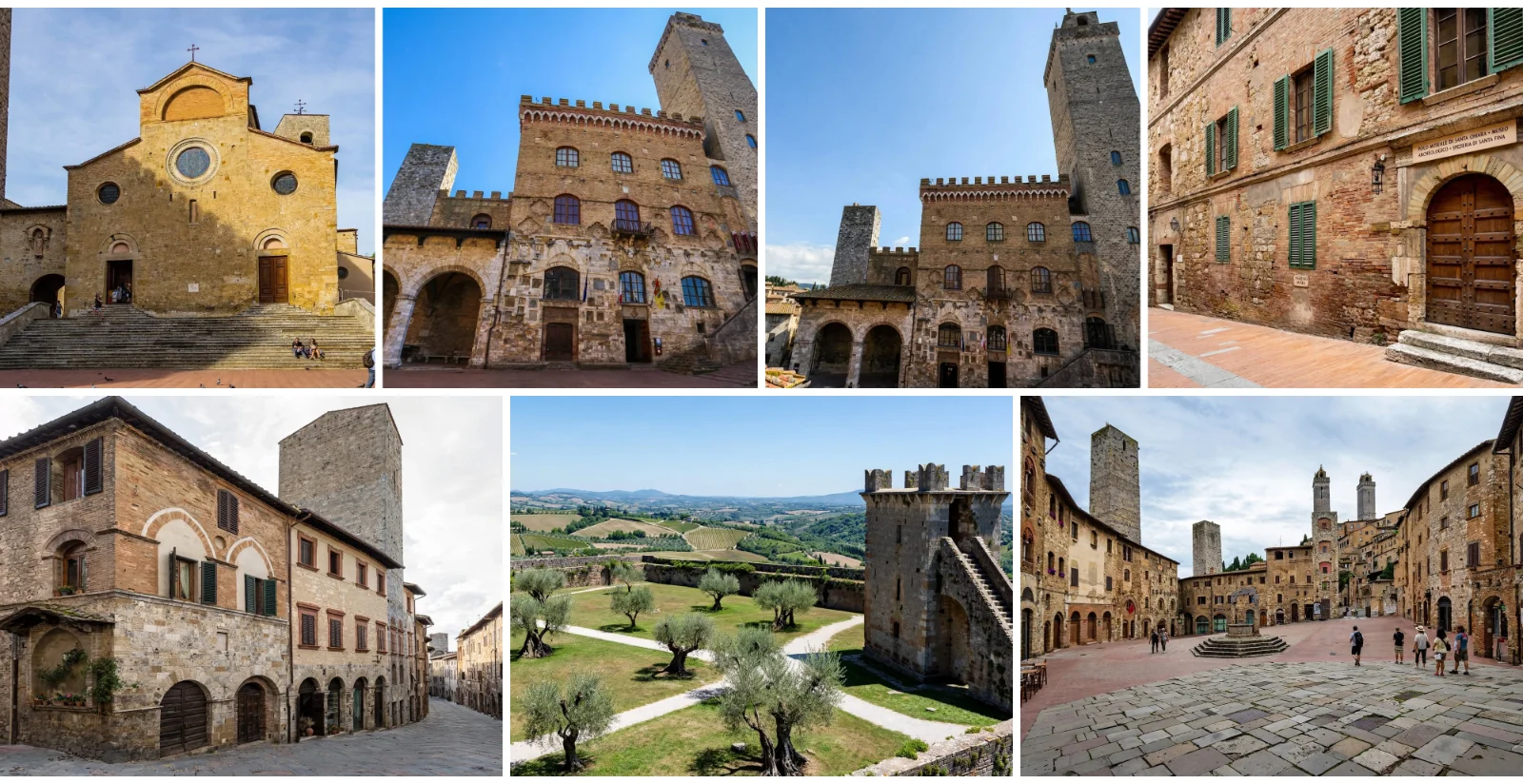
Is San Gimignano wheelchair accessible? Partly. The outdoor core linking Porta San Giovanni, Piazza della Cisterna, and Piazza del Duomo is documented by an accessible-tour operator as a step-free but uphill route. Building interiors present the main barriers: official regional audits record entrance steps and no elevators at both the Town Hall museum complex and the Santa Chiara museums, the Duomo stands above a stepped churchyard, and Torre Grossa requires a 218-step climb.
Quick answer: Plan San Gimignano as an open-air medieval town to admire from its squares and enter selectively, rather than expecting full indoor access. Compared with neighboring hill towns covered in our Siena wheelchair accessibility guide and our guide to visiting Montepulciano in a wheelchair, San Gimignano has far fewer verified step-free interiors. Roll along the core street route from Porta San Giovanni to Piazza della Cisterna and Piazza del Duomo, admire Torre Grossa and Palazzo Comunale from the outside, and confirm entrance ramp assistance in advance before buying tickets for the Duomo, Santa Chiara Museums, Torre and Casa Campatelli, or Rocca di Montestaffoli.
Key facts:
- Torre Grossa: 54 metres tall, 218 steps, no elevator.
- Town Hall (Palazzo Comunale): steps at the entrance; upper floors have no lift or disability ramp.
- Duomo: six steps at the main entrance; a secondary left-side entrance has three steps and an internal ramp.
- Streets: Via San Matteo climbs from both city gates, and Piazza della Cisterna has a natural slope.
- Parking: reserved disabled bays at P1 Giubileo (5 spaces), P2 Montemaggio (4 spaces), and P3 Bagnaia Superiore (9 spaces).
- Driving in: the historic centre operates a strict restricted-traffic zone (ZTL) monitored by six camera gates.
In this guide: At a Glance · Duomo of San Gimignano · Town Hall & Pinacoteca · Torre Grossa · Santa Chiara Museums · Torre & Casa Campatelli · Rocca di Montestaffoli · Streets, Slopes & Surfaces · Parking & Getting Around · Half-Day Itinerary · Verdict · Before You Go · FAQ
At a Glance: Is San Gimignano Wheelchair Accessible? Verdicts by Sight
How to read our verdicts:
🟢 Accessible according to the cited evidence.
🟡 Accessible with limitations or assistance.
🟠 Significant limitations: reachable only in part, or only with substantial help.
🔴 Not wheelchair accessible for the described area.
⚪ Unconfirmed: published evidence is insufficient to guarantee step-free access.
| Attraction | Marketed As / Official Record | Wheelchair Accessible? Our Verdict |
|---|---|---|
| Duomo of San Gimignano | Regional guide: 6 main steps; side entrance has 3 steps + internal ramp | 🟠 Significant limitations; stepped churchyard approach and 3 steps before the side ramp |
| Town Hall & Pinacoteca | Visit Tuscany audit: entrance steps, priority queue, no upper-floor lift | 🔴 Major barriers to the museum route; upper gallery floors lack an elevator or ramp |
| Torre Grossa | Civic museums listing: 54-metre medieval tower climb | 🔴 Not accessible for the climb (218 steps, no lift); view exterior from Piazza del Duomo |
| Santa Chiara Museum Complex | Visit Tuscany audit: entrance steps, multi-floor galleries, no elevator | 🟠 Significant limitations; entrance steps and no lift between ground, first, and second floors |
| Torre & Casa Campatelli | FAI property page: free disabled admission, explicit mobility warning | 🟠 Significant limitations; FAI flags architectural barriers for wheelchair users |
| Rocca di Montestaffoli | Comune di San Gimignano: outdoor fortress and viewpoint; call ahead | ⚪ Unconfirmed; municipality advises contacting the venue regarding architectural barriers |
| Core Route (Gates to Main Squares) | Accessible tour operator: step-free route with uphill climb | 🟡 Accessible with limitations; continuous uphill slope and sections of uneven brick paving |
Booking platforms frequently blur the distinction between outdoor street routes and historic interiors. A private tour of San Gimignano often carries a wheelchair-accessible badge because the accessible van and main squares work on wheels, while the Town Hall, towers, and multi-level museums along the route remain blocked by steps. Free disabled admission or a priority queue never guarantees physical entry.
To see how other central Italian hill towns manage steep gradients, escalators, and historic palaces, compare our Orvieto wheelchair accessibility guide and our Assisi step-free travel breakdown.
Our methodology:
The claim: How municipal visitor pages, regional tourism portals, and commercial tour listings present San Gimignano's major sights, parking facilities, and walking routes.
The reality: We cross-checked the Town Hall and Torre Grossa official accessibility sheet (verified 12 February 2024) and the Santa Chiara museum accessibility audit against municipal ZTL and parking data, FAI monument warnings, and accessible-tour operator notes. Where an official audit shows a dash, it indicates unverified data rather than a confirmed absence. This is desk research, not an on-site physical inspection.
Documented step counts and barrier severity across San Gimignano:
Bars illustrate relative physical barrier severity based on published audits. Yellow indicates step-free outdoor climbs, unconfirmed paths, or partial access requiring assistance; red indicates severe step barriers and multi-story buildings without elevators.
1. Is the Duomo of San Gimignano Wheelchair Accessible?
Short answer: Access presents significant barriers. The Cathedral sits above a broad flight of stone stairs on Piazza del Duomo, and while a regional accessibility guide notes an internal ramp at the left-side secondary door, that side entrance is still preceded by three steps and a stepped churchyard approach.
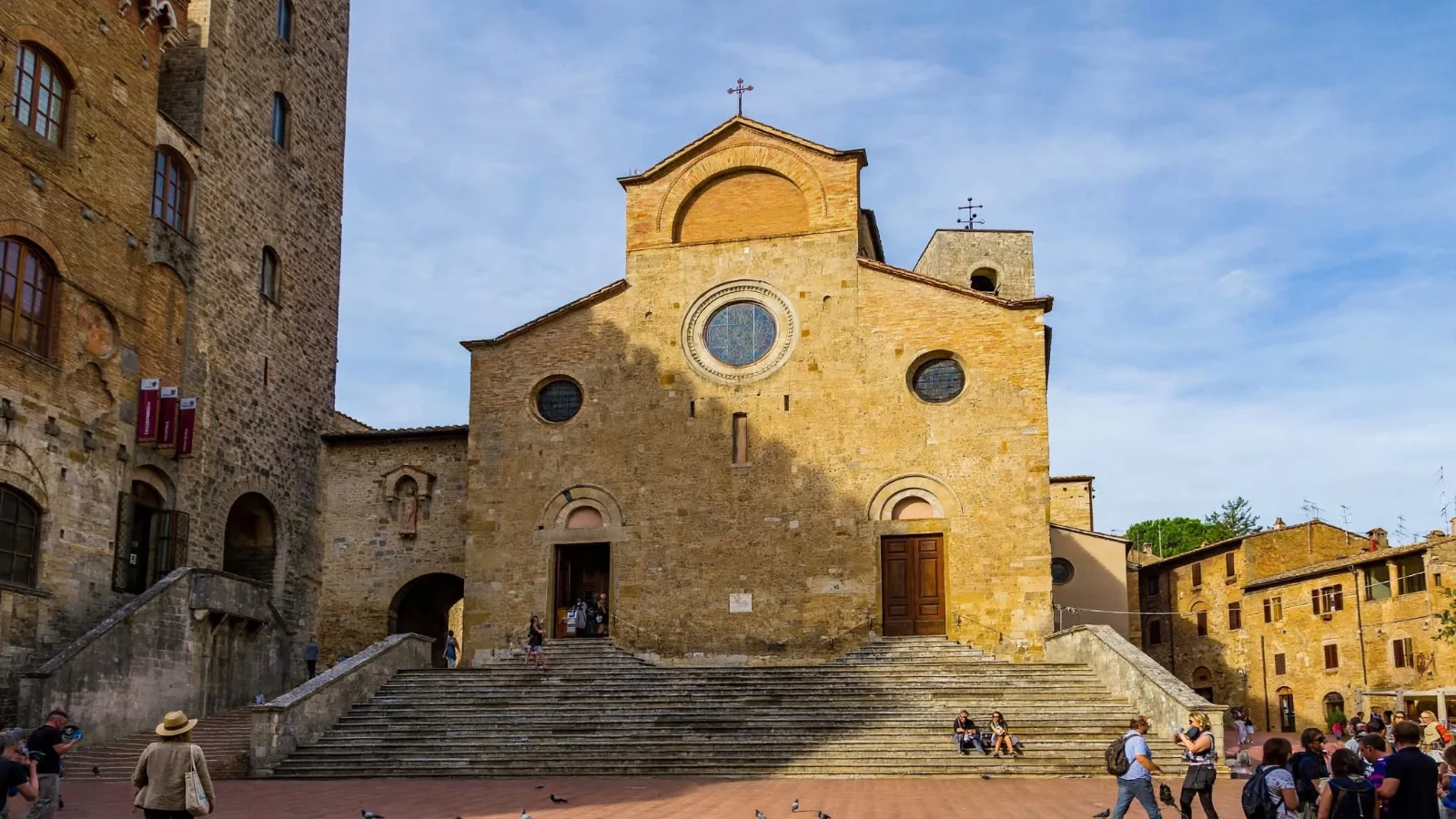
The Claim: Included in San Gimignano's combined museum and church pass, the Cathedral (Basilica di Santa Maria Assunta) and adjacent Museum of Sacred Art offer online booking and audio guides that make the complex appear ready for all visitors.
The Reality: General visitor amenities do not equate to step-free entry. Both Visit Tuscany's Cathedral profile and the Handy Superabile regional accessibility guide document multiple stair barriers between the public square and the nave.
Access details:
- Stepped churchyard approach: Reaching the upper parvis from Piazza del Duomo involves either the main stone staircase or a steep ramp broken up by small steps.
- Main vs. secondary entrance: The main front portal has six steps. The secondary entrance on the left side has three steps followed by an internal ramp fitted with a handrail.
- Museum of Sacred Art: Located beside the church, this museum spans two floors with no elevator confirmed on municipal visitor pages.
- What to verify before buying tickets: Contact the parish or ticket desk in advance to ask whether portable bridging ramps or staff assistance are currently provided over the three side-entrance steps.
Our verdict:
🟠 Significant limitations (steps at both entrances): Do not rely on the internal side ramp alone as proof of independent wheelchair access; verify step-free bridging arrangements before purchasing a Duomo pass.
2. Are the Town Hall and Pinacoteca Wheelchair Accessible?
Short answer: No for the upper-floor museum route. Official accessibility audits record steps at the main entrance and no elevator or disability ramp serving the upper floors where the Sala di Dante and Pinacoteca art galleries are located.
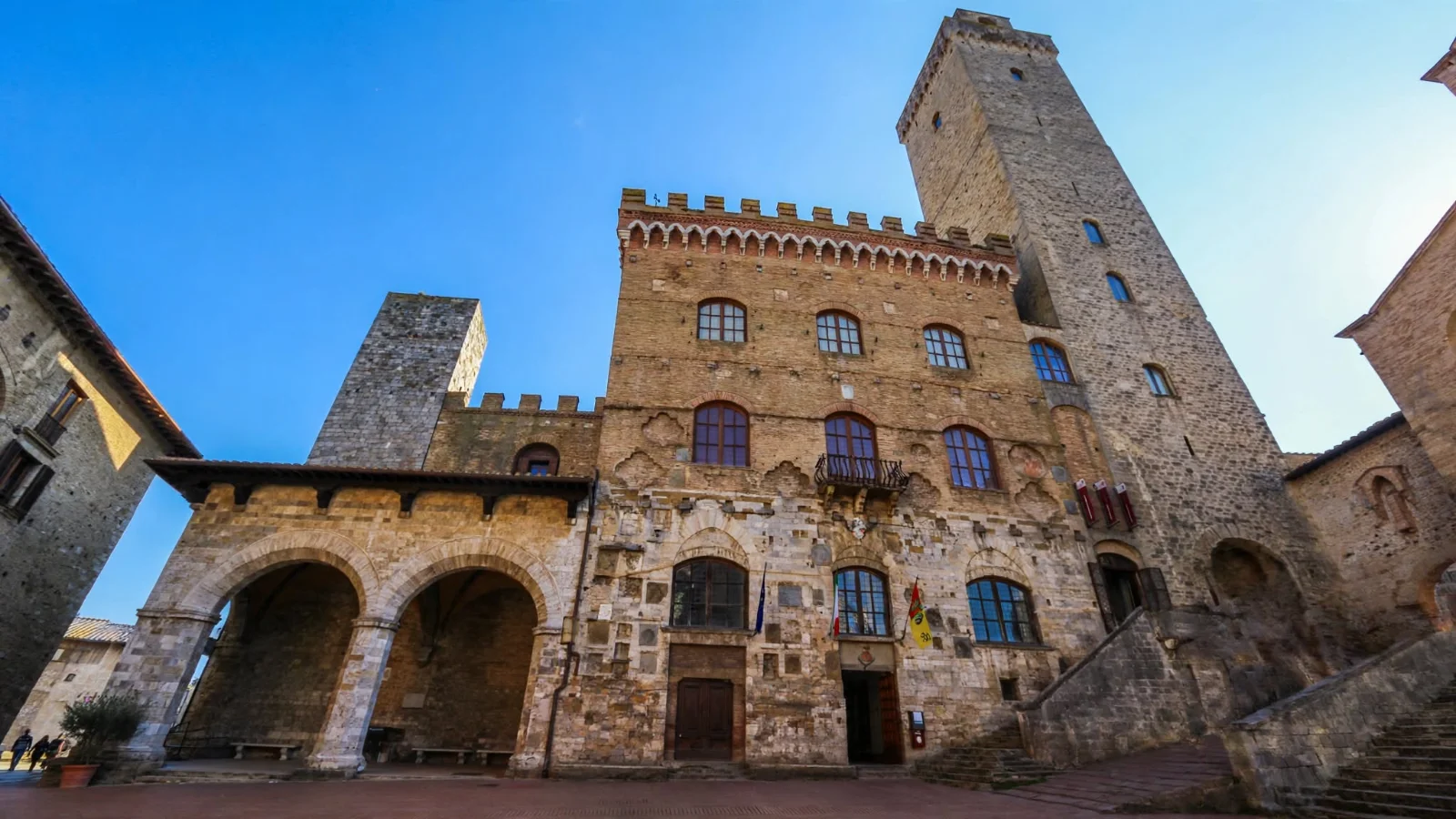
The Claim: Known as Palazzo Comunale or Palazzo del Popolo, the Town Hall is the centerpiece of San Gimignano's civic museum ticket, housing famous medieval frescoes in the Sala di Dante, the Camera del Podestà, and the Pinacoteca gallery.
The Reality: Both the official regional accessibility sheet and the municipality's Palazzo Comunale directory page confirm severe vertical barriers across the medieval palace.
Access details:
- Entrance steps and reception: The regional audit marks the approach from parking and the reception area as only partially accessible, documenting steps at the building entrance with no ramp listed.
- No elevator to upper galleries: No lift is recorded in the museum audit, and the Comune di San Gimignano states explicitly that the palace's upper floors have no elevator or disability ramp.
- Priority queue limitation: While the audit notes a priority queue for visitors with reduced mobility, skipping the ticket line does not bypass the entrance stairs or upper-floor steps.
- Restroom uncertainty: The official accessibility sheet leaves adapted toilet specifications unconfirmed.
Our verdict:
🔴 Major barriers to the museum route: Do not book civic museum tickets assuming you can reach the Pinacoteca or Sala di Dante on the upper levels; contact the museum first to ask if any ground-floor courtyard areas are viewable step-free.
3. Can Wheelchair Users Climb Torre Grossa?
Short answer: No. Rising 54 metres above Piazza del Duomo, San Gimignano's tallest medieval tower is climbed via 218 internal steps and has no elevator.
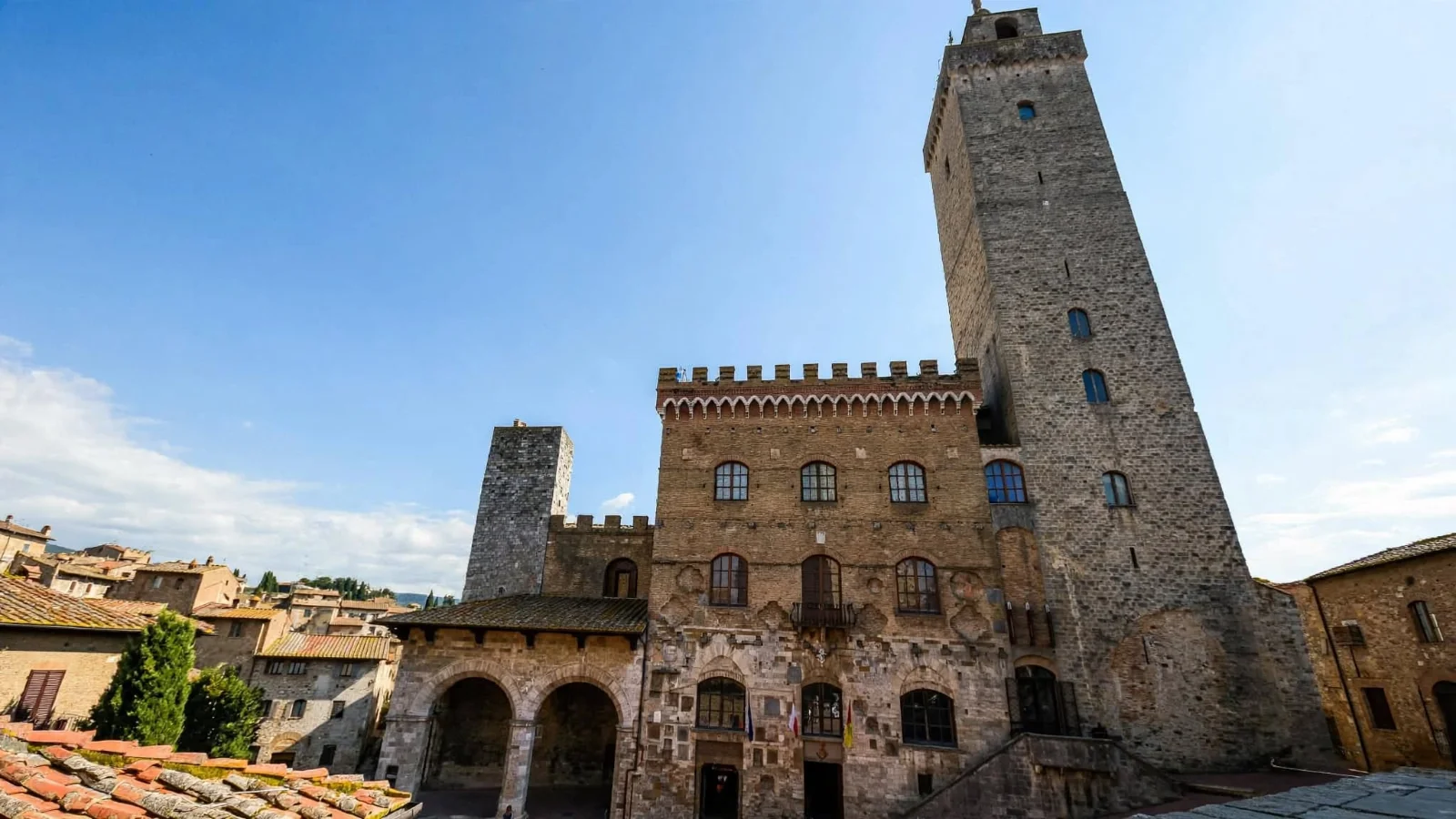
The Claim: Torre Grossa is the signature tower open to the public in San Gimignano and is bundled into the Palazzo Comunale and Pinacoteca civic museum complex at Piazza del Duomo 2.
The Reality: Visit Tuscany's official San Gimignano itinerary specifies that the 54-metre summit is reached by climbing 218 steps, and Discover Tuscany's civic museums guide confirms plainly that there is no lift.
Access details:
- 218 steps, no lift: Neither the tower nor the adjoining Palazzo Comunale entry complex has a passenger elevator.
- Stepped entry point: Access to the tower base runs through the Palazzo Comunale museum route, which already presents entrance steps.
- Best exterior vantage points: Wheelchair users can view the full height of Torre Grossa free of charge from the open paving of Piazza del Duomo and neighboring Piazza della Cisterna.
Our verdict:
🔴 Not wheelchair accessible for the climb: Skip the tower ticket and enjoy the exterior views from Piazza del Duomo instead.
4. Are the Santa Chiara Museums Wheelchair Accessible?
Short answer: Access has significant limitations. The official regional audit documents steps at the main entrance, a partially accessible approach, and no elevator connecting the building's three exhibition levels.
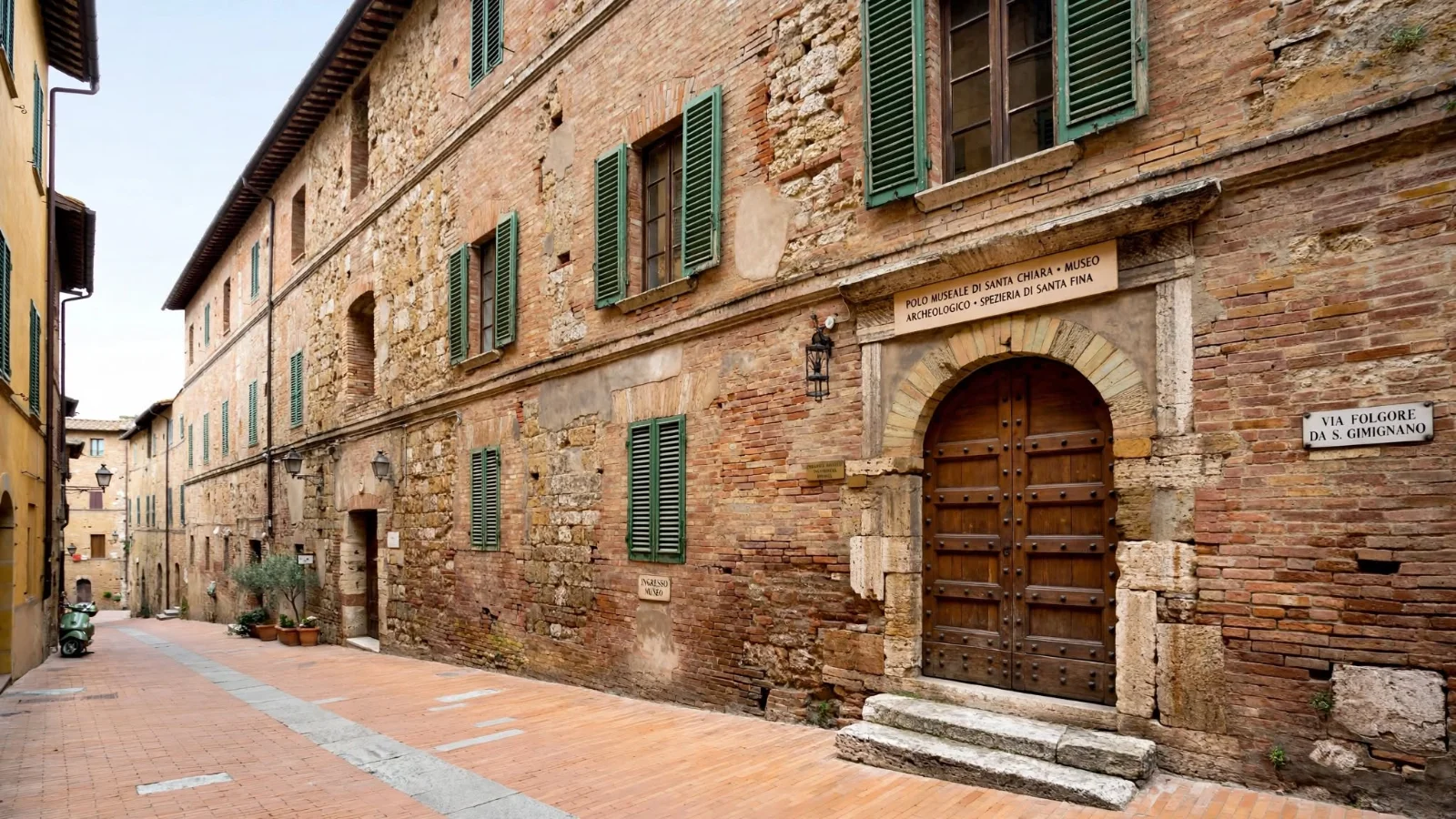
The Claim: The Santa Chiara complex (Complesso Museale di Santa Chiara) groups the Archaeological and Via Francigena Museum, the historic Spezieria di Santa Fina apothecary, and the Raffaele De Grada Gallery of Modern and Contemporary Art under one roof, making it look like an easy cultural stop away from the towers.
The Reality: The Visit Tuscany accessibility sheet for Santa Chiara records physical barriers at the front door and between the gallery floors.
Access details:
- Stepped entrance: The official audit lists steps at the entrance with no permanent entrance ramp confirmed, alongside a partially accessible reception zone.
- Multi-floor layout with no lift: No elevator is recorded in the structure. That creates a major barrier because the Archaeological and Via Francigena sections span the ground and first floors, the Spezieria of Santa Fina sits on the first floor, and the De Grada Gallery occupies the second floor.
- Confirm ground-floor access before visiting: Use the contact details on the official Visit Tuscany museum listing to ask whether a portable threshold ramp allows entry to the ground-floor rooms and whether an accessible restroom is open.
Our verdict:
🟠 Significant limitations (entrance steps and no elevator): Do not assume a combined museum ticket grants access to the upper-floor apothecary or art galleries; verify ground-floor entry with staff before arrival.
5. Is Torre and Casa Campatelli Wheelchair Accessible?
Short answer: Access is difficult and unconfirmed for full wheelchair visits. FAI (Fondo per l'Ambiente Italiano), which manages this 12th-century tower-house, explicitly warns of architectural barriers for visitors with reduced mobility or wheelchairs.
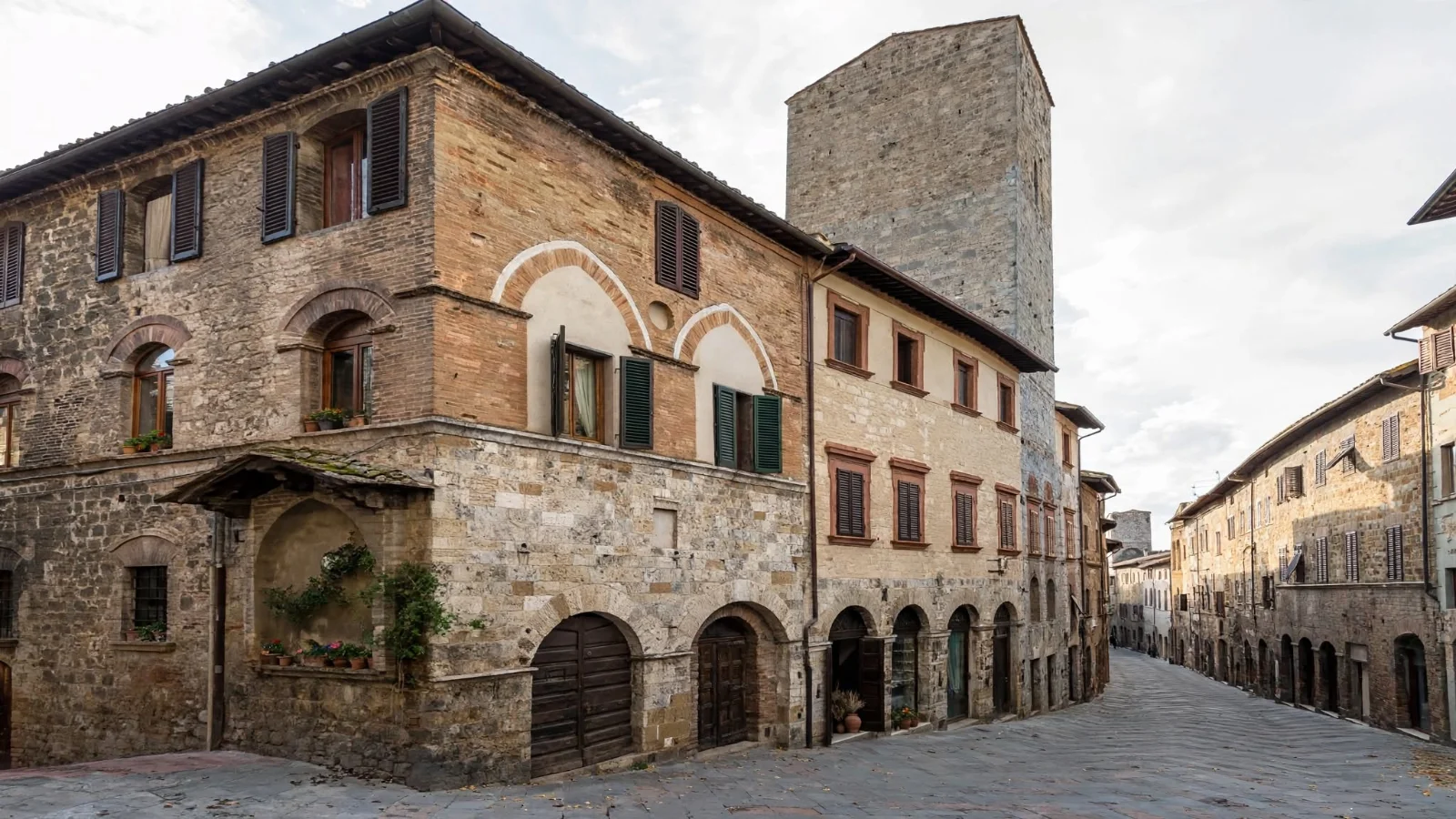
The Claim: Located along the main pedestrian street (Via San Giovanni), Torre and Casa Campatelli offers multimedia exhibits and preserved 19th-century bourgeois interiors inside a medieval tower-house, and provides free admission to visitors with disabilities and a companion.
The Reality: Free ticketing is a concession policy, not an accessibility guarantee. The official FAI property listing specifically cautions that the historic structure and multi-level layout create difficulties for visitors using wheelchairs.
Access details:
- Explicit FAI mobility warning: FAI flags access difficulties across the property for visitors with reduced mobility.
- Unconfirmed interior clearances: Published sources do not confirm a step-free doorway threshold, an internal lift to the upper living quarters where the multimedia screening takes place, doorway widths, or an adapted restroom.
- Questions to ask FAI before booking: Contact the property directly to ask whether any ground-level rooms can be entered without steps and whether compact manual chairs or power wheelchairs can clear the entrance.
Our verdict:
🟠 Significant limitations (explicit FAI barrier warning): Treat an interior tour as unsuitable unless FAI confirms in writing that specific rooms work for your wheelchair dimensions and mobility needs.
6. Is Rocca di Montestaffoli Wheelchair Accessible?
Short answer: Unconfirmed. While this 14th-century fortress ruin and public olive-grove park sits outdoors, the Comune di San Gimignano explicitly advises visitors to contact the venue in advance regarding architectural barriers.
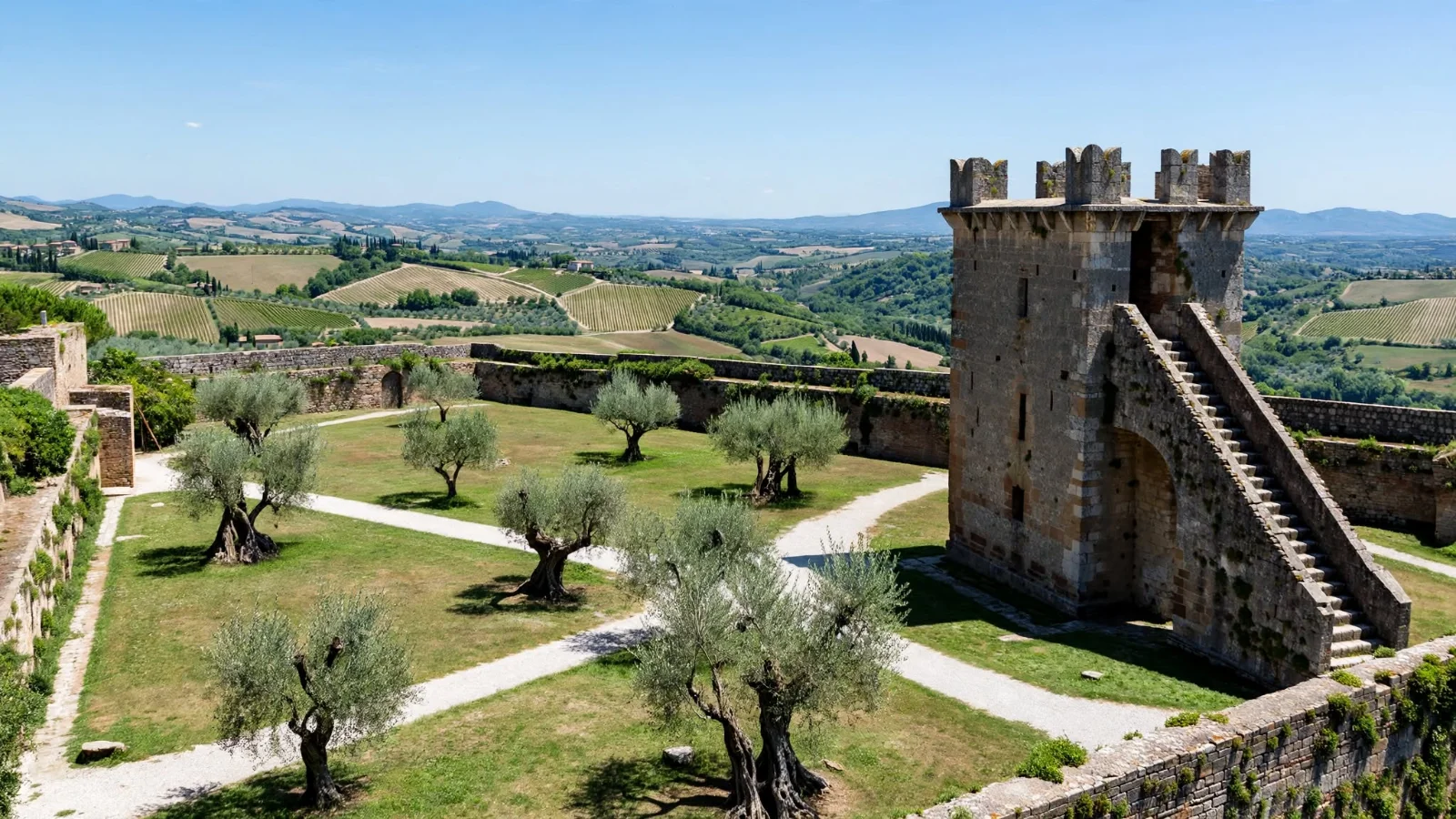
The Claim: Set just above Piazza del Duomo, Rocca di Montestaffoli is an open-air medieval fortress park known for cultural events and panoramic views over the Elsa Valley from its surviving square turret (Torretta).
The Reality: Outdoor parks in medieval hill towns frequently involve steep cobbled approaches, gravel paths, and stepped gateways. The municipality's official Rocca di Montestaffoli page does not certify step-free access, instructing visitors to call or email ahead about overcoming architectural barriers.
Access details:
- Viewpoint tower stairs: The surviving panoramic turret is reached via an exterior staircase and is not accessible to wheelchairs.
- Unverified park approach and surface: Published municipal records do not document the uphill gradient from Piazza del Duomo up Via della Rocca, gateway thresholds, or gravel path firmness inside the park walls.
- Direct venue contact: Call +39 0577 941267 or email larocca@vernaccia.it (Address: Via della Rocca 1) to check the nearest vehicle drop-off point and whether the park grounds are navigable without steps.
Our verdict:
⚪ Unconfirmed (contact venue before visiting): Never assume the climb up to the fortress walls or the interior park paths are barrier-free without direct confirmation from the site.
7. Streets, Slopes and Surfaces: Can You Explore the Historic Centre in a Wheelchair?
Short answer: Yes, with uphill effort. Accessible-tour operator Sage Traveling confirms that the main spine from Porta San Giovanni through Piazza della Cisterna to Piazza del Duomo is step-free, though visitors face a sustained uphill climb and sections of uneven brick paving.
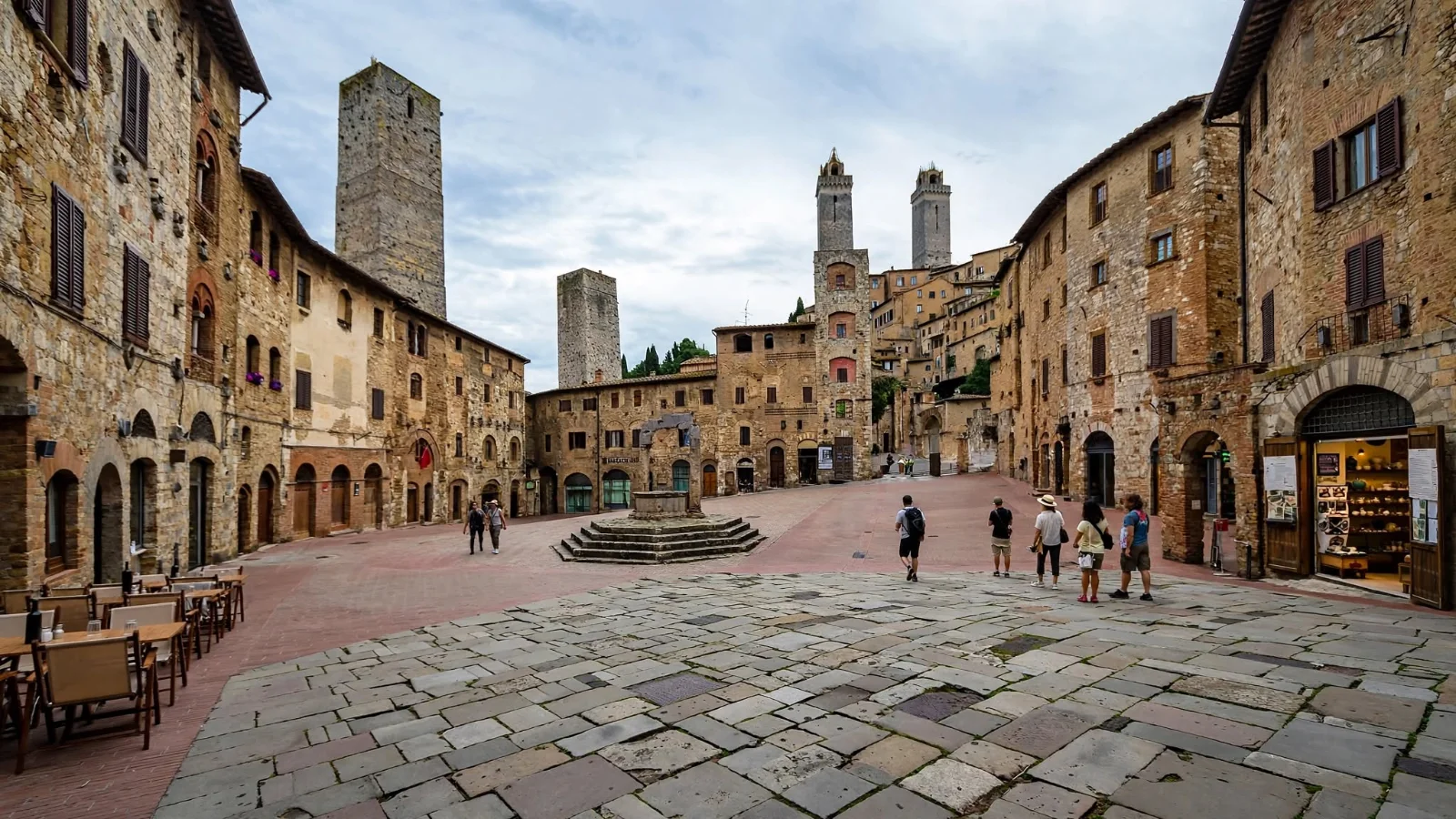
The Claim: San Gimignano's pedestrianized medieval streets and twin central squares are marketed as the quintessential Tuscan strolling experience.
The Reality: Specialist operator Sage Traveling confirms a step-free outdoor route across the town center while cautioning that the hillside gradients can challenge manual wheelchair users. In its accessible shore excursion documentation, the operator notes that Via San Matteo climbs from both gates, reaching Piazza della Cisterna always involves going uphill (described as manageable rather than extreme), and parts of the route cross uneven brick paving.
Street-by-street breakdown:
| Route Segment | Published Evidence | Practical Wheelchair Note |
|---|---|---|
| City Gates (Porta San Giovanni / Porta San Matteo) to Centre | Main streets climb steadily from both gates; no flat route to the main square exists. | Expect a sustained uphill push; manual wheelchair users benefit from a companion or power attachment. |
| Via San Giovanni to Piazza della Cisterna | Primary step-free tourist spine from the southern gate; exact slope percentage is unpublished. | Take regular rest breaks on the climb and watch for braking control on the return descent. |
| Piazza della Cisterna | Triangular brick-paved square with a slight natural tilt around the central well steps. | Easy to roll across, though the slight incline requires wheel locks when stopping. |
| Piazza della Cisterna to Piazza del Duomo | Connected via a short, wide open passage beside the loggia. | Step-free link giving full exterior views of the Duomo, Town Hall, and Torre Grossa. |
| Street Paving & Café Thresholds | Herringbone brick and stone flags; uneven bricks in sections; café steps undocumented. | Small front casters can catch on worn bricks; inspect restaurant doorways for single steps and accessible toilets before sitting down. |
For more hillside street comparisons across central Italy, see our Perugia wheelchair accessibility guide alongside our reports on Siena and Montepulciano.
Our verdict:
🟡 Accessible with limitations on the core route: The main outdoor corridor from Porta San Giovanni to Piazza della Cisterna and Piazza del Duomo is step-free and rewarding, provided you prepare for an uphill climb and variable brick paving.
Getting Around San Gimignano: Parking, ZTL Rules, Toilets and Tours
Because San Gimignano's historic walls sit atop a ridge surrounded by camera-enforced traffic gates, arrival logistics matter just as much as street gradients:
- Reserved Disabled Parking Bays: According to the municipality's official parking directory, designated disabled spaces are available at P1 Giubileo (5 reserved spaces out of 305, near Porta San Giovanni), P2 Montemaggio (4 reserved spaces out of 153), and P3 Bagnaia Superiore (9 reserved spaces out of 90). The P3 Bagnaia Superiore municipal page notes that P3 connects to the historic center via an elevation system; always verify that those lifts are running on your travel date. Third-party guide Discover Tuscany notes free parking in P1 disabled bays with a valid badge, which you should confirm on arrival.
- Strict Camera-Enforced ZTL (6 Gates): The Comune di San Gimignano operates a video-monitored Restricted Traffic Zone (ZTL) across six access points: Porta San Giovanni, Bonda/Piandornella, Via Santa Caterina, Via di Quercecchio, Porta San Matteo, and Via di Bagnaia. Both the municipal ZTL press release and the April 2026 ZTL brochure confirm daily camera enforcement starting from 9:30 AM. Never drive past a camera gate assuming an international disabled permit registers automatically; email the municipal police at poliziamunicipale@comune.sangimignano.si.it beforehand to register your license plate or confirm drop-off rules, and keep their written reply.
- Unconfirmed Accessible Restrooms: Neither the Town Hall audit nor the Santa Chiara museum sheet confirms an adapted toilet. Ask the tourist office on Piazza del Duomo upon arrival for the nearest step-free public restroom and verify door width and grab rails.
- CityBus and Accessible Van Tours: Municipal CityBus shuttles pass through the ZTL, though official documents do not verify low-floor wheelchair ramps on every bus. If booking a commercial wheelchair-accessible tour (such as Sage Traveling's van excursion), remember that the accessibility guarantee covers the adapted vehicle and step-free streets rather than stepped museum interiors.
A Realistic Half-Day Wheelchair Itinerary in San Gimignano
This desk-built planning template focuses on San Gimignano's verified step-free outdoor core and treats stepped interiors as optional add-ons requiring prior confirmation:
- 48 Hours Before Arrival: Email poliziamunicipale@comune.sangimignano.si.it if requesting ZTL gate access for a closer drop-off, and email the Duomo or Rocca di Montestaffoli if you hope to arrange step-free entry.
- Arrival & Parking (20 to 30 mins): Park in the reserved disabled bays at P1 Giubileo (closest to Porta San Giovanni) or P3 Bagnaia Superiore (only if the elevation lift to the center is confirmed active).
- Porta San Giovanni to Piazza della Cisterna (30 to 45 mins): Enter through the southern gate and roll up Via San Giovanni. Pace yourself on the steady uphill brick incline.
- Piazza della Cisterna Rest Stop (20 to 30 mins): Admire the medieval tower houses and octagonal well. Check individual café thresholds for steps before ordering.
- Piazza del Duomo Exterior Tour (30 mins): Roll through the open passage beside the loggia into Piazza del Duomo to view the Cathedral facade, Palazzo Comunale, Loggia del Comune, and the 54-metre Torre Grossa from the square.
- Optional Interior Stop (45 mins): Enter the Duomo or ground floor of Santa Chiara only if you hold written confirmation of portable ramp assistance over their entrance steps.
- Return Descent: Retrace your step-free route down Via San Giovanni to Porta San Giovanni, taking care with manual braking on the downhill slope.
Building a multi-stop Italian itinerary? Compare towns with wider step-free indoor access in our Alberobello trulli wheelchair guide alongside our guides to Orvieto and Assisi.
So, Is San Gimignano Wheelchair Accessible? Our Verdict
Partly, and it works best when approached as a scenic outdoor hilltop visit rather than a museum-heavy day trip. While accessible-tour operators confirm that you can roll step-free from Porta San Giovanni up to Piazza della Cisterna and Piazza del Duomo, San Gimignano's famous interiors present documented barriers at almost every turn.
Official regional audits confirm entrance steps and no elevators at both the Town Hall and Pinacoteca complex and the Santa Chiara Museums. Torre Grossa is an uncompromising 218-step climb with no lift, the Duomo has steps at both its main and ramped side entrances, and Torre and Casa Campatelli carries an explicit mobility warning from FAI. Build a memorable half-day around the medieval squares, verify parking and ZTL rules in advance, and save your museum tickets for better-equipped Tuscan cities. Browse more destination audits in our accessible travel guides section.
Before You Go: San Gimignano Wheelchair Checklist
- ☐ Email the municipal police (poliziamunicipale@comune.sangimignano.si.it) before driving near any of the 6 camera-controlled ZTL gates with a disabled badge, and save their written response.
- ☐ Park in the reserved disabled bays at P1 Giubileo (5 spaces) or P2 Montemaggio (4 spaces), or verify that the P3 Bagnaia Superiore (9 spaces) elevation system is running before relying on it.
- ☐ Skip tickets for Torre Grossa (218 steps, no lift) and the upper floors of Palazzo Comunale / Pinacoteca (entrance steps, no elevator or ramp).
- ☐ Contact the Duomo in advance to ask if staff provide a temporary bridge over the 3 steps at the left-side entrance leading to the internal ramp.
- ☐ Ask the Santa Chiara Museum Complex whether any ground-floor Archaeological rooms can be entered via a temporary threshold ramp, as no elevator serves the upper floors.
- ☐ Contact FAI before booking Torre and Casa Campatelli, as the property warns of architectural barriers for wheelchair users.
- ☐ Call Rocca di Montestaffoli (+39 0577 941267) to check slope gradients and path surfaces before attempting the climb to the fortress park.
- ☐ Bring a companion or power-assist device if using a manual wheelchair, as reaching Piazza della Cisterna requires a sustained uphill push from the city gates.
San Gimignano Wheelchair Accessibility FAQ
Is San Gimignano wheelchair accessible for tourists?
Partly. The main outdoor route from Porta San Giovanni through Piazza della Cisterna to Piazza del Duomo is documented by an accessible-tour operator as step-free, though it involves a steady uphill climb and sections of uneven brick paving. Inside the monuments, however, official audits record entrance steps and no elevators at the Town Hall museums, Torre Grossa, and the Santa Chiara complex.
Is San Gimignano flat or hilly for wheelchair users?
Hilly. Main streets such as Via San Giovanni and Via San Matteo climb steadily from the outer city gates toward the central ridge, meaning there is no flat route into Piazza della Cisterna. While an accessible-tour operator describes the incline as manageable, manual wheelchair users should expect a sustained push uphill and careful braking on the way back down.
Can a wheelchair user climb Torre Grossa?
No. Torre Grossa is 54 metres tall and requires climbing 218 internal steps with no elevator. Even the entry route through the Palazzo Comunale complex has entrance steps, so wheelchair users should view the tower from outside on Piazza del Duomo.
Is the Duomo of San Gimignano accessible by wheelchair?
Access is heavily restricted by steps. The Cathedral sits atop a wide staircase on Piazza del Duomo with six steps at the main front door. While a regional accessibility guide notes an internal ramp with a handrail at the left-side secondary door, that entrance is still reached via three steps, so you must contact the church ahead of time to check if bridging assistance is available.
Where can you park in San Gimignano with a disabled badge?
The Comune di San Gimignano provides reserved disabled parking spaces at P1 Giubileo (5 spaces), P2 Montemaggio (4 spaces), and P3 Bagnaia Superiore (9 spaces). P1 is closest to the Porta San Giovanni gate, while P3 connects to the historic center via an elevation system whose operating status should be confirmed on the day of travel.
Can you drive into San Gimignano's historic centre with a disabled badge?
Not without prior authorization. The historic center is protected by a camera-enforced Restricted Traffic Zone (ZTL) with six gates active daily from 9:30 AM. Because out-of-town disabled permits are not recognized automatically by the cameras, email the municipal police at poliziamunicipale@comune.sangimignano.si.it before your trip to request entry instructions.
Are there wheelchair-accessible tours of San Gimignano?
Yes, accessible tour operators such as Sage Traveling offer excursions using wheelchair-accessible vans and step-free outdoor routes through the central squares. Keep in mind that these tours cover transportation and the exterior streets rather than stepped museum or tower interiors, so confirm the exact itinerary before booking.
Discussion
No comments yet. Be the first to share your thoughts.
Leave a comment