


Author: Jaziba Luqman
Last updated: October 2026
Jaziba Luqman writes TheDailyFront's wheelchair-accessibility travel series, cross-checking tourism claims against official accessibility databases, operator listings, and traveler accounts.
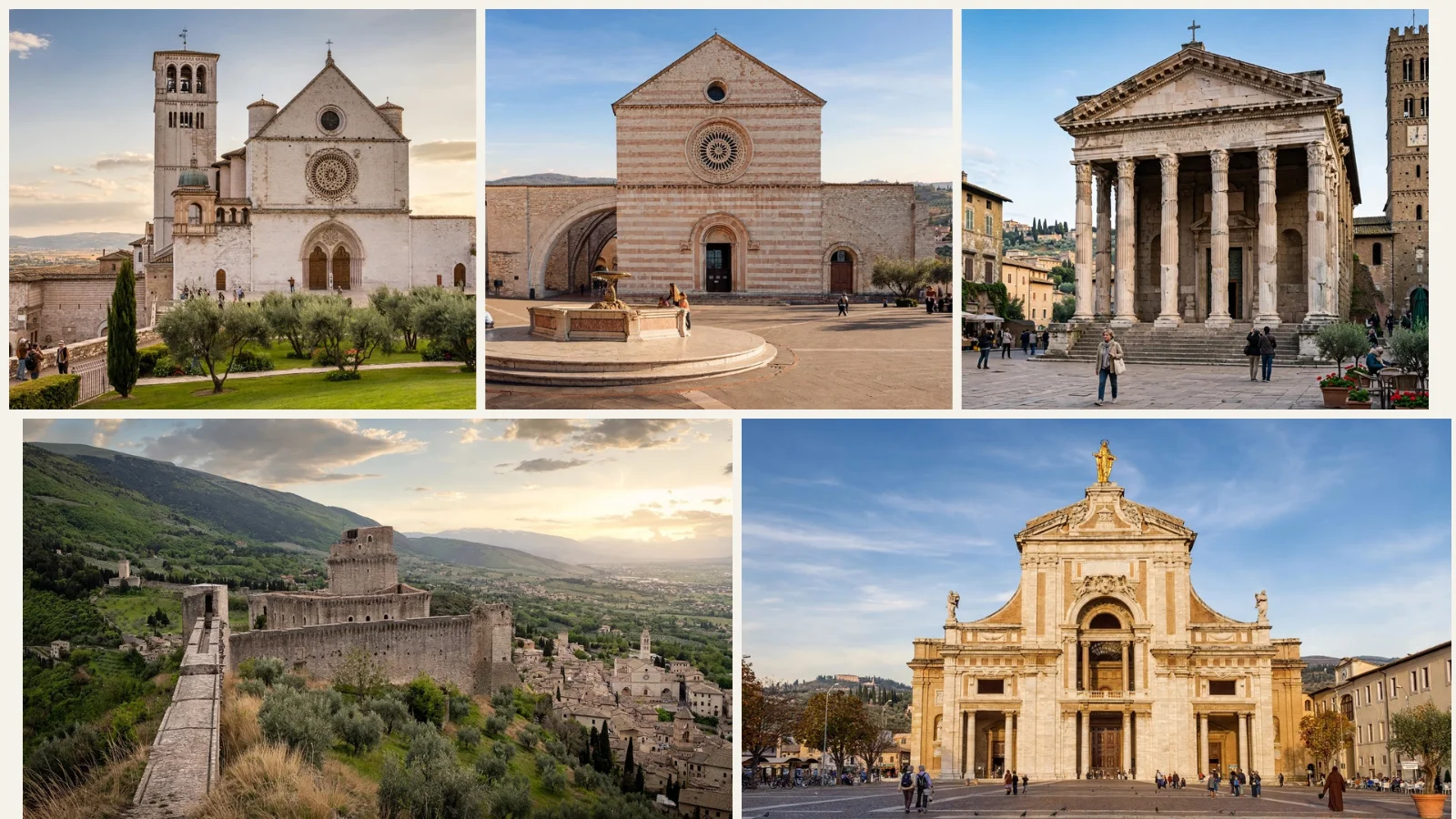
Assisi is a small hilltop city on the slopes of Mount Subasio in Umbria, Italy. It is the birthplace of St Francis and St Clare, and its Franciscan sites have been a UNESCO World Heritage Site since 2000. With steep medieval lanes, it is fair to ask whether Assisi is wheelchair accessible, or whether disabled access stops at the city gates.
Quick answer: Santa Maria degli Angeli, in the valley below the old town, is the most straightforward visit. The Lower Basilica of St Francis is accessible by ramp, and the church level of Santa Chiara is accessible through a side entrance if you ring for the custodians. The Upper Basilica is accessible inside but comes with a very steep approach. Don't assume you can enter the Temple of Minerva, Rocca Maggiore or the Tomb of St Clare.
In this guide: Basilica of St Francis · Santa Chiara · Temple of Minerva and Roman Forum · Rocca Maggiore · Santa Maria degli Angeli · Getting around · Verdict · Before you go · FAQ
At a Glance: Assisi Wheelchair Access by Sight
How to read our verdicts:
🟢 Accessible according to the cited evidence.
🟡 Accessible with limitations or assistance.
🔴 Not wheelchair accessible for the described area.
| Attraction | Marketed As | Our Verdict |
|---|---|---|
| Basilica of St Francis — Lower Basilica | Mixed (some listings accessible, some not) | 🟢 Accessible by ramp |
| Basilica of St Francis — Tomb of St Francis | Mixed (Viator: crypt not accessible) | 🟡 Lift available; ask the caretaker for the key |
| Basilica of St Francis — Upper Basilica | Mixed (some listings accessible, some not) | 🟡 Steep approach (about 21%); interior accessible |
| Basilica of Santa Chiara — Church | Listed accessible; one tour not | 🟡 Side entrance only; ring for the custodians |
| Basilica of Santa Chiara — Tomb of St Clare | Listed accessible; one tour not | 🔴 Not accessible (27 steps) |
| Temple of Minerva | Mixed (some tours accessible, some not) | 🔴 Not accessible (steps, no ramp) |
| Roman Forum museum | Mixed (some tours accessible, some not) | 🟡 Side entrance with a steep ramp (about 19%) |
| Rocca Maggiore | Wheelchair accessible (on some tours) | 🔴 Not accessible (city portal) |
| Basilica of Santa Maria degli Angeli | Listed as wheelchair accessible | 🟢 Accessible (ramp about 8%) |
Steep lanes and uneven stone are common across Italy's hill towns. If you are comparing, see how accessible Siena and Montepulciano are for wheelchair users.
Tour listings give opposite answers. One private day tour of Assisi and Orvieto on Expedia says "All areas and surfaces are wheelchair accessible." A private walking tour on Viator that visits the Basilica of St Francis, Santa Chiara and the Temple of Minerva says "Not wheelchair accessible."
We checked five of Assisi's best-known sights against the city's own accessibility descriptions, tour listings, one first-hand traveler account and visitor reviews. This is desk research, not a site visit. Where a claim holds up, we say so.
Our methodology:
The claim: What tour operators, booking platforms like Viator and Expedia, and travel guides say about each site.
The reality: We found no independent professional accessibility audits for these sights. The city's official Visit Assisi portal, however, describes each UNESCO site with measured ramps, slopes and step heights, so we treated it as our primary evidence.
Listings, travel guides, one first-hand account and reviews count as supporting evidence. The English version of the city page carries a September 2024 date, so we flag where current conditions need confirming.
One caution: a tour's "wheelchair accessible" tag doesn't prove every stop on it can be entered by wheelchair. It may describe the vehicle, a guide or just the walking route. Even within one Expedia listing, the private tour is tagged accessible while the small-group version of the same itinerary is not.
How steep is steep? Common ramp guidance (the US ADA standard, for example) puts the maximum slope at about 8% (1:12). Several approaches in Assisi are well above that:
Bars are scaled to the steepest slope (21%). Figures come from the city's descriptions; the 8% line is a general guideline, not an Assisi figure. A 21% slope is roughly 2.5 times steeper than that guideline.
Basilica of St Francis: Wheelchair Access
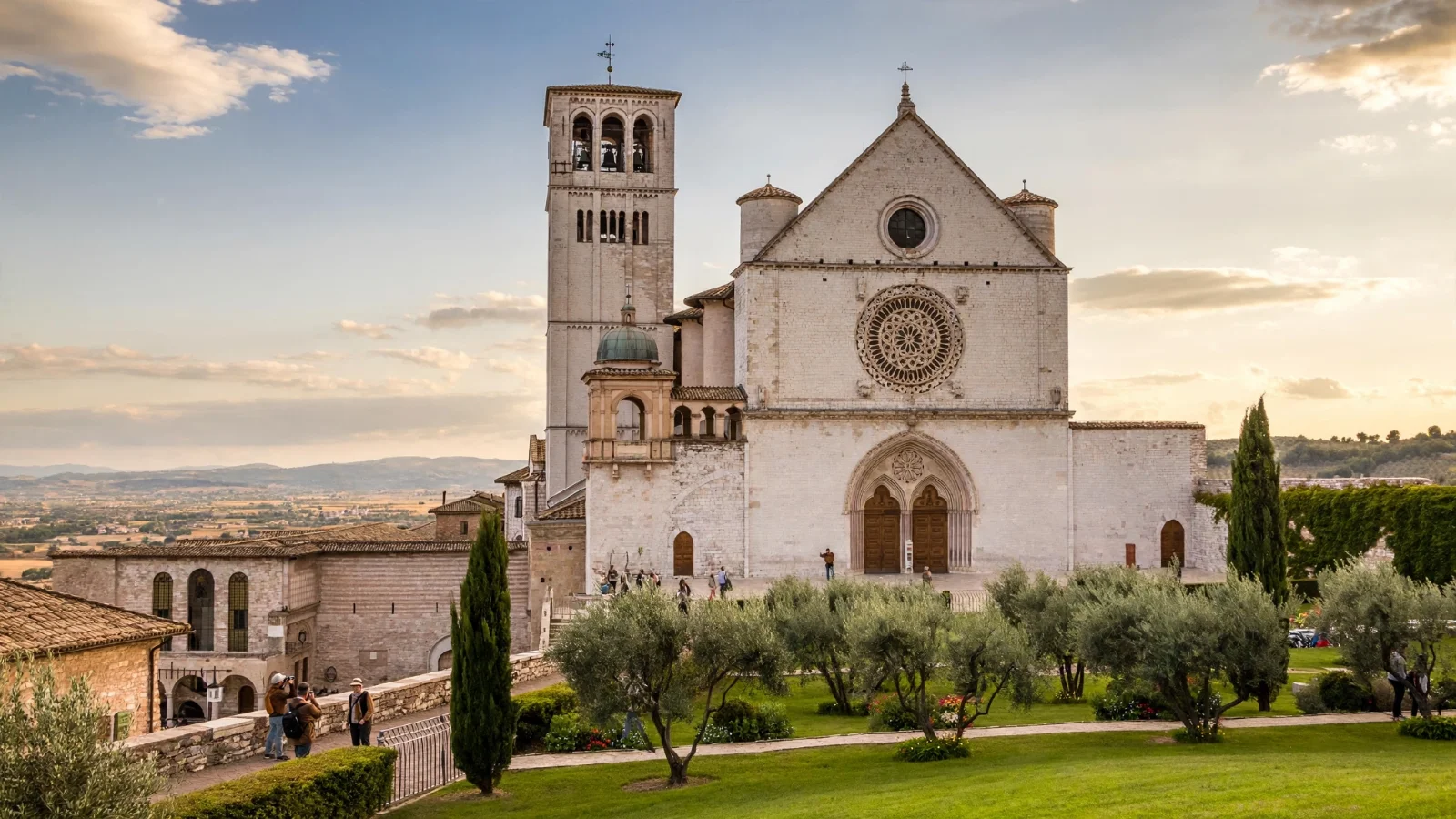
The Claim: Listings disagree. Viator's page for the basilica says the Upper and Lower Basilica are accessible, but the crypt is not. Two Viator guided tours that include it are marked "Not wheelchair accessible."
The Expedia private tour above is tagged accessible, yet its small-group version is not. Nomads Travel Guide says the Lower Church and piazza are accessible, with ramps and elevators in designated areas.
The Reality: The city splits the basilica into three parts.
Access details:
- Lower Basilica: the entrance has two steps, overcome by a 270 cm (about 8 ft 10 in) ramp with about an 11% slope.
- Tomb of St Francis: reached through the convent door next to the entrance. Ask the caretaker for the lift key, then cross about 60 m (about 200 ft) of slightly uneven courtyard with slopes of about 8–9%. The lift door is 85 cm (about 33 in) wide and the car is 120 cm (about 47 in) deep.
- Upper Basilica: from the Lower Basilica, the only wheelchair route is about 60 m (about 200 ft) at a slope of roughly 21%, then about 50 m (about 165 ft) of acceptable slopes. Once there, a small metal ramp handles a 4 cm (about 1.6 in) entrance step, the interior has no difficulties, and a 13% ramp leads to the presbytery.
The tomb lift contradicts Viator's "crypt not accessible" line, though it depends on staff unlocking it.
The Upper Basilica is the hard part. A 21% slope is steep for any wheelchair, and manual users may want a companion to push. That is our general reading, not something the city states. Steep hilltop approaches like this also come up in Ronda.
The city says a lift linking the two basilicas is underway. A 2022 foundation notice said the works were nearly finished, but we could not confirm it is in service.
On busy days, a free on-call shuttle runs from 10 am to 5 pm to the main entrance. A 2019 first-hand account from a wheelchair user describes family members struggling to push her chair up Assisi's hills. She also skipped the tomb lift, assuming it needed arrangements.
Our verdict:
🟢 Lower Basilica: accessible by ramp, according to the city.
🟡 Tomb of St Francis: reachable by lift, but the caretaker must unlock it, so ask on arrival.
🟡 Upper Basilica: accessible once you arrive, but the approach is the steepest stretch in this guide (about 21%), and the connecting lift is unconfirmed.
Santa Chiara: Wheelchair Access and Entrances
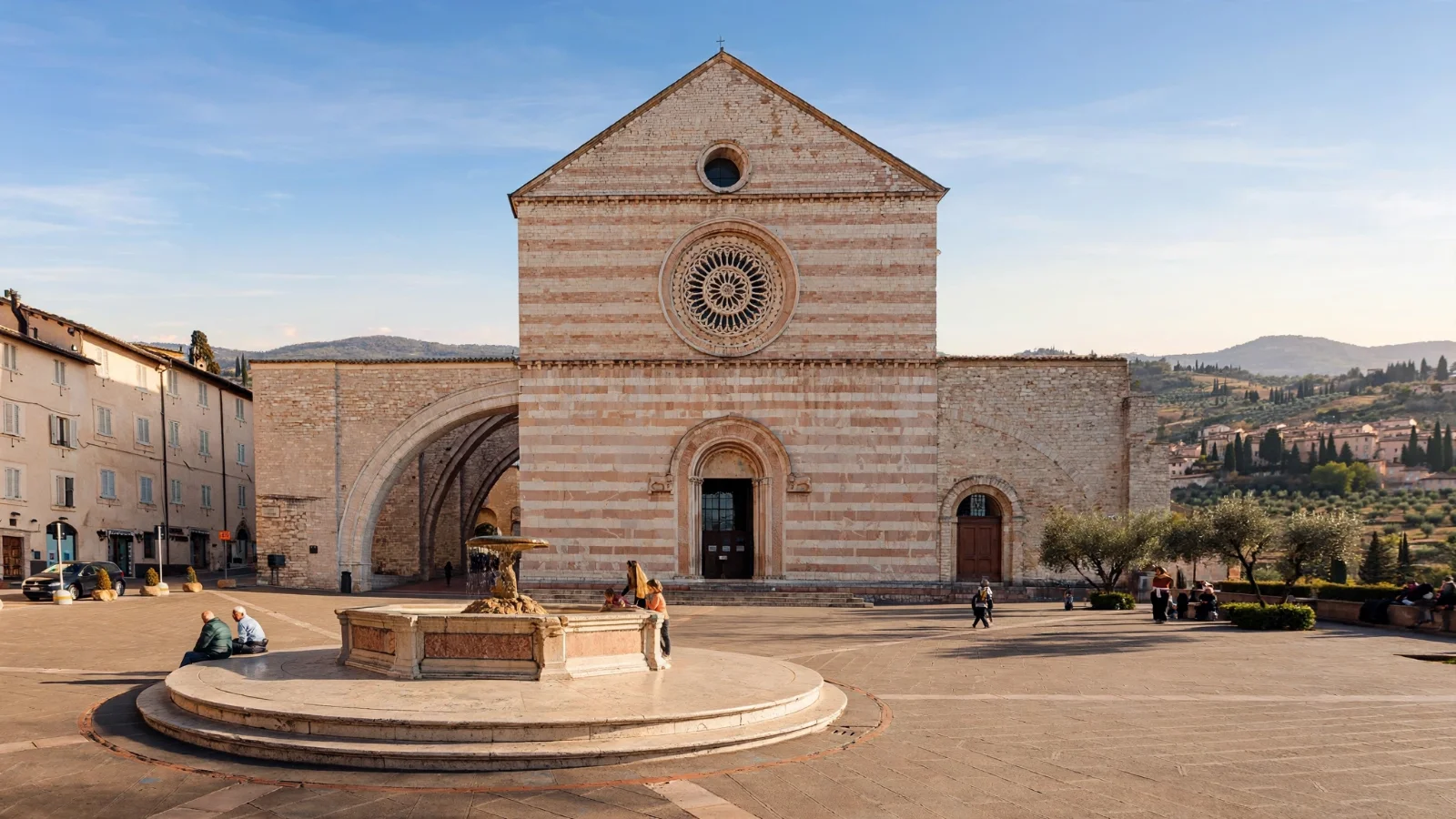
The Claim: The venue-guide page Airial lists the basilica as wheelchair accessible with accessible parking.
Viator's page for the basilica is more specific: the ground floor is accessible via a side entrance, while the crypt and relic hall are not. The Viator private tour from the introduction, which includes this basilica, is tagged "Not wheelchair accessible."
The Reality: The city's description supports the more specific claim.
Access details:
- Main entrance: six steps, not accessible.
- Accessible entrance: on the left side of the church, under the arches. Ring the bell next to the door so the custodians open it.
- Ramp and door: a small brick ramp of about 200 cm (about 6 ft 7 in) leads to an 85 cm (about 33 in) door with a 7 cm (about 2.8 in) internal step, which a small wooden ramp overcomes.
- Inside: the central nave and the Chapel of the Crucifix are flat.
- Tomb of St Clare: 27 steps down with a handrail. The city says it is not accessible to people in wheelchairs, and the 2019 traveler says the same about the lower level.
- Parking: two reserved spaces next to the basilica for permit holders.
Our verdict:
🟡 Church (ground level): accessible through the side entrance, but you must ring for the custodians.
🔴 Tomb of St Clare: not accessible. It is 27 steps down.
Temple of Minerva and Roman Forum: Wheelchair Access
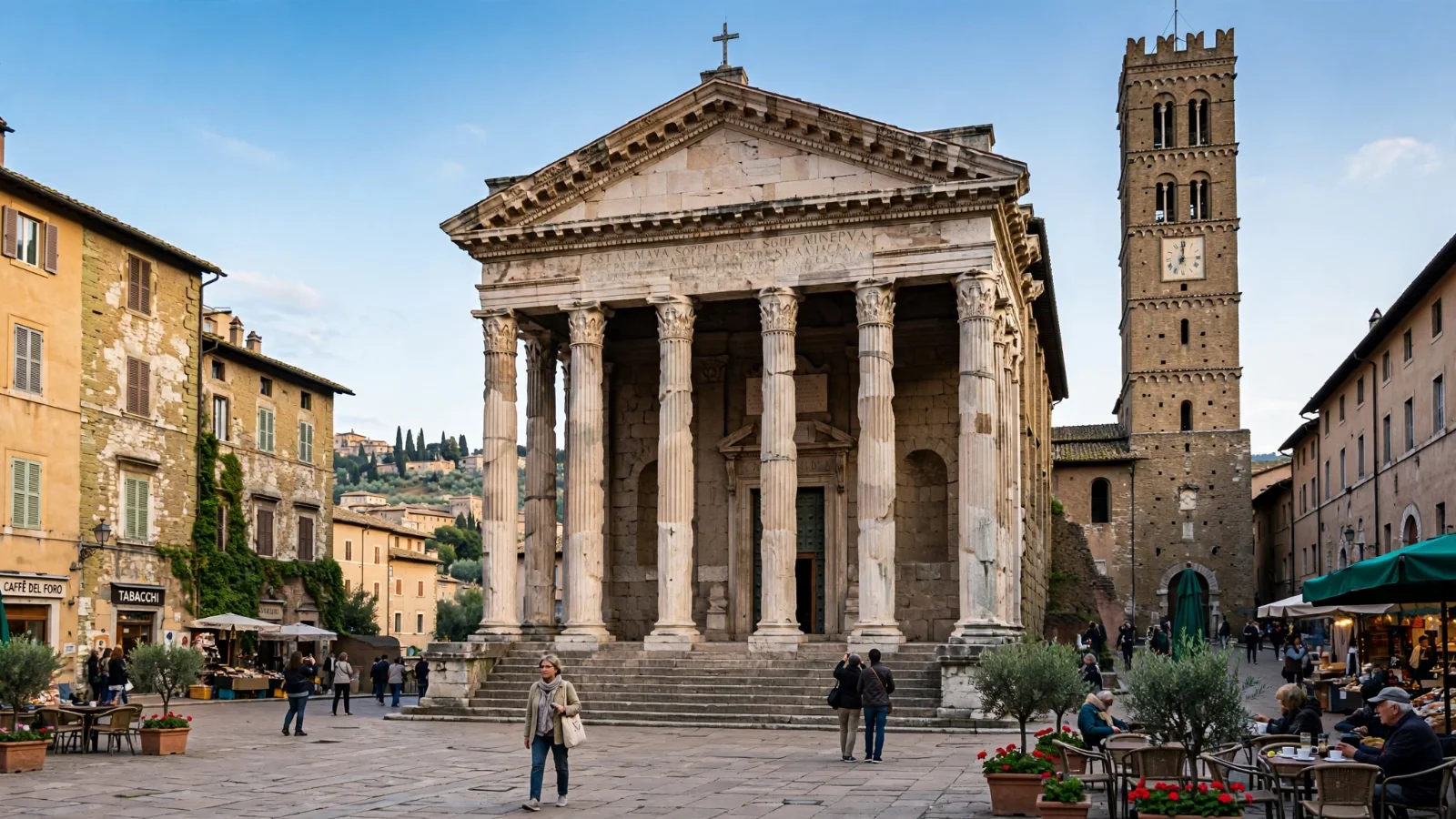
The Claim: A GetYourGuide walking tour that stops at the Temple of Minerva is tagged wheelchair accessible. Nomads Travel Guide says the temple is accessible for most visitors, with the entrance on level ground.
An AccessTravel listing is more careful: the square is accessible, but the original Roman steps of the portico are intact and there is no ramp into the church.
The Reality: The city's page for the Temple of Minerva lists it as not accessible. That matches AccessTravel's steps-and-no-ramp description and contradicts the "level ground" claim.
Roman Forum museum, access details:
- Main entrance: has steps.
- Secondary entrance: on Via Arco dei Priori, for visitors with reduced mobility. Ask at the ticket office. It has a wooden ramp of about 7 m (about 23 ft) with a slope of about 19%.
- Route: the city warns that Via Arco dei Priori is steep and recommends the adjacent street toward the Chiesa Nuova, where slopes are gentler.
- Inside: a small metal ramp serves the crypt.
- Parking: a reserved space sits in front of the tourist office, close to the Forum entrance.
The 2019 traveler also noted that most shops on the main street have one or two steps.
Our verdict:
🔴 Temple of Minerva (interior): not accessible. Stairs, no ramp.
🟡 Roman Forum museum: accessible through the secondary entrance, but its ramp is steep (about 19%) and you need to ask staff.
Rocca Maggiore: Wheelchair Access
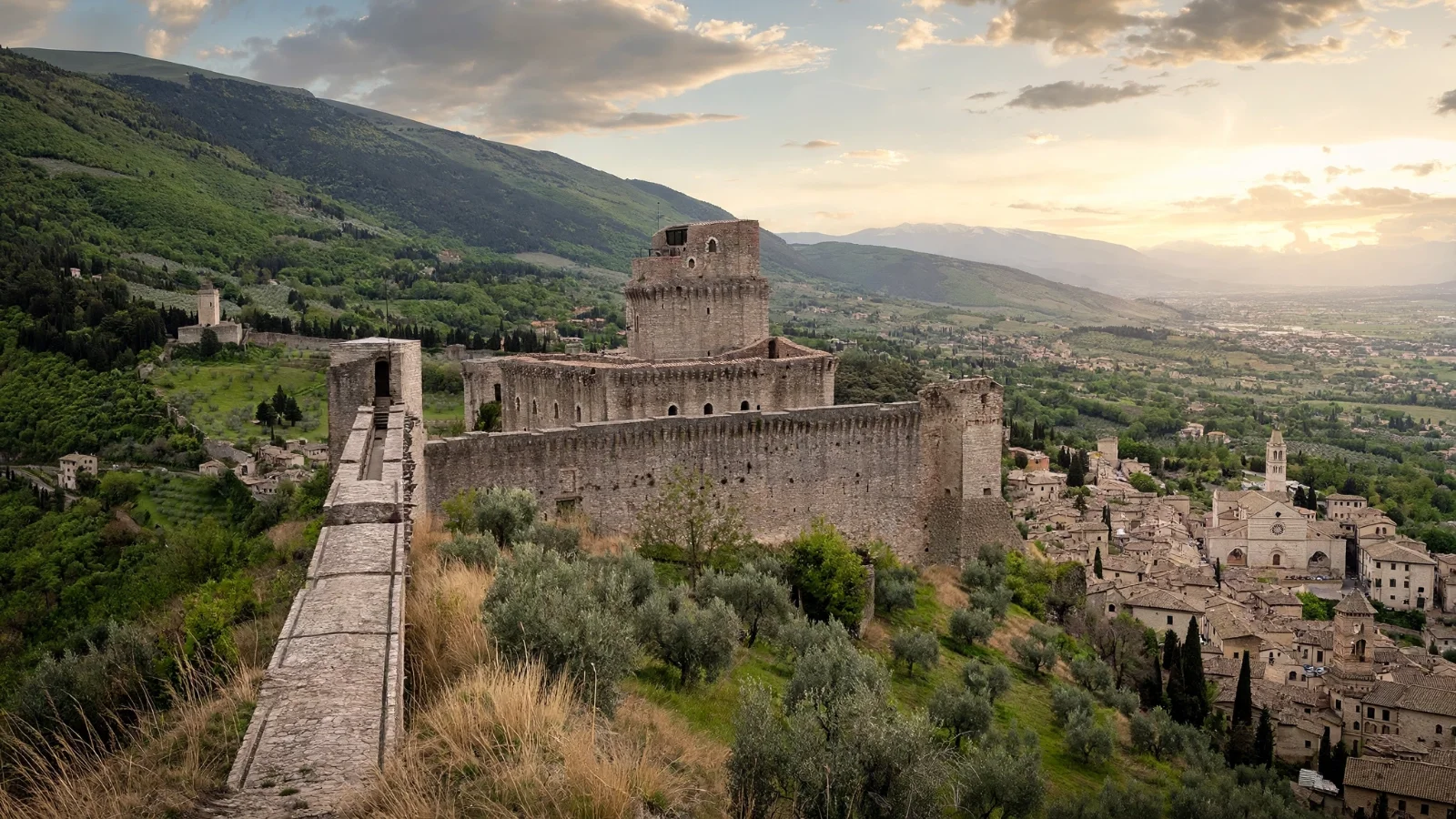
The Claim: The GetYourGuide walking tour above lists Rocca Maggiore as a stop and is tagged wheelchair accessible.
A tailored half-day tour from Rome and Italy Accessible also lists it among its highlights for wheelchair users, though it doesn't say whether that includes the interior.
The Reality: The city's page for Rocca Maggiore is blunt: "Accessibility: not accessible."
The fortress sits on top of the Asio hill, 550 meters (about 1,800 ft) from Piazza Matteotti. Only authorized vehicles can enter the historic center, and the nearest car park is the Piazza Matteotti pay lot. Disability card holders get free entry, but that doesn't change the access problem.
There is also a status conflict. Italia.it, on an undated, auto-translated page, says the fortress is currently closed for restoration. The city's page lists normal opening hours. We couldn't confirm which is current.
No source we found describes a step-free route to the fortress or its viewpoints.
Our verdict:
🔴 Not accessible, according to the city. Treat any "accessible" tag that includes Rocca Maggiore with caution, and ask the operator what the tag means for this stop.
Santa Maria degli Angeli: Wheelchair Access
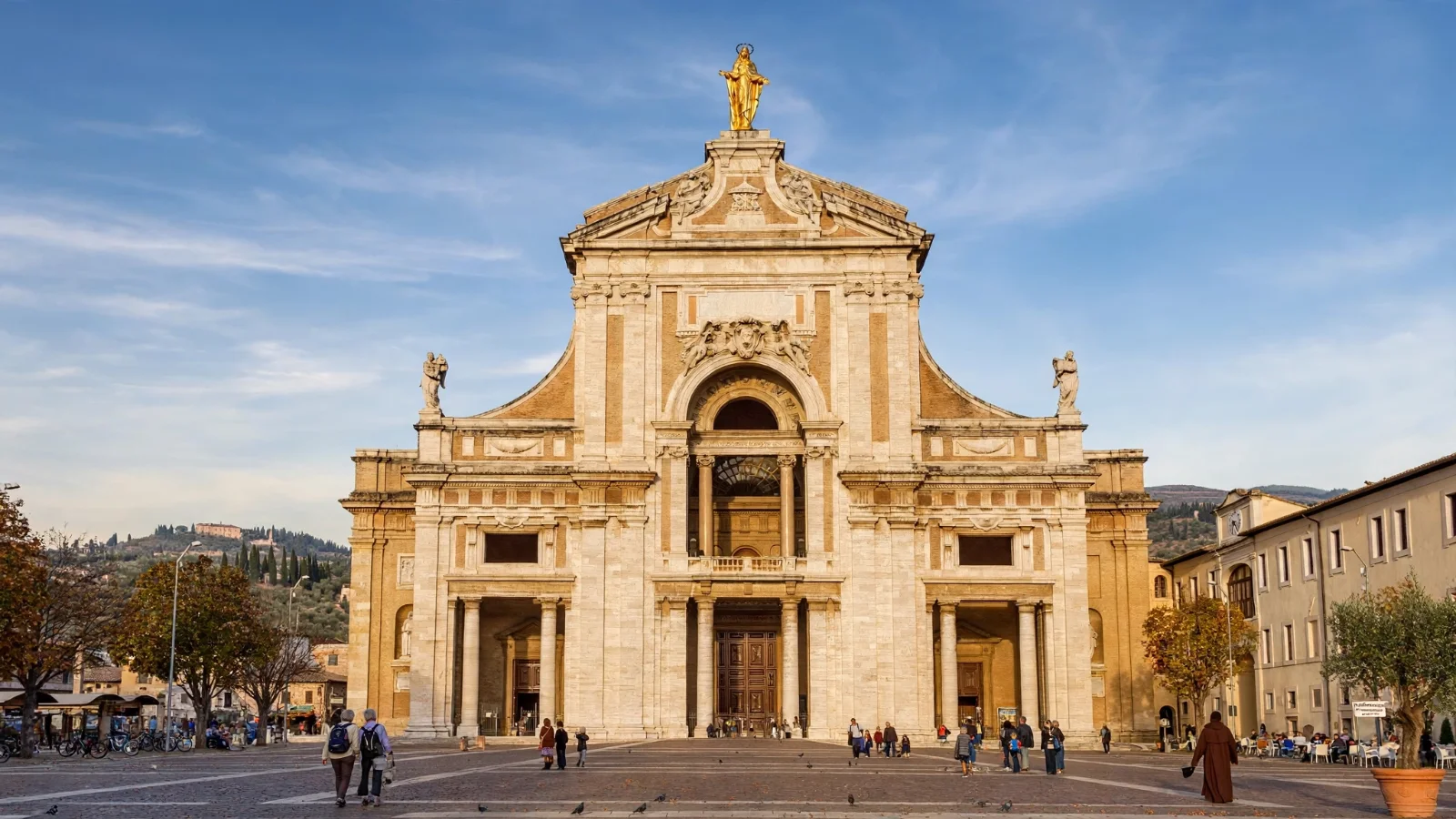
The Claim: Viator's page for the basilica says the church and adjacent monastery are accessible to wheelchairs. A venue-map listing shows a wheelchair-accessible entrance, parking and restroom.
One AccessTravel listing shows both "Accessible Toilet" and "Not accessible for wheelchair and Electric scooters" on the same page, so treat its tags as unreliable.
The Reality: This is the easiest large site on the list, and the city's own description backs the claims. The basilica sits in the valley below the old town, about 400 meters (about 1,300 ft) from the railway station.
Access details:
- Parking: a car park about 150 m (about 490 ft) away has reserved spaces and flat paving, starting with asphalt and then slightly irregular stone slabs.
- Entrance: on the right of the basilica, via a 540 cm (about 17 ft 9 in) ramp with a slope of about 8%, after two short ramps and through a 93 cm (about 37 in) door.
- Inside: flat flooring, and the Porziuncola chapel is also accessible.
- Rose Garden: a path leads through a double door, then along a brick walkway with a 14% slope over about 260 cm (about 8 ft 6 in).
- Toilets: toilets for people with disabilities sit halfway along the route from the car park.
One pilgrimage guide also calls this basilica flat and fully accessible, unlike most of the hilltop town. We found no first-hand wheelchair account of visiting it, so conditions are documented by the city rather than a traveler.
Our verdict:
🟢 Accessible, according to the city's description, with listings agreeing. Confirm current conditions as with any site.
Getting to and Around Assisi
We only list what the city's pages and our sources state. The key points for step-free planning:
- Start in the valley: Santa Maria degli Angeli is about 400 m (about 1,300 ft) from the railway station, which makes it the simplest first stop.
- Driving: only authorized vehicles enter the historic center. The city lists reserved parking for permit holders near most sites, for example Via Merry del Val or Via San Francesco for the Basilica of St Francis, and the Piazza Matteotti pay lot for Rocca Maggiore.
- Shuttle: a free on-call shuttle runs from 10 am to 5 pm on busy days to the main entrance of the Basilica of St Francis. Call the tourist office on +39 075 8138680.
- Surfaces: expect slightly uneven courtyards and irregular stone slabs. Via Arco dei Priori is steep, and the city suggests the gentler street toward the Chiesa Nuova.
- Shops: a 2019 traveler noted most shops on the main street have one or two steps.
- Vehicles: that traveler also reports larger adapted vehicles may not fit Assisi's narrow streets, so check your driver's vehicle size.
We did not verify accessible taxis or buses from the station, accessible hotels, or wheelchair and scooter rental, so we don't list any. Ask the tourist office before you book.
So, Is Assisi Wheelchair Accessible? Our Verdict
Partly. Assisi is a hill town with a few well-documented accessible entrances among steep lanes, and the city itself says its architecture and heritage landscape set limits.
Santa Maria degli Angeli is the clearest yes. The Lower Basilica of St Francis and the church at Santa Chiara come next, with staff help. A few sites are a no: the Tomb of St Clare, the Temple of Minerva and Rocca Maggiore.
If you have one day, start with Santa Maria degli Angeli. In the hill town, plan the Lower Basilica (with the tomb lift arranged on arrival) and Santa Chiara's side entrance. Add the Upper Basilica or the Roman Forum only if you are comfortable with steep approaches.
Tour tags vary more than the sites do. When an operator calls a tour accessible, ask which stops are entered and how.
Planning more of Italy? See our guides to Matera and Alberobello.
Before You Go: Assisi Wheelchair Checklist
- Read the city's "Assisi for everyone" page and save the tourist office number (+39 075 8138680).
- Confirm current conditions. The English city page carries a September 2024 date.
- At St Francis, ask the caretaker for the tomb lift key. At Santa Chiara, ring for the custodians instead of expecting open doors.
- If a tour is tagged accessible, ask which stops are entered and how.
- If you drive with a disabled permit, plan around the reserved parking, since only authorized vehicles enter the historic center. Confirm with the tourist office whether foreign permits are recognized.
- Check your driver's vehicle size for the narrow streets.
- Budget extra time, and bring a companion for the steep stretches.
Assisi Wheelchair Accessibility FAQ
Is Assisi wheelchair accessible?
Partly. The city says it is trying to guarantee access to its cultural sites despite the limits of its architecture and landscape. Some approaches have slopes of about 20%, and several sites are not accessible, so check each site before you go.
Is Assisi wheelchair friendly?
It is mixed. The valley level around Santa Maria degli Angeli is flat and ramped, while the hill town has steep lanes, steps at many shops and a few sites with no step-free route. Visitors with limited mobility should plan around the sights marked 🟢 and 🟡 above.
Is the Basilica of St Francis wheelchair accessible?
Partly. The Lower Basilica has a ramp entrance, the tomb is reachable by lift, and the Upper Basilica is accessible inside but reached by a steep route. We could not confirm the lift linking the two basilicas is open.
Can wheelchair users visit the Tomb of St Francis?
According to the city, yes, by lift through the convent door next to the entrance. Ask the caretaker for the key. One Viator page says the crypt is not accessible, which contradicts the city's description.
Can wheelchair users see the Tomb of St Clare?
No. The tomb is 27 steps below the church, and the city lists the route as not accessible. The church above it can be entered through a side door.
Is the Temple of Minerva wheelchair accessible?
No, according to the city. The portico stairs have no ramp. The square in front of it is reportedly accessible.
Is Rocca Maggiore wheelchair accessible?
The city lists it as not accessible. Some walking-tour listings that include the fortress are tagged wheelchair accessible, so ask the operator what that means for this stop.
Is the Basilica of Santa Maria degli Angeli wheelchair accessible?
Yes, according to the city and several listings. It has a ramped entrance, flat flooring, an accessible Porziuncola and accessible toilets on the route from the car park.
Can I drive into the historic center with a disabled parking permit?
The city lists reserved parking near several sites for visitors with a valid permit, such as Via Merry del Val or Via San Francesco for the Basilica of St Francis. It also says only authorized vehicles can enter the historic center.
We didn't find a statement on whether permits issued abroad are recognized, so confirm with the tourist office before you travel.
Is there a shuttle for visitors with reduced mobility?
The city lists a free on-call shuttle on days with high tourist flow, from 10 am to 5 pm. It takes visitors to the main entrance of the Basilica of St Francis. Call the tourist office on +39 075 8138680 for details.
Are there wheelchair-accessible tours of Assisi?
Some operators advertise private tours for wheelchair users with adapted vans. We didn't verify them. One operator's highlights include Rocca Maggiore and the Temple of Minerva, which the city lists as not accessible, so ask which parts are visited from outside.
Are there accessible public restrooms in Assisi?
At the Basilica of St Francis, the city lists a toilet for people with disabilities under the lower square, reached by a large lift, with support handles and room for a wheelchair. Santa Maria degli Angeli has accessible toilets on the route from its car park.
At San Damiano, the city says the disabled toilet is not accessible. A 2019 traveler also found an accessible restroom in a parking area locked, so confirm availability on the day.
When is the best time to visit Assisi with limited mobility?
Early morning is a practical option for avoiding peak crowds. One pilgrimage guide says the streets are quietest before 9 am, although crowd levels vary by day and season.
Discussion
No comments yet. Be the first to share your thoughts.
Leave a comment