

Author: Jaziba Luqman
Last updated: November 2026
Jaziba Luqman writes TheDailyFront's wheelchair-accessibility travel series, cross-checking tourism claims against official accessibility records, specialist physical audits, operator information, and traveler accounts.
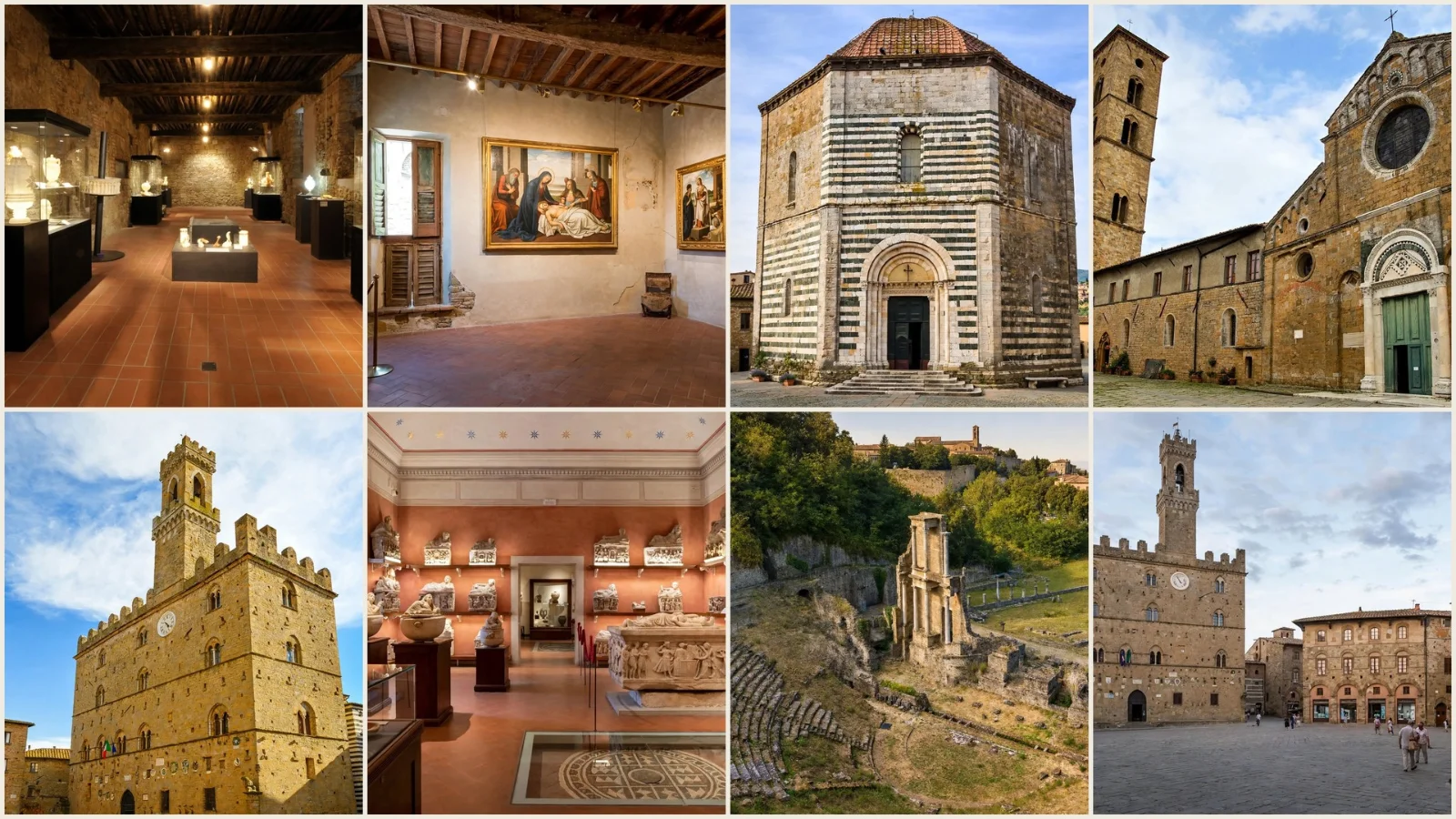
Is Volterra wheelchair accessible? Partly. Several sights have documented elevators or side-entrance ramps, but the hilltop town is steep, narrow and partly stepped. Summer 2024 audits record entrance ramps from 8.5% to 15%, so a power-assist chair and a planned route make a major difference.
The claims are not consistent. Accessibility-focused publisher Willeasy describes Volterra as manageable with a propulsion device, while a Norwegian Cruise Line Volterra excursion says its sights are not wheelchair accessible. The municipality’s 2020 barrier audit said many routes are difficult to use independently.
Quick answer: Volterra is wheelchair accessible at selected sights, but it is not a fully step-free town. The Guarnacci Museum and the Pinacoteca/Ecomuseum complex have elevators, while the Roman Theater is documented as partially accessible. Piazza dei Priori is more manageable with a propulsion device. However, steep approaches, 13–15% ramps, a step at the Baptistery entrance and narrow streets can make independent travel difficult.
Top 3 to prioritize
- Guarnacci Etruscan Museum: two elevators serve its exhibition floors, and an accessible restroom is on the ground floor.
- Pinacoteca and Alabaster Ecomuseum: a shared elevator reaches the gallery and the underground and mezzanine displays. Check the 74 cm door first.
- Piazza dei Priori: the paving may be manageable with a propulsion or power-assist device.
Top 3 to skip or confirm first
- Baptistery of San Giovanni: a 14–15 cm entrance step is recorded. Confirm a threshold solution with the operator before buying tickets.
- Palazzo dei Priori tower: it is reached by stairs and narrow passages. Use only the side entrance and the elevator.
- The Cathedral's 15% side ramp: it has no handrail, so go with a companion or ask staff for help.
In this guide: At a Glance · Methodology · Ramp Slopes & Door Widths · 1. Piazza dei Priori · 2. Roman Theater · 3. Guarnacci Museum · 4. Palazzo dei Priori · 5. Cathedral · 6. Baptistery · 7. Civic Art Gallery · 8. Alabaster Ecomuseum · Getting around Volterra · One-Day Route · By Chair Type · Volterra vs San Gimignano · Verdict · Before you go · FAQs
At a Glance: Is Volterra Wheelchair Accessible? Verdicts by Sight
How to read the verdicts:
🟢 Accessible according to the cited evidence.
🟡 Accessible with limitations or assistance.
🟠 Significant limitations: reachable only in part, or only with substantial help.
🔴 Not wheelchair accessible for the described area.
| Attraction | Marketed As | Wheelchair Accessible? Our Verdict |
|---|---|---|
| 1. Piazza dei Priori | Willeasy says the square can be crossed with a propulsion device. | 🟡 The square may be manageable with power assistance; the steep approach and parking are the bigger obstacles. |
| 2. Roman Theater | 2024 audit explicitly calls the archaeological area partially accessible. | 🟡 Partial access is documented; not every seating level or archaeological route is confirmed step-free. |
| 3. Guarnacci Museum | An older 2019 travel account calls it inaccessible; the 2024 audit records two elevators. | 🟢 The main exhibition floors are reachable by elevator; the 3–6 cm threshold and difficult approach still matter. |
| 4. Palazzo dei Priori | Willeasy highlights elevator access, while the detailed audit records a narrow side ramp and elevator door. | 🟡 Partly accessible via the side entrance; not every room or the tower is reachable. |
| 5. Cathedral of Santa Maria Assunta | Kalatà's combined tour is described as accessible to people with mobility impairments. | 🟡 The main interior is reachable by a designated route, but the 15% ramp may require assistance. |
| 6. Baptistery of San Giovanni | Kalatà describes the combined tour as accessible; the audit records a 14–15 cm entrance step. | 🟠 Significant barrier: independent step-free entry is not established by the published measurements. |
| 7. Civic Art Gallery (Pinacoteca) | Willeasy flags stairs and narrow passages in the historic building. | 🟡 The first-floor gallery is documented as elevator-served, but the 74 cm elevator door and 12% entrance ramp are significant checks. |
| 8. Alabaster Ecomuseum | Willeasy notes stairs and narrow passages; the audit describes an elevator-served museum route. | 🟡 The underground and mezzanine displays are reachable by elevator; the upper loggia uses a stairlift. |
Volterra's own barrier-removal plan provides important context. Its February 2020 survey found that 21 of 45 assessed public or public-use buildings in the historic center (46.7%) were classed as non-accessible. Six of the nine assessed public spaces (66.7%) were also classed as non-accessible.
These are historical survey figures, not a live 2026 inventory. They do show why a ramp at a museum door does not automatically make the route to that door accessible.
The same route-planning challenge appears in other central Italian hill towns. Compare our San Gimignano guide, Siena breakdown, Orvieto guide, Perugia guide and Assisi guide.
The Claim vs. The Reality: How We Checked Volterra
The Claim: What accessibility-focused travel publishers, tour operators and excursion listings say about each sight.
The Reality: What the Handy Superabile summer 2024 site audits, the Comune di Volterra's 2020 PEBA barrier survey, official museum and transport information, and publicly available visitor accounts actually document.
Where a source gives a ramp length, slope, threshold or elevator-door width, we report that measurement and its date. Where no dependable measurement was found, we say so rather than inventing one.
That distinction matters. A specialist accessibility audit is not the same as an operator's broad “accessible” label, and a general visitor review is not proof of wheelchair access. No verifiable first-person wheelchair report surfaced for every sight, so we do not present unverified social-media snippets as testimonials.
Measured Access Barriers: Ramp Slopes and Door Widths in Volterra
The Comune di Volterra's PEBA report uses 8% as the design benchmark for ramps in its barrier-removal guidance. The measurements below come from separate 2024 Handy Superabile site sheets.
Both the Cathedral and Baptistery sheets record a 102 cm by 108 cm ramp at 15%, but the reports do not establish whether this is one shared physical ramp or two separate approaches. We therefore report each sheet independently and do not assume they describe the same structure. These figures refer to specific entrances or transitions, not every route through the buildings.
Bars are scaled to a maximum of 15%. A ramp's practical difficulty also depends on its length, surface, handrails, turning space, wheelchair type and the user's strength. The citywide street network has not been assigned a single slope percentage: the municipal PEBA survey describes steep and sometimes stepped routes but does not provide a complete street-by-street gradient map.
Door, Elevator and Ramp Widths Recorded in the 2024 Audits
Bars are scaled to 100 cm. Colors show relative tightness, not a pass or fail standard, so compare each figure with the measured width of your own chair. Elevator cabin sizes are given in the sight sections: Palazzo dei Priori about 97 × 115 cm, Pinacoteca/Ecomuseum 85 × 120 cm, and the parking-garage elevator 120 × 120 cm.
1. Is Piazza dei Priori Wheelchair Accessible?
Short answer: The square itself may be manageable with a propulsion or power-assist device, but reaching it can be tiring because the surrounding historic center is steep.
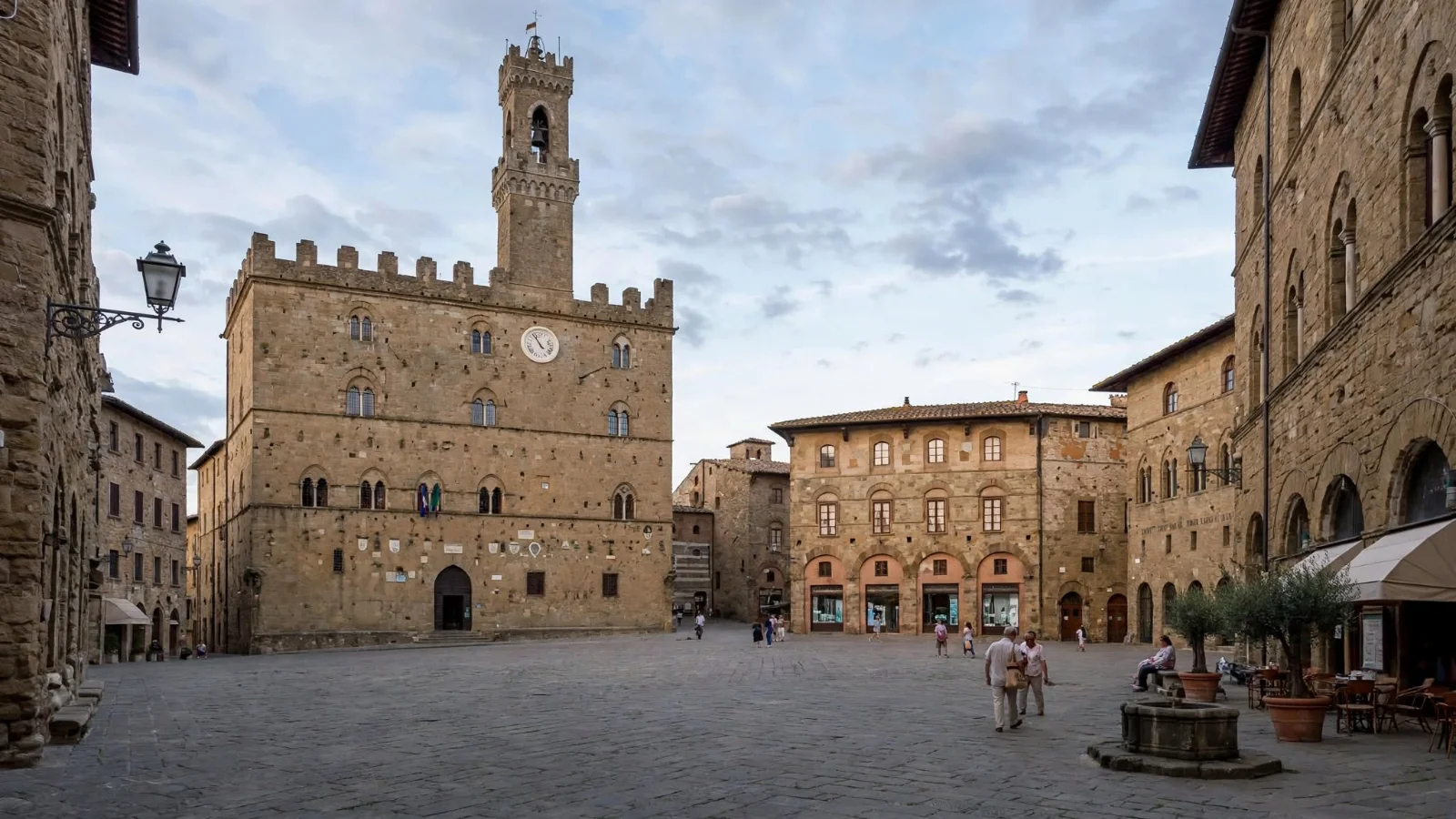
The Claim: Accessibility platform Willeasy's October 2024 article says visitors using a wheelchair fitted with a propulsion device can move across the square's paving without difficulty. This is an accessibility-focused editorial account, not a published first-person route log with wheelchair model, gradient readings or measured surface tests.
The Reality: A Tripadvisor reviewer, Fede M, wrote on 10 August 2022 that there were very few available disabled parking spaces in Volterra's historic center. The reviewer said they had to park outside the walls and travel to Piazza dei Priori in a wheelchair, describing the effort as tiring but worthwhile. This is a first-person wheelchair-related report about parking and the approach, not a technical assessment of the square's paving.
The municipality's PEBA survey explains the wider problem: steep gradients, narrow streets and occasional stepped routes can prevent independent movement even when the destination itself has an accessible entrance. No reliable published slope measurement for the Piazza dei Priori paving itself was found, so we would not assign the square a made-up gradient.
Our verdict:
🟡 Treat Piazza dei Priori as a worthwhile stop, but plan the approach and parking first. A propulsion device or power chair may make the square easier to enjoy; a manual-chair user should not assume the surrounding streets will be easy.
2. Is the Roman Theater of Volterra Wheelchair Accessible?
Short answer: Partly. Handy Superabile's summer 2024 audit records a ramp into the archaeological area and explicitly describes the Roman Theater as partially accessible.
The Claim: The available information does not support a blanket promise of full wheelchair access; the specialist audit itself describes the archaeological area as only partially accessible.
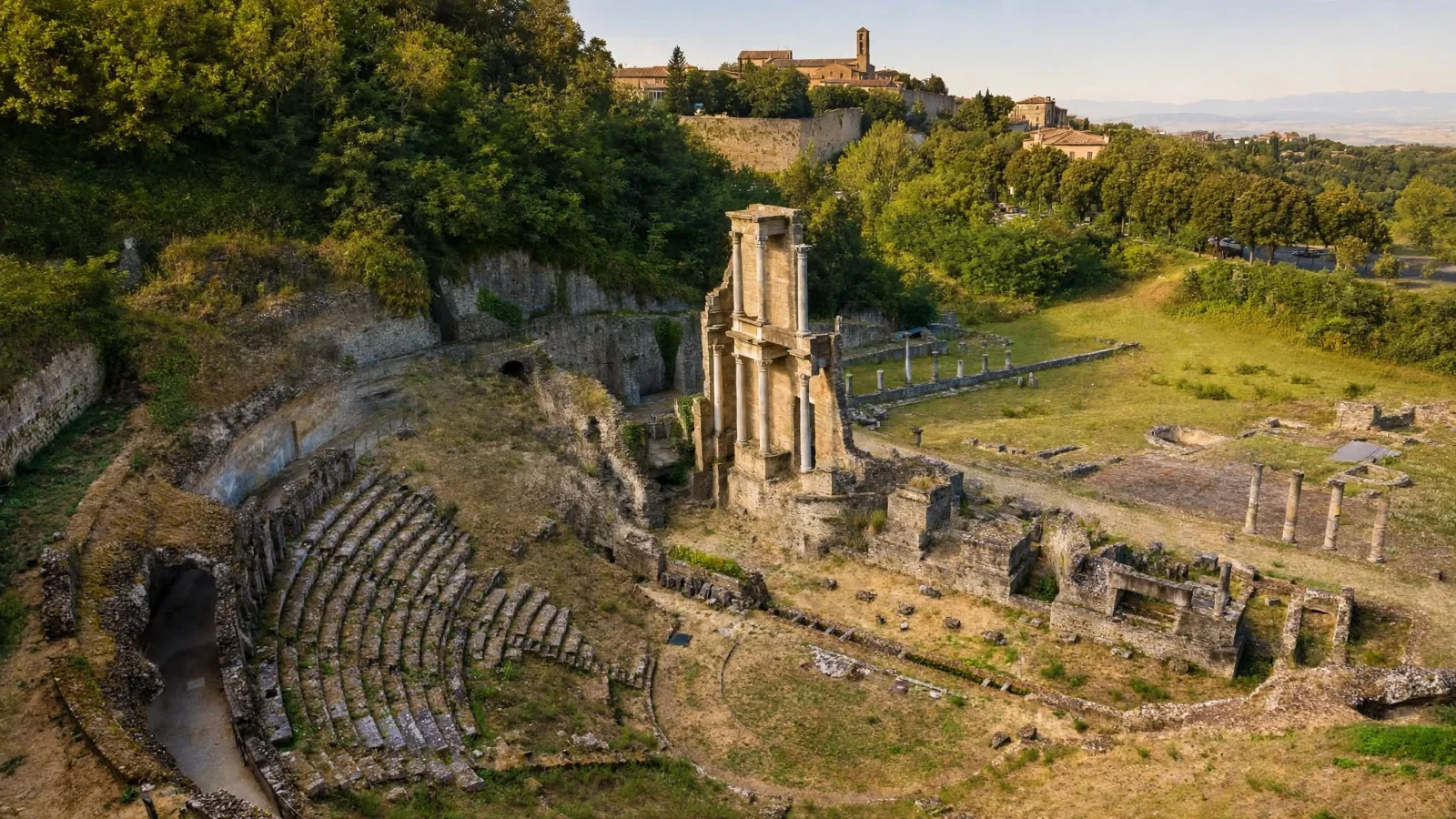
The Reality: The 2024 Handy Superabile sheet records a flat main entrance with a gate wider than 90 cm. To reach the archaeological area, it documents a ramp approximately 2 meters long with a 9% incline and a handrail on the right.
The audit's summary is clear: the theater is partially accessible for visitors with limited mobility. It does not establish that every tier, seating row or archaeological feature can be reached by wheelchair.
Visitor context: General Tripadvisor reviews praise the ruins and mention that the theater can be viewed from the road or from above. One June 2024 reviewer called the ruins easy to reach by car, while another in March 2024 recommended the free view from above before descending toward the site. These are general visitor comments, not wheelchair-user testimonials.
The same 2024 audit says there is no accessible restroom inside the archaeological site. It identifies an accessible public restroom about 300 meters away, at Via delle Prigioni 3, reached by a ramp with a slope greater than 8%. Ask staff about the current route before relying on that facility.
Our verdict:
🟡 A partially accessible archaeological visit is documented, not full access to every level. Contact the museum before traveling to confirm the current ramp, the areas open to wheelchair users and the nearest usable restroom.
3. Is the Guarnacci Etruscan Museum Wheelchair Accessible?
Short answer: It is one of Volterra's stronger indoor options. The 2024 audit records an accessible main entrance, two elevators and exhibition routes on two floors, but the approach from the underground parking garage includes a 13% ramp and stone paving.
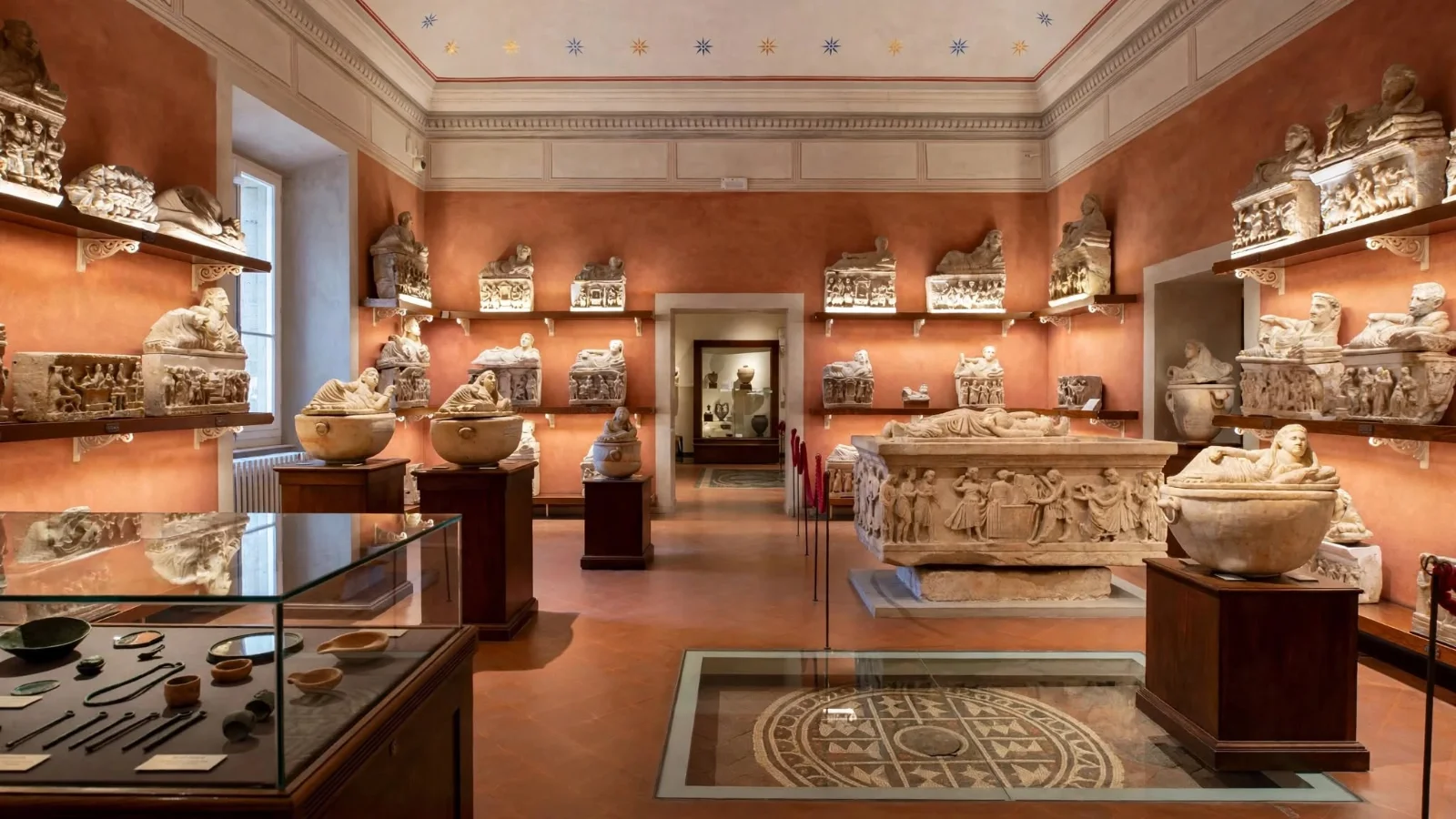
The Claim: An older 2019 visitor account describes the museum as not wheelchair accessible; the newer 2024 audit provides a more detailed picture of the elevators and exhibition route.
The Reality: Handy Superabile's summer 2024 audit tested the museum. It records a main entrance wider than 90 cm with a variable threshold of 3–6 cm. The exhibition route starts on the ground floor and continues over two floors using two elevators.
The sheet does not publish the elevator-door widths or internal cabin dimensions. It also records an accessible ground-floor restroom, with an 89 cm entrance door.
The approach is less straightforward than the interior. The audit describes an underground public parking garage with an elevator (80 cm door; 120 × 120 cm internal dimensions), followed by a 9-meter ramp at 13% to the parking-garage exit. From there, the route continues through the historic center on stone-block paving, with the museum about six minutes away on foot. This is why an accessible museum entrance does not automatically mean an easy journey from the car.
Our verdict:
🟢 The main exhibition floors are one of Volterra's strongest documented indoor options: the 2024 audit records two elevators serving the collection. The approach from the underground parking garage remains a separate challenge, with a 13% ramp and stone-block paving. Elevator dimensions were not published in the audit, so ask the museum for them if your chair is wide.
4. Is Palazzo dei Priori Wheelchair Accessible?
Short answer: Partly. A side entrance has a ramp and the building has an elevator, but the main entrance has three irregular steps and at least one exhibition area remains blocked by a high step.
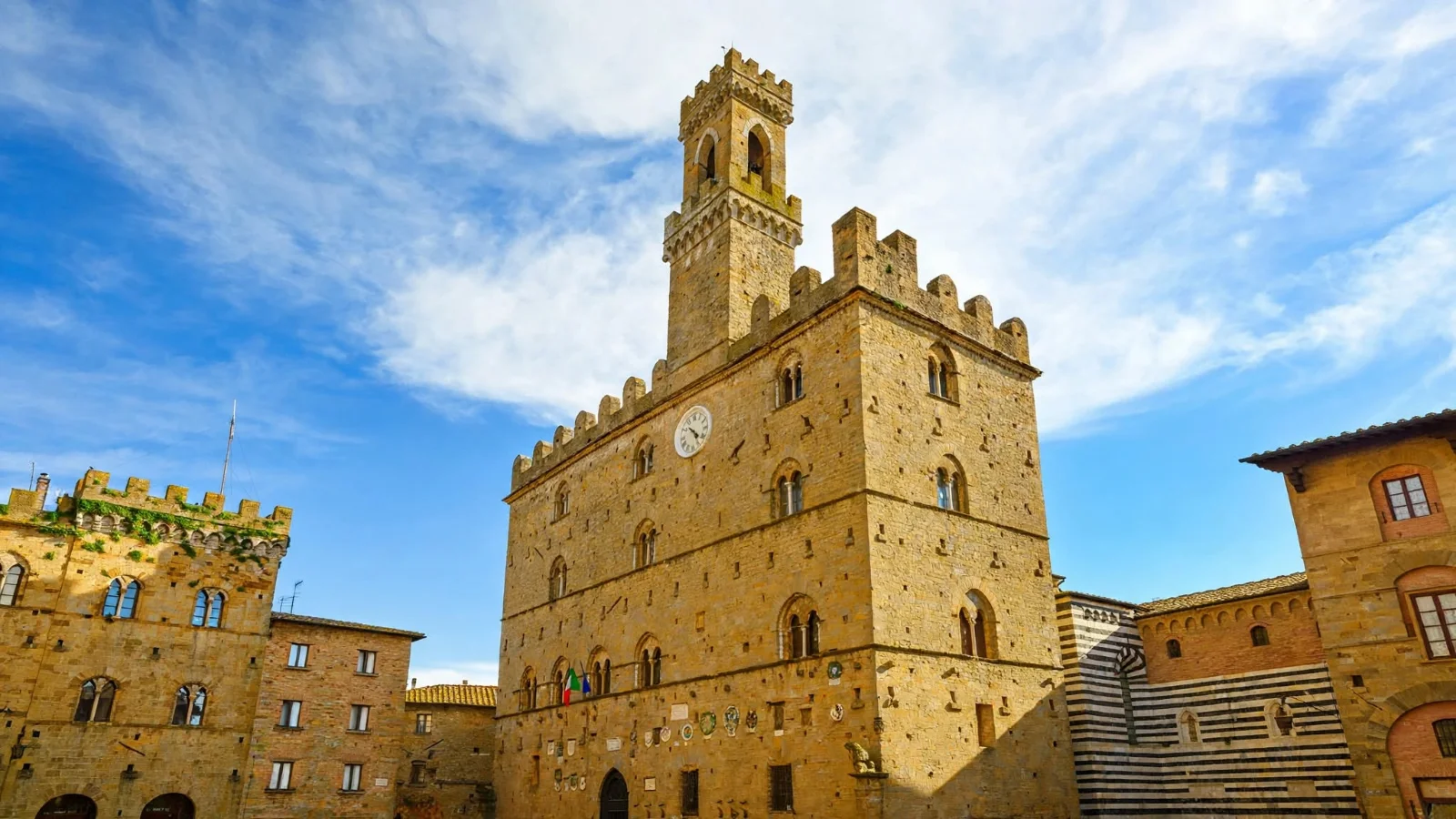
The Claim: Willeasy describes Palazzo dei Priori as accessible thanks to its elevator, but that broad description does not cover every room or the tower.
The Reality: Handy Superabile's summer 2024 report records three irregular steps, 14–24 cm high, at the main entrance. The alternative side entrance is reached by a 170 cm-long, 82 cm-wide ramp with an 8.5% slope and no handrail. An elevator is documented, with a 70 cm door and an internal space measuring approximately 97 cm wide by 115 cm deep.
Some rooms are accessible by elevator, but the audit records a 25–28 cm irregular step at the entrance to one second-floor exhibition area. The tower is reached by stairs and narrow passages, so it should not be presented as wheelchair accessible.
An accessible restroom is recorded on the third floor, reached by a separate 4.5% ramp. Its door is 85 cm wide.
Our verdict:
🟡 Use the side entrance and ask staff which exhibition rooms are open on the day. The 70 cm elevator doorway is the tightest published elevator measurement in this guide; the 82 cm ramp is also narrow. The elevator makes a meaningful difference, but it does not remove every internal barrier.
5. Is Volterra Cathedral (Cathedral of Santa Maria Assunta) Wheelchair Accessible?
Short answer: The three naves can be visited by wheelchair using a designated side entrance, but the 2024 audit records a steep ramp and no handrail. The main entrance should not be assumed to be step-free.
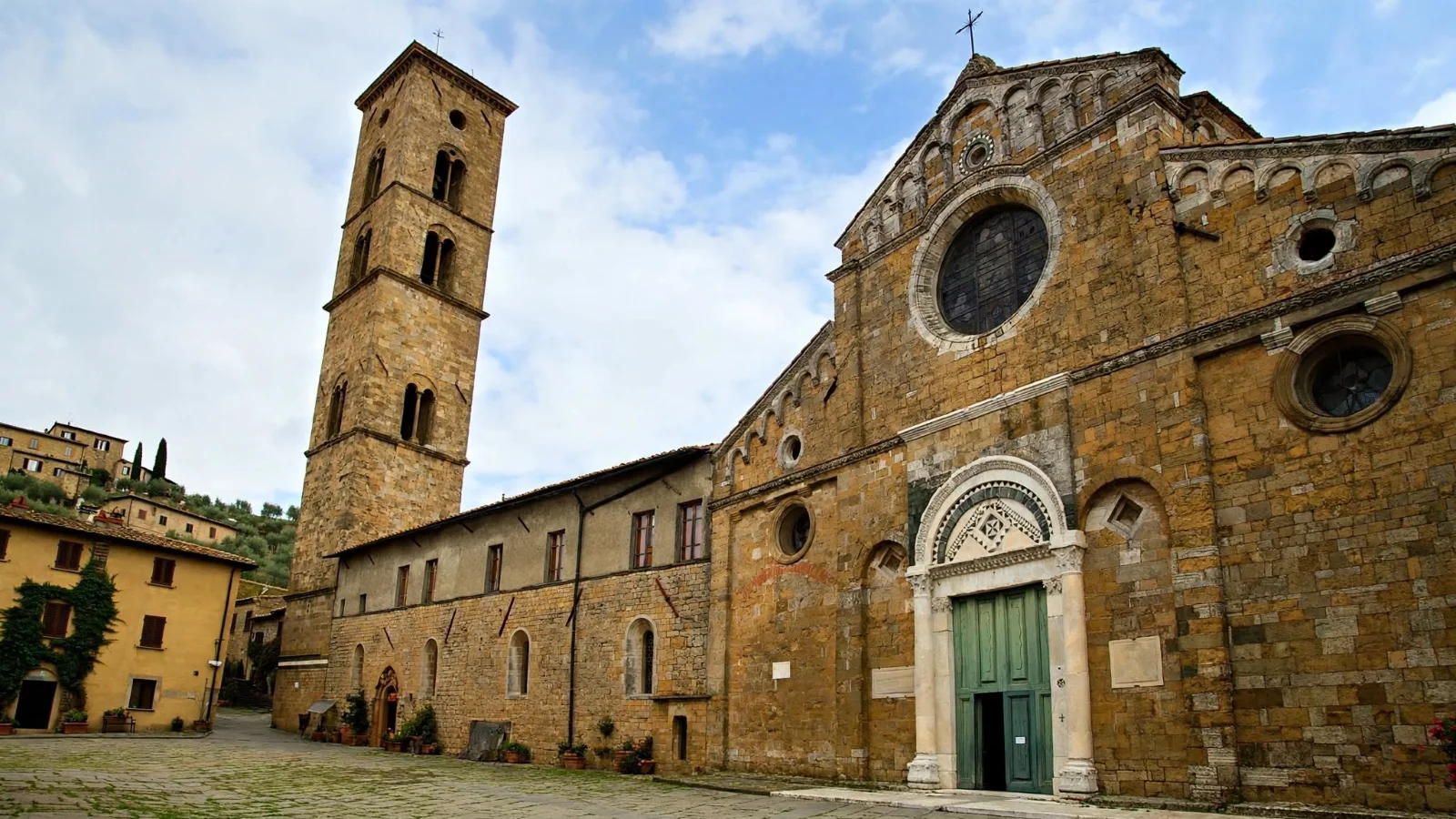
The Claim: Kalatà describes its combined Cathedral-and-Baptistery tour as accessible to people with mobility impairments.
The Reality: Handy Superabile's summer 2024 sheet records the visitor entrance from the side door of the Chapel of Our Lady of Sorrows. The ramp is 102 cm long, 108 cm wide and has a 15% slope, without a handrail. The three cathedral naves are on the same level once inside.
The Baptistery audit records identical ramp dimensions, but the two reports do not say whether this is one shared physical ramp.
The audit also describes an alternative route to the altar from the side near Palazzo dei Priori: a 168 cm ramp at 10%, followed by a 110 cm wooden ramp at 8%. This may allow a wheelchair user to reach the altar and Chapel of the Sacrament, but the route includes a change of level at the pavement and should be checked with staff.
Restrooms: The 2024 sheet locates the accessible restroom in the ticket office inside the Palazzo del Centro Espositivo (the former hospital), not inside the cathedral nave. The recorded restroom door is 88 cm wide. The ticket-office approach itself includes a 400 cm stone ramp at 10% and an 83 cm wooden ramp at 14%.
Our verdict:
🟡 The main nave is documented as reachable, but the 15% entrance ramp is steep. Contact the ticket office before visiting, particularly if you use a manual chair or need to use the accessible restroom.
6. Is the Baptistery of San Giovanni Wheelchair Accessible?
Short answer: Access is limited. The 2024 audit records a 15% ramp and a step of about 14–15 cm at the Baptistery entrance, even though the interior is described as flat.
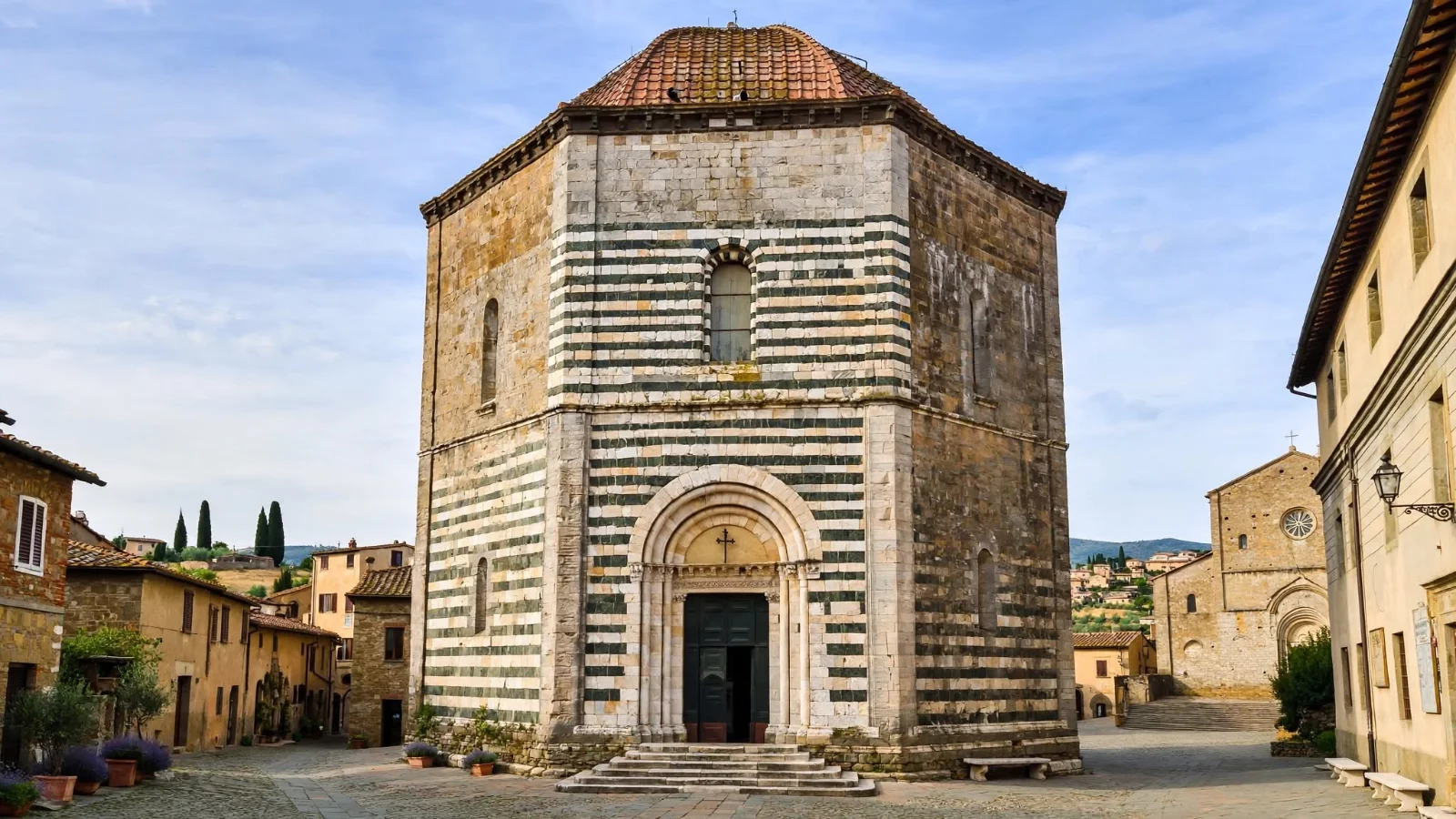
The Claim: Tour operator Kalatà states that its combined Baptistery-and-Cathedral tour route is accessible to people with mobility impairments. It separately says the Cathedral bell tower is not accessible to them.
The Reality: Handy Superabile's summer 2024 sheet records an entrance ramp 102 cm long and 108 cm wide, with a 15% slope and no handrail. It then notes a step of about 14 cm at the Baptistery entrance (also described as approximately 15 cm in the room-access details). The interior is flat after that threshold.
The ticket office and accessible restrooms are in the former hospital building, not inside the Baptistery itself.
This is a useful example of why an operator's overall tour label and a site-specific physical measurement can tell different parts of the story. “Accessible tour” does not necessarily mean every doorway is step-free for every wheelchair configuration. Ask Kalatà whether a temporary ramp or staff assistance is available at the Baptistery threshold before purchasing a ticket.
Our verdict:
🟠 Do not count on independent step-free entry based on the published audit. Confirm the threshold solution directly with the operator.
7. Is the Civic Art Gallery (Pinacoteca Civica) Wheelchair Accessible?
Short answer: The Pinacoteca occupies the first floor of Palazzo Minucci-Solaini and is documented as reachable by elevator. The shared building has a 12% secondary entrance ramp and a 74 cm elevator door.
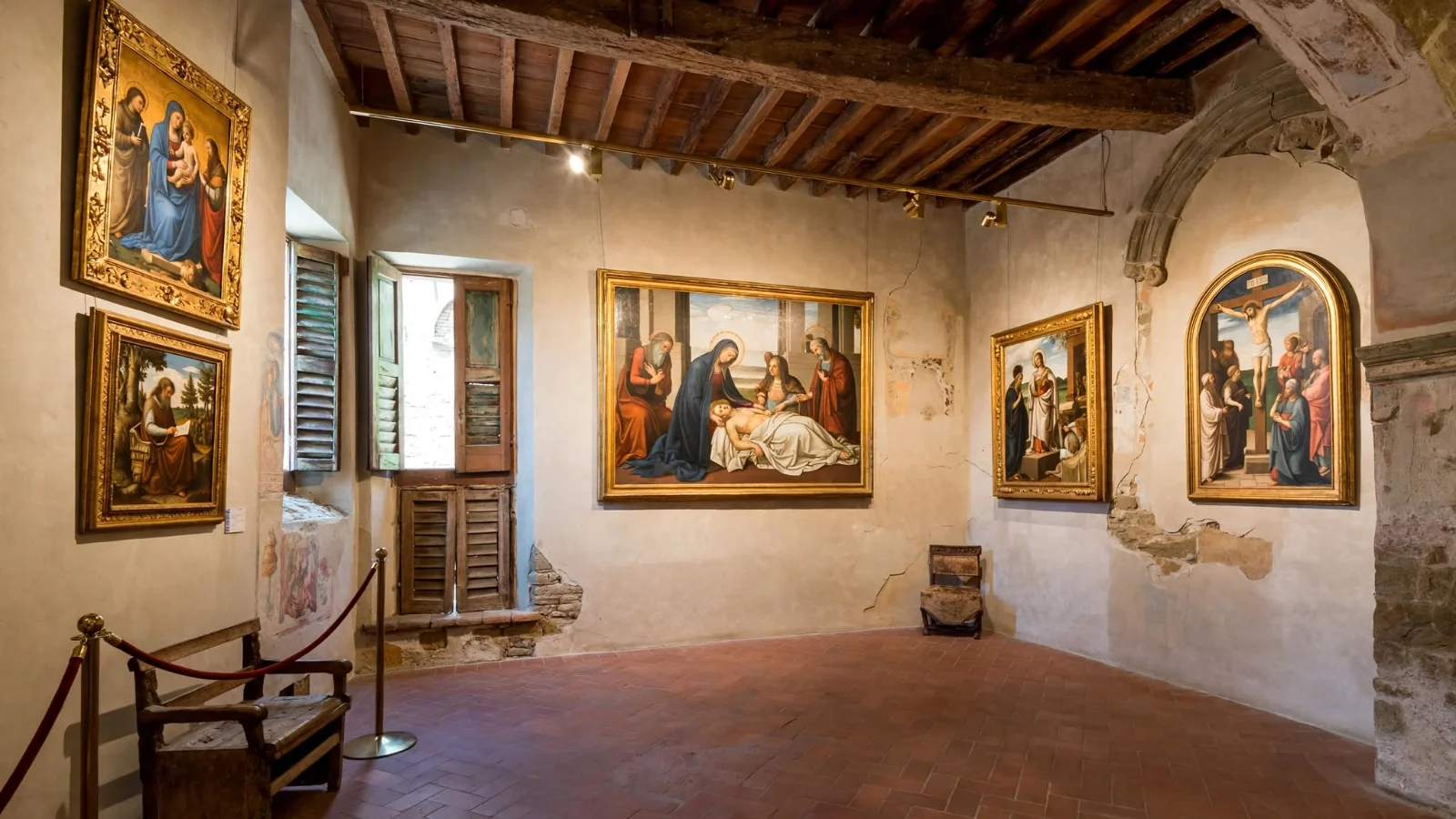
The Claim: Willeasy flags stairs and narrow passages in Palazzo Minucci-Solaini, while the specialist audit maps an elevator-served route to the gallery.
The Reality: The Pinacoteca shares Palazzo Minucci-Solaini with the Alabaster Ecomuseum. Handy Superabile's summer 2024 sheet records an accessible secondary entrance via a ramp 279 cm long, 123 cm wide and 12% steep, leading into the cloister. The building's elevator has a 74 cm door and an internal car width of 85 cm with a depth of 120 cm.
For the Pinacoteca, the key point is the first-floor gallery route via the shared elevator. The second-floor loggia is separate and requires a stairlift. The shared ground-floor accessible restroom has a 79 cm door and limited lateral clearance on one side.
Our verdict:
🟡 The first-floor gallery is documented as elevator-served, but the 74 cm elevator doorway and 12% entrance ramp make this a conditional visit. The upper loggia is a separate stairlift route, not part of the step-free gallery access.
8. Is the Alabaster Ecomuseum Wheelchair Accessible?
Short answer: The Alabaster Ecomuseum occupies the underground and mezzanine levels of the same building. The 2024 audit documents elevator access to those exhibition levels; the upper loggia is a separate stairlift route.
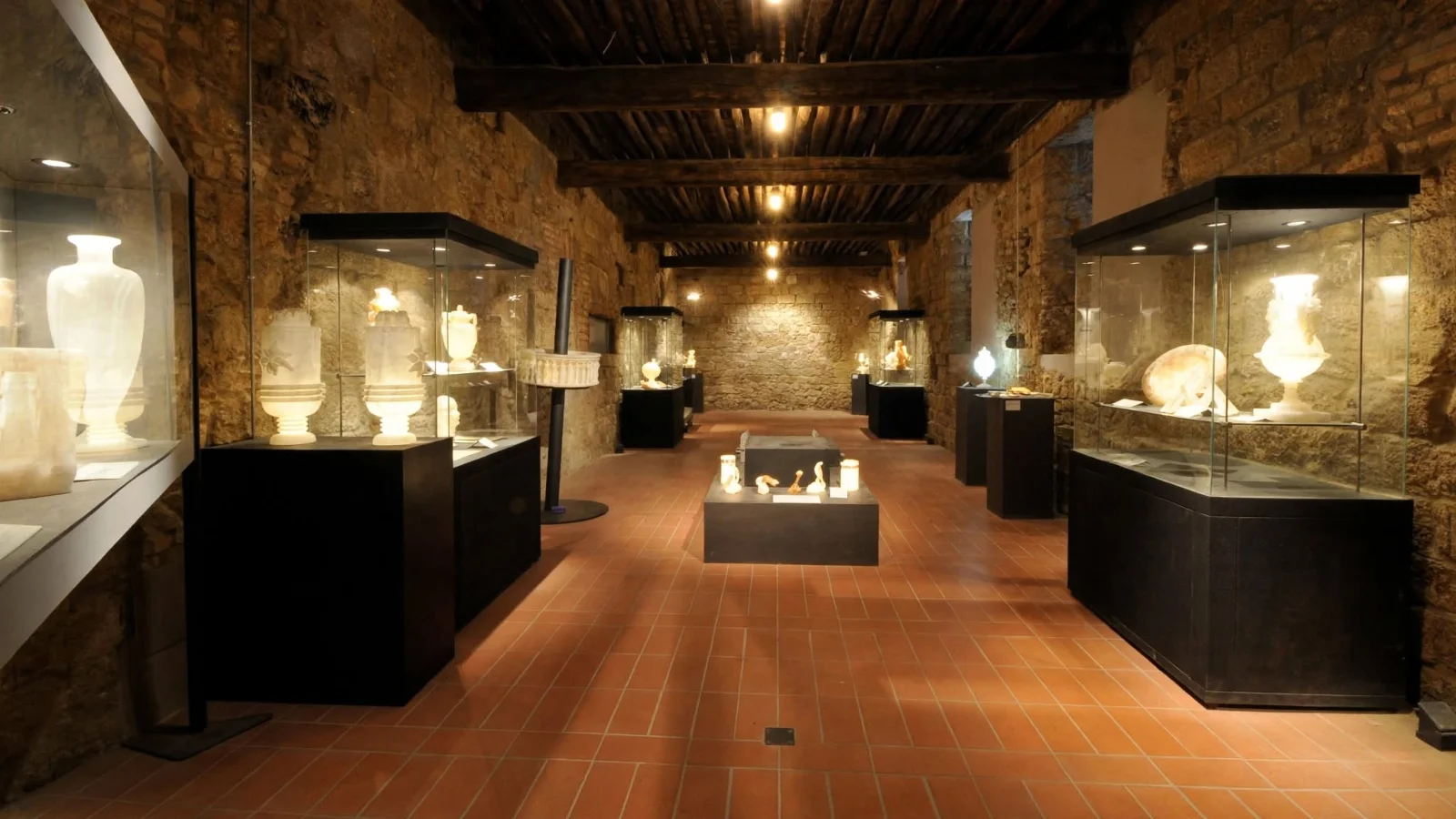
The Claim: Willeasy warns about stairs and narrow passages in the historic building; the audit separates the Ecomuseum's elevator-served levels from the upper loggia.
The Reality: The 2024 Handy Superabile report places the Alabaster Ecomuseum on the underground and mezzanine levels of Palazzo Minucci-Solaini and records elevator access to those levels. This is distinct from the Pinacoteca's first-floor gallery route, even though both use the same building and elevator.
Willeasy's 2024 article identifies stairs and narrow passages in the historic building as potential obstacles. That warning is worth taking seriously, but the later-described technical route is more specific: the main museum levels are reached by elevator, while the loggia uses a stairlift. The 74 cm elevator door and 85 cm internal cabin width are key measurements to compare with your wheelchair.
Our verdict:
🟡 The underground and mezzanine Ecomuseum displays are documented as elevator-served. The upper loggia is not on that same step-free route and uses a stairlift. Check the 74 cm elevator doorway against your chair before setting out.
Getting Around Volterra in a Wheelchair
Volterra's biggest accessibility challenge is not one museum entrance; it is the terrain between attractions. The municipal PEBA survey says the historic center has strong level changes, narrow streets, steep slopes and, in places, stepped routes. It also says the survey did not analyse the entire street network because of the historic urban fabric and topography.
The report describes an electric-assist wheelchair as an important aid for moving around the town.
Street surfaces and slopes
- Hilltop setting: Volterra sits at roughly 530 meters above sea level, according to Italy Review, so most routes between sights climb or descend.
- Paving: the 2024 museum audits record stone-block paving on the route from the underground garage through the historic center. No complete street-by-street gradient map is published.
- Steps in the street network: the municipal survey describes stepped routes in places, so check each leg of your route rather than only the sight's entrance.
- On the day: a power-assist device makes the climbs far more manageable. Manual-chair users should plan companion help uphill and careful braking on descents.
Getting to Volterra from Florence, Pisa and Siena
Volterra has no direct rail station in the historic center, so public-transport journeys involve a bus connection. The official Volterra tourism guide lists routes via Pontedera, Colle Val d'Elsa and Cecina. Current Autolinee Toscane line 500 connects Pontedera and Volterra, while line 770 connects Volterra with Colle Val d'Elsa.
- From Florence: take the regional train to Pontedera and connect with line 500, or use the regional bus network via Colle Val d'Elsa. Check the 131R Florence–Siena corridor and line 770 timetables before choosing a connection.
- From Pisa: Autolinee Toscane lists a bus connection via line 840 and a change to line 500, or a train to Pontedera followed by line 500. See the operator's Pisa arrival guidance.
- From Siena: the regional 131R service links Siena and Colle Val d'Elsa; line 770 then serves Volterra. Check the transfer time and service day carefully.
These are route options, not confirmation that every departure has wheelchair space or a ramp-equipped vehicle. For Autolinee Toscane services, request a ramp-equipped bus at least 48 hours ahead and confirm that both boarding and alighting stops are accessible. Check live timetables and disruptions before setting out; the operator notes that published PDFs may not include every change.
Parking: check the final ramp, not just the elevator
The central underground Parcheggio La Dogana is listed by the local Discover Volterra portal as having 200 spaces, an internal elevator and four disabled bays. It places the garage about 170 meters from Piazza dei Priori, with a stated 3-meter level difference. However, the portal warns that some information may be temporary or inaccurate, so confirm the disabled bays and elevator operation directly with the operator before relying on them.
There is another detail in the 2024 Handy Superabile museum audits: the route from the underground parking garage's elevator to the exit is described as a 9-meter ramp with a 13% slope, followed by stone-block paving through the historic center. An elevator in the garage therefore does not guarantee a gentle, fully step-free route to every attraction.
The official Volterra tourism parking page lists other parking garages, but does not provide a complete current wheelchair-accessibility assessment for each one.
ZTL: do not drive through the camera gates without checking
Volterra's historic center is a limited-traffic zone (ZTL). The municipal PEBA report notes that vehicles serving disabled people may be authorized to enter, but Italy's ACI warns that ZTL procedures vary by municipality and that drivers may need to communicate their number plate in advance.
Before entering, contact Volterra's Municipal Police and confirm the current procedure, required documents and permitted time window. Do not assume that displaying a disability badge alone will prevent a camera-issued fine.
Public buses and accessible transfers
Volterra's tourism office directs passengers to its official bus and travel information page for suburban services arriving in or departing from the town. If the service you plan to use is operated by Autolinee Toscane, wheelchair users should request a ramp-equipped bus at least 48 hours before travel.
The operator says ramp availability also depends on accessible boarding and alighting stops, so confirm both ends of the journey rather than checking the vehicle alone.
Accessible restrooms to plan around
- Guarnacci Museum: one accessible restroom on the ground floor; the 2024 audit records an 89 cm door.
- Palazzo dei Priori: an accessible restroom is recorded on the third floor, reached by a separate ramp; the door is 85 cm wide.
- Cathedral/Baptistery ticket office: the accessible restroom is in the former hospital/ticket-office building, not inside the cathedral or Baptistery; the audit records an 88 cm door.
- Pinacoteca/Ecomuseum: one ground-floor accessible restroom is recorded, with a 79 cm door and limited clearance on one side.
- Roman Theater: no accessible restroom is recorded inside the archaeological area; the 2024 audit identifies a public accessible restroom about 300 meters away, at Via delle Prigioni 3.
These are measurements from the summer 2024 audits, not a guarantee that facilities remain open or unchanged. Ask the venue to confirm access on the day.
Events and busy periods
- Volterra AD 1398: the medieval festival takes over the historic center and the Archaeological Park on the second and third Sundays of August (the 2026 edition ran on 9 and 16 August), according to Terre di Pisa. Expect crowds on the same steep, narrow streets.
- International Festival at the Roman Theatre: evening performances run from mid-July to early August (the 2026 edition ran from 16 July to 8 August, with shows from 21:30), per Terre di Pisa. Ask the museum office whether staging affects the ramp or viewing areas during your visit.
- Check each year's dates: both events move with the calendar, so confirm the dates and any temporary access changes before booking.
What We Could Not Verify
We did not assign accessibility verdicts to the Acropolis or Porta all'Arco. The sources reviewed for this guide did not provide dependable, route-level wheelchair measurements for those sites, so their access should not be assumed either way.
A Realistic One-Day Wheelchair Route in Volterra
This route links the sights with the strongest documented access and treats uncertain stops as optional. Allow a full day with rest breaks, because the climbs between stops matter more than the distances.
- Before you travel: if you are driving, contact the Municipal Police about ZTL rules and number-plate registration. Confirm La Dogana's disabled bays and elevator, or request a ramp-equipped Autolinee Toscane bus at least 48 hours ahead if you arrive by public transport.
- Park at Parcheggio La Dogana: use the garage elevator (80 cm door; 120 × 120 cm interior), then the 9-meter, 13% ramp to the exit. Ask a companion to help on the ramp if you use a manual chair.
- Guarnacci Etruscan Museum: the audit puts it about six minutes on foot from the garage exit. Two elevators serve the exhibition floors, and an accessible restroom is on the ground floor. This is the best place for a long indoor visit.
- Piazza dei Priori and Palazzo dei Priori: roll across the square, then enter the palace through the side entrance (8.5% ramp, 70 cm elevator door). Ask staff which rooms are open and skip the tower.
- Cathedral: Piazza San Giovanni adjoins Piazza dei Priori. Use the designated side entrance (15% ramp, no handrail) and accept help on the ramp. The accessible restroom is in the ticket-office building (88 cm door).
- Baptistery (conditional): go in only if Kalatà confirms how the 14–15 cm entrance step is handled.
- Pinacoteca and Alabaster Ecomuseum: use the secondary entrance ramp (12%) and the shared elevator (74 cm door). Check your chair's width before you set out.
- Roman Theater (optional): add it only if you have energy left. Access is partial via the 9% ramp, and the nearest accessible restroom is about 300 meters away at Via delle Prigioni 3.
- Return to the garage: keep some energy for the way back, where the 13% ramp and stone-block paving apply again.
Check each step with the venue first, because ramps, elevators and opening arrangements can change.
Which Volterra Sights Suit Your Wheelchair Type?
| Chair type | Best-fit sights | Plan carefully |
|---|---|---|
| Power or power-assist chair | Piazza dei Priori, Guarnacci Museum, Pinacoteca/Ecomuseum, Palazzo dei Priori side entrance | The municipal survey calls an electric-assist wheelchair an important aid in town. Check your chair against the 70 cm and 74 cm elevator doors. |
| Manual chair with a companion | Guarnacci Museum, Pinacoteca/Ecomuseum, Piazza dei Priori | Plan help on the 12% Pinacoteca ramp, the 13% garage exit and the 15% Cathedral and Baptistery ramps, plus the steep streets. |
| Manual chair, traveling solo | The Guarnacci Museum interior | Choose one or two close sights and confirm each route first. The steep approaches and ramps of 12–15% may be beyond independent use. |
| Wide or large powered chair | Confirm each sight before booking | The 70 cm and 74 cm elevator doors and the 82 cm side ramp at Palazzo dei Priori are the tightest published figures. Guarnacci's elevator dimensions are unpublished, so ask the museum. |
Volterra vs San Gimignano: Which Is Easier in a Wheelchair?
Both are Tuscan hill towns with uphill streets, so neither is an easy roll. The difference is indoors. Our San Gimignano guide records no elevator at the Town Hall museums or the Santa Chiara museums, a 218-step Torre Grossa and steps at both Duomo entrances.
Volterra's 2024 audits document elevator-served interiors at the Guarnacci Museum, Palazzo dei Priori (partly) and the Pinacoteca/Ecomuseum complex. That gives Volterra more verified indoor options, although its 12–15% ramps and narrow elevator doors still need checking.
San Gimignano works best as an outdoor visit, while Volterra rewards a plan built around its museums. The two guides rely on different audit sources, so compare the measurements rather than the verdict labels alone.
So, Is Volterra Wheelchair Accessible? Our Verdict
Volterra is partly wheelchair accessible, with several worthwhile historic sights that have documented ramps, elevators or alternative entrances. The Guarnacci Museum and the Pinacoteca/Ecomuseum complex have the strongest evidence for multi-level indoor access. The Roman Theater is partially accessible, while the Cathedral's main naves can be reached by a designated side route.
For comparisons with other Italian hill towns, see our Orvieto guide, Perugia guide and Assisi guide.
The bigger obstacle is the journey between those places. Volterra is a hilltop town, not a flat historic center. If you are comparing easier Tuscan bases, our Lucca guide covers a flatter historic center, while our Montepulciano review examines another hill town.
The municipal barrier survey describes steep, narrow and sometimes stepped streets, and the measured ramps at several sights range from 8.5% to 15%. The Baptistery's documented threshold is particularly important: a ramp at the entrance does not remove the step into the interior.
For a realistic visit, start by confirming the parking and approach route, then prioritize the Guarnacci Museum, Piazza dei Priori and the Pinacoteca/Ecomuseum if your chair fits the elevator. Add the Cathedral or Roman Theater after checking their specific entrance arrangements. Treat the Baptistery as a conditional visit until the operator confirms how the 14–15 cm threshold is managed.
The Acropolis and Porta all'Arco remain unverified in the sources reviewed for this guide. Our one-day route and chair-type table turn these findings into a plan.
Before You Go: Volterra Wheelchair Checklist
- Check your route, not only the attraction: ask about the steepest approach, stone paving, steps and any temporary street works between your parking space and the entrance.
- Measure your wheelchair: Palazzo dei Priori has a 70 cm elevator door and an 82 cm-wide side ramp; the Pinacoteca/Ecomuseum elevator door is 74 cm. Guarnacci's 2024 audit records two elevators but does not publish their door or cabin dimensions.
- Ask about the steep ramps: Palazzo dei Priori is recorded at 8.5%, the Roman Theater at 9%, the Pinacoteca at 12%, and the Cathedral/Baptistery route at 15%.
- Confirm the Baptistery threshold: ask Kalatà whether a portable ramp or other assistance is available for the recorded 14–15 cm step.
- Contact the parking operator: confirm that La Dogana's disabled bays and elevator are working and ask about the 13% ramp recorded on the route out of the underground garage.
- Arrange an accessible bus in advance: Autolinee Toscane asks wheelchair users to request a ramp-equipped bus at least 48 hours before travel, subject to stop access and vehicle availability.
- Check ZTL permission before driving in: contact the Municipal Police and confirm whether your vehicle registration must be submitted in advance.
- Check event dates: Volterra AD 1398 falls on the second and third Sundays of August, and the Roman Theatre festival runs on summer evenings from mid-July to early August.
- Ask about free admission: the official Volterra Museums website lists free admission for visitors with disabilities and their companions in the museum circuit; confirm the required documentation when booking.
- Reconfirm opening and equipment: check the official Volterra Museums website for current opening information and confirm any essential elevator or stairlift is operating before traveling.
Volterra Wheelchair Accessibility FAQ
Is Volterra wheelchair accessible overall?
Volterra is partly wheelchair accessible, not fully step-free. Several museums and historic buildings have elevators or alternative entrances, but the hilltop setting creates steep, narrow streets and uneven stone paving. The municipality's 2020 barrier survey identified substantial access barriers in the historic center, so plan each route between attractions rather than judging access by the destination entrance alone.
Is Volterra flat or hilly for wheelchair users?
Hilly. Volterra is a hilltop town at roughly 530 meters above sea level, and the municipality's 2020 barrier survey describes strong level changes, narrow streets, steep slopes and some stepped routes. A power-assist chair or a companion makes the climbs far more manageable, and measured ramps at the sights run from 8.5% to 15%.
Which sights in Volterra are the most accessible for wheelchair users?
The Guarnacci Etruscan Museum and the Pinacoteca/Ecomuseum complex have the clearest 2024 evidence for elevator access to multiple exhibition levels. Piazza dei Priori may be manageable with a propulsion device, while the Roman Theater is documented as partially accessible. Each site still has limitations, including thresholds, steep ramps, elevator dimensions or uneven approaches.
Can wheelchair users visit Volterra's Roman Theater?
Partly. Handy Superabile's summer 2024 audit records a flat main entrance and a 2-meter ramp with a 9% incline and a handrail leading into the archaeological area. The report explicitly calls the theater partially accessible. It does not confirm that every seating tier or archaeological level can be reached, so ask the museum which areas are open to wheelchair users.
Is the Guarnacci Etruscan Museum wheelchair accessible?
It has one of the strongest documented indoor access arrangements in Volterra. A 2024 specialist audit records a main entrance with a 3–6 cm threshold, two elevators serving exhibition routes on two floors, and an accessible ground-floor restroom with an 89 cm door. The approach from the underground parking garage includes stone paving and a 13% ramp, which may require assistance.
Are Volterra Cathedral and the Baptistery wheelchair accessible?
The Cathedral's three naves are documented as reachable through a designated side entrance, but the recorded ramp is 15% and has no handrail. The Baptistery is more difficult: its 2024 audit records a ramp and a step of about 14–15 cm at the entrance. Kalatà describes its combined tour as accessible, so confirm how that threshold is managed before booking.
Where should wheelchair users park in Volterra?
Parcheggio La Dogana is a central underground option; a local listing describes an elevator and four disabled bays, but warns that some information may be temporary or inaccurate. A 2024 specialist audit also records a 9-meter, 13% ramp on the route from the underground parking garage to the exit. Contact the operator to confirm the current route and bay availability.
Can disabled badge holders drive into Volterra's ZTL?
Do not assume that displaying a disability badge alone is enough. Volterra's historic center is a limited-traffic zone, and Italian ACI guidance says local procedures can require advance number-plate registration. Contact Volterra's Municipal Police before entering and confirm the current documents, registration process and authorised time window to avoid a camera-issued fine.
Can you visit Volterra in a day in a wheelchair?
Yes, with a focused plan. Start with the Guarnacci Museum, roll across Piazza dei Priori, use the Palazzo dei Priori side entrance and the Cathedral's side route, then add the Pinacoteca and Ecomuseum if your chair fits the 74 cm elevator door. Treat the Baptistery and Roman Theater as conditional stops, and confirm parking, ZTL and bus arrangements beforehand.
Are there accessible toilets in Volterra?
Yes, at several sights, according to the 2024 audits. The Guarnacci Museum has a ground-floor accessible restroom (89 cm door), Palazzo dei Priori has one on the third floor (85 cm door), the Cathedral and Baptistery ticket-office building has one (88 cm door), and the Pinacoteca/Ecomuseum has one with a 79 cm door. The Roman Theater has none inside; the audit points to a public accessible restroom at Via delle Prigioni 3, about 300 meters away.
Is Volterra or San Gimignano easier for wheelchair users?
Both are hilly, but Volterra has more documented elevator-served interiors. San Gimignano's audits record no elevators at the Town Hall museums or Santa Chiara museums and a 218-step Torre Grossa. Volterra's Guarnacci Museum, Palazzo dei Priori side route and Pinacoteca/Ecomuseum complex have elevators, though ramps of 8.5% to 15% and narrow elevator doors still need checking.
Explore More Wheelchair-Accessible Tuscany Guides
For the wider picture beyond Volterra, use our Europe Wheelchair Accessible Travel Guide.
Discussion
No comments yet. Be the first to share your thoughts.
Leave a comment