
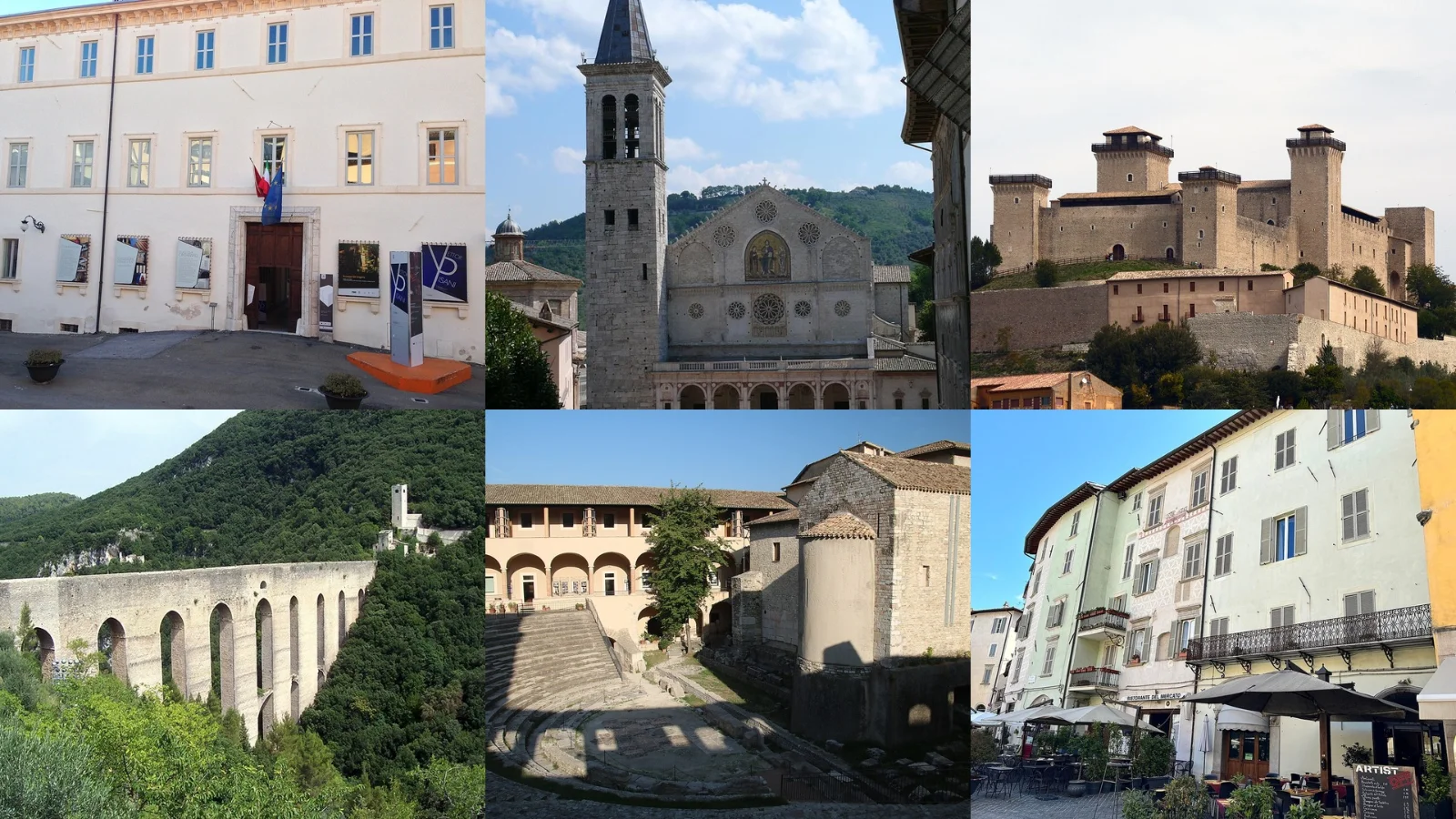
Is Spoleto wheelchair accessible? Partly, and the car park you choose decides how much of the town you can use. Spoleto is a hill town, but a free network of underground moving walkways and lifts carries visitors from the lower car parks into the upper town, and the best-documented sights are indoors: Palazzo Collicola, the National Archaeological Museum and the Rocca's museum route. The limits are just as clear. Escalators are not wheelchair routes, there is no lift link between Piazza del Duomo and the Rocca, the step-free approach to the Cathedral is a steep road, and Ponte delle Torri still has no official wheelchair statement.
Quick answer: Spoleto is workable in a wheelchair if you plan around the Posterna and Spoletosfera underground walkways and lifts rather than the steep historic streets. Palazzo Collicola, the National Archaeological Museum and the Rocca's museum route have documented lifts and accessible restrooms. Avoid the escalator-based Ponzianina route, treat the Cathedral as a separate effort because of its steep road approach, and treat Ponte delle Torri as unverified until confirmed by the Comune.
Top 3 to prioritize
- Palazzo Collicola: officially marked wheelchair accessible, with a lift to the floors, accessible toilets and free entry for disabled visitors and one companion.
- National Archaeological Museum: a lift to all exhibition levels, an accessible restroom and a level museum route. The Roman Theatre cavea is only a partial visit.
- Rocca's Museo Nazionale del Ducato: a museum route documented as barrier free, reached by lift from the Posterna tunnel. Expect a short gravel stretch at the entrance.
Confirm before visiting
- Spoleto Cathedral: the ramped entrance is documented, but the step-free approach is a steep road shared with traffic, and the shortest way down is a staircase.
- Ponte delle Torri: no official wheelchair statement, and no wheelchair account since the 2024 reopening.
- Via Brignone and the upper streets: a wheelchair-using traveler found the climb from Piazza della Liberta too steep and used the tunnel instead.
In this guide: At a Glance · Methodology · The Escalator and Lift Question · 1. Spoleto Cathedral · 2. Rocca Albornoziana · 3. Ponte delle Torri · 4. National Archaeological Museum and Roman Theatre · 5. Piazza del Mercato and Piazza della Liberta · 6. Palazzo Collicola · Getting around Spoleto · Where to stay · When to go · One-Day Route · By Chair Type · Spoleto vs Other Hill Towns · Verdict · Before you go · FAQs
At a Glance: Is Spoleto Wheelchair Accessible? Verdicts by Sight
How to read the verdicts:
🟢 Accessible according to the cited evidence.
🟡 Accessible with limitations or assistance.
🟠 Significant limitations: reachable only in part, or only with substantial help.
🔴 Not wheelchair accessible for the described area.
⚪ Unverified: insufficient official or traveler data to confirm wheelchair access.
| Attraction | What the evidence says | Wheelchair Accessible? Our Verdict |
|---|---|---|
| 1. Spoleto Cathedral (Duomo) | The Comune di Spoleto lists a secondary entrance with a wheelchair ramp. | 🟡 The ramp is documented. The climb to the square is the limit. |
| 2. Rocca Albornoziana and Museo Nazionale del Ducato | Spoleto Cultura marks it accessible. The Ministry describes the museum route as barrier free. | 🟡 Lifts reach the entrance. Gravel at the door; towers and ramparts are not documented as accessible. |
| 3. Ponte delle Torri | The Comune says it reopened and is open 24 hours. | ⚪ No wheelchair-specific access details found. |
| 4. National Archaeological Museum and Roman Theatre | The Ministry's accessibility page publishes a PEBA and a progress report. | 🟡 Strongest indoor option. The theatre cavea is partly inaccessible. |
| 5a. Piazza della Liberta | The Comune marks it accessible to disabled people. | 🟢 Officially accessible, with a lift-served tunnel exit on the square. |
| 5b. Piazza del Mercato | Spoleto Cultura has no accessibility label. A wheelchair user reached it through the tunnel. | 🟡 Reachable from the Via Saffi exit. Vehicles share the square. |
| 5c. Streets between the two squares | The Comune names Corso Mazzini and Via del Mercato, or Via Brignone and Via Arco di Druso. | 🟠 A wheelchair user called the Via Brignone climb particularly steep. |
| 6. Palazzo Collicola | Spoleto Cultura states "Wheelchair Accessibility: Yes." The museum lists a lift. | 🟢 Officially accessible, with free entry for disabled visitors and one companion. |
| Walkways and lifts (Posterna, Spoletosfera) | Free moving walkways and lifts from the lower car parks. Escalator routes are separate. | 🟡 A strong backbone, but there is no lift link between the Duomo and the Rocca. |
The latest detailed official assessments we located for the National Archaeological Museum and the Rocca date from December 2021. They are useful baselines, but confirm that lifts, accessible restrooms, ramps and platforms still work, especially if you use a wide or heavy powered wheelchair.
The Claim vs. The Reality: How We Checked Spoleto
The Claim: What the Comune di Spoleto, Spoleto Cultura, Umbria Tourism, the Ministry of Culture and travel guides say about reaching the hill, using the mechanical routes and entering the main monuments.
The Reality: What official municipal pages, Ministry PEBA documents, museum accessibility records, local reporting, traveler reviews and a wheelchair user's first-person account actually document.
We cross-checked official accessibility plans, municipal and museum pages, transport operator pages and local news, and re-checked them on 22 November 2026. The first-person account is a January 2024 Italian-language guide by wheelchair-using travel blogger Ina. Official PEBA documents identify barriers and planned works rather than always publishing exact measurements. Where slope percentages, lift cabin dimensions or entrance-step heights were not published in any source, we say so rather than inventing figures.
The Escalator and Lift Question: Reaching the Upper Town
Short answer: Spoleto's walkway and lift network is the main reason the town is workable, but it is three separate systems, not one seamless wheelchair route. Choosing the right car park matters more than anything else you plan.
The Claim: Umbria Tourism describes a route from the Ponzianina car park through escalators to the Cathedral, and says that once visitors reach the Piazza Campello terminal they can continue upward through one of two available routes.
The Reality:
- Posterna is the wheelchair backbone. According to Busitalia, Posterna car park has 454 spaces, including 9 reserved for disabled visitors. Its underground tunnel of moving walkways and lifts has four exits: Teatro Nuovo, Piazza Pianciani, Via A. Saffi (about 50 metres from Piazza del Duomo and Piazza del Mercato) and Via Gattapone (about 10 metres from Piazza Campello and 100 metres from the tunnel entrance leading to the Rocca lifts). Ina used it in January 2024 and called it surprisingly accessible, with lifts at the surface exits. Parking at Posterna is paid even with a disabled badge, though she found an accessible bay easily.
- Spoletosfera serves Piazza della Liberta. Its underground gallery is over 600 m long with a gentle slope, two moving walkways and lifts at four exits, one of them on Piazza della Liberta beside the Roman Theatre and the Archaeological Museum (Busitalia). Italian Wikipedia says the three routes were designed without architectural barriers.
- Ponzianina is escalator based. Enjoy Spoleto says this car park connects to the town by escalators, which wheelchairs cannot use. For the Rocca, use the last Posterna exit near Piazza Campello instead.
- One gap remains. Ina reports that Piazza del Duomo and the Rocca are linked only by stairs and escalators, with no lift or moving walkway.
- Service can stop. Busitalia publishes seasonal timetables (including a winter schedule starting on 2 November), and a strike notice for 15 May 2026 listed Spoleto's mechanised routes. We found no live status page for individual lifts.
The Comune's Piazza Pianciani page also confirms the underground walkways from that square to Piazza Campello, the recommended exit for the Rocca and Ponte delle Torri.
Our verdict:
🟡 Use Posterna for most sights and Spoletosfera for Piazza della Liberta. Do not rely on Ponzianina's escalators or on a lift link between the Duomo and the Rocca. Confirm that the lifts are running before you depend on them (the contact is in the checklist).
1. Is Spoleto Cathedral (Duomo) Wheelchair Accessible?
Short answer: Partly. The ramped entrance is officially documented, but the step-free approach to Piazza del Duomo is a steep road, and the quickest way down from the Via Saffi tunnel exit is a staircase.
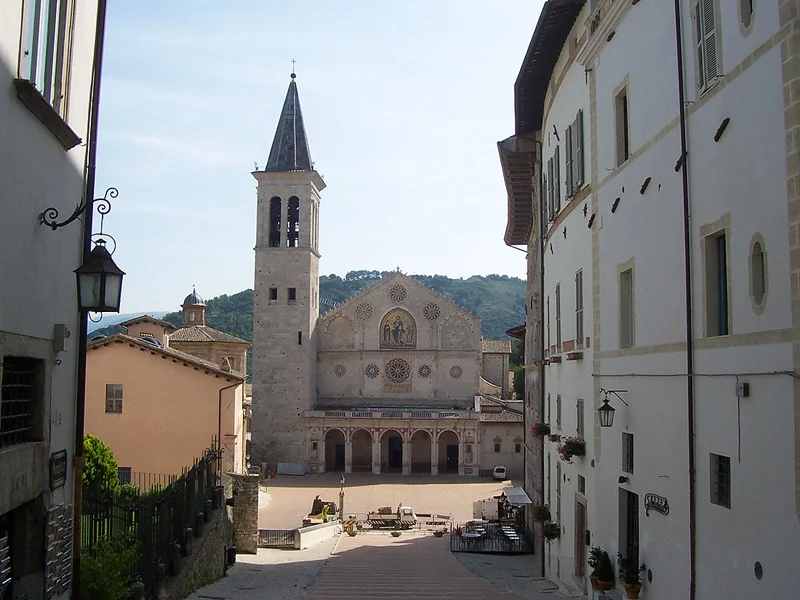
The Claim: The Comune di Spoleto presents the Cathedral as a major monument and specifically states: "Entrata secondaria dotata di rampa per l'accesso in sedia a rotelle," meaning a secondary entrance equipped with a ramp for wheelchair access.
The Reality: The official page confirms the ramp and adds the visiting basics. Entry to the Cathedral alone is free, it opens until 19:00 from April to October and until 18:00 from November to March, with last entry an hour before closing, and disabled visitors with a companion are free on the paid circuit. An older, undated listing from the regional site Umbria Accessibile describes a platform on the right side of the forecourt, which may be the same access, so ask staff to confirm its exact position.
The approach: Busitalia places the Posterna tunnel's Via A. Saffi exit about 50 metres from Piazza del Duomo, but the direct line down is the stepped Via dell'Arringo. Ina writes that the only wheelchair route to the Duomo runs along Via del Duomo, sharing the road with traffic, and then up a particularly steep street.
Still unpublished: the Comune does not map a continuous step-free route from the tunnel exit to the ramped entrance, nor does it state whether every interior area is accessible or where an accessible restroom is.
Our verdict:
🟡 The entrance is documented, and the climb is the cost. Allow extra time, ask the Local Police which streets near the Duomo badge holders may use, and confirm the entrance with the Cathedral (the contact is in the checklist).
2. Is the Rocca Albornoziana and Museo Nazionale del Ducato Wheelchair Accessible?
Short answer: Partly. The museum route is documented as free of architectural barriers and lifts reach the fortress, but the entrance path, towers and ramparts are the weak spots.
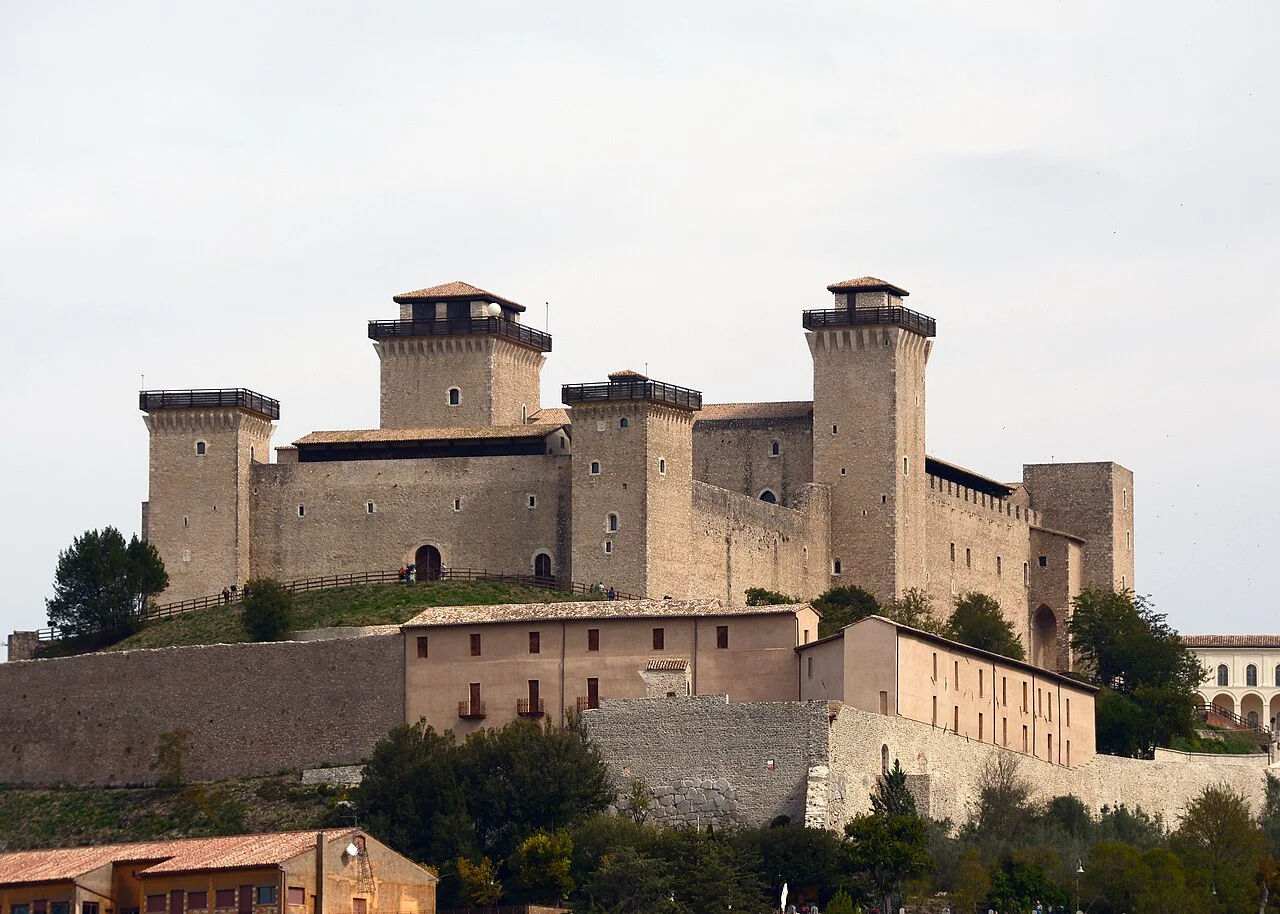
The Claim: The Spoleto Cultura page marks the Rocca Albornoz and Museo Nazionale del Ducato as accessible to disabled people and lists accessible bathrooms, a bookshop and a cloakroom.
The Reality:
- Getting there: take the last Posterna exit at Via Gattapone near Piazza Campello. Busitalia places the tunnel entrance leading to the Rocca lifts about 100 metres from this exit, and Ina took this lift route up to the fortress. The Ministry's December 2021 PEBA progress report adds that visitors with particular needs can use internal parking after contacting reception and security staff.
- The entrance: Ina found about 15 m of loose gravel at the entrance and uneven flooring inside, which she managed with care.
- Inside: the Ministry report says the museum route has no architectural barriers. Ina reached the first floor by a lift entered from outside, and staff helped her move between floors.
- Restroom: Spoleto Cultura lists accessible bathrooms. Ina says you must ask staff for access because the toilet is not directly connected to the museum rooms.
- Tickets: entry was free for her and a companion.
- Limits: the same report says work at Malborghetto was intended to make part of the external annexes usable by wheelchair visitors. That does not make the whole fortress accessible, and the towers and ramparts have no documented accessible route.
Our verdict:
🟡 Visit the Museo Nazionale del Ducato if you want Spoleto's strongest documented fortress-museum experience. Contact the Rocca before arrival about internal parking, the entrance surface and which outdoor areas can be visited (the contact is in the checklist).
3. Is Ponte delle Torri Wheelchair Accessible?
Short answer: Unverified. The bridge reopened in December 2024 and has been open 24 hours since April 2025, but no official source or wheelchair-user account documents access to the bridge, its approaches or its surface.
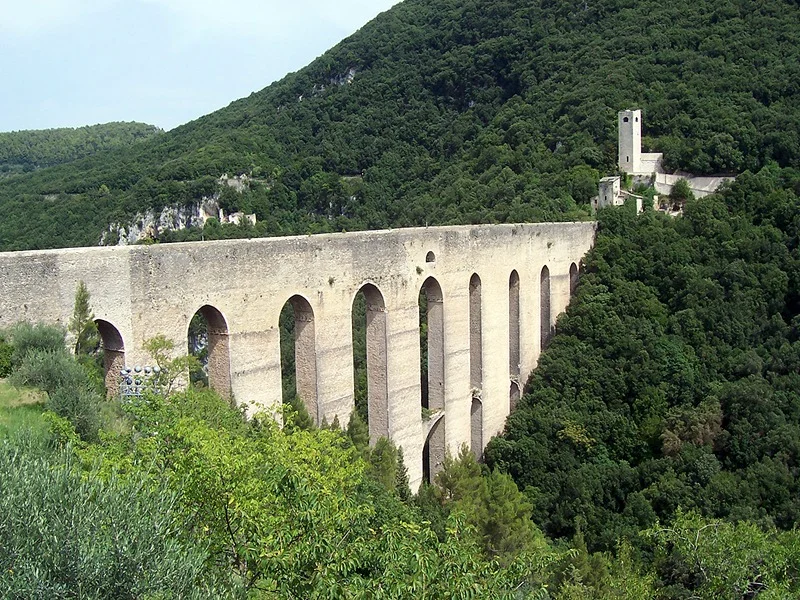
The Claim: The Comune di Spoleto says the bridge reopened after more than eight years and that visitors can again reach the Fortilizio dei Mulini and Giro dei Condotti by crossing it. A later municipal notice says it is open 24 hours.
The Reality: The official notices confirm that the bridge is walkable again, but neither gives a wheelchair assessment. They do not state the bridge width, surface material, cross slope, approach gradient, ramps or whether the Fortilizio dei Mulini end is reachable without steps. Umbria Journal's reopening coverage says the safety work made the pedestrian path accessible to everyone, but it does not say what that means for wheelchairs. Umbria24 reports that the gates at the ends stay in place but are wide open.
What the secondary sources say:
- A 2025 Tripadvisor reviewer says the parapet height and walkway width make the walk suitable for everyone, without mentioning wheelchairs.
- Adagio Umbro calls the crossing flat but notes slightly uneven stones, while My Secret Map describes a narrow pedestrian walkway. The sources disagree on width.
- The approach is on foot from the Rocca side along the fortress road. Adagio Umbro says reaching it from the lower town involves slopes, steps or the mechanised routes.
Our verdict:
⚪ Nothing we found shows a wheelchair user crossing the bridge since it reopened. View it from the Rocca side, and ask the Comune about the surface, the gate width and the approach before you plan a crossing (the contact is in the checklist).
4. Are the National Archaeological Museum and Roman Theatre Wheelchair Accessible?
Short answer: The museum is mostly yes. The December 2021 Ministry PEBA records a lift connecting all exhibition levels, an accessible restroom, a wheelchair-height ticket desk and a level museum route. The Roman Theatre cavea remains difficult for people with reduced mobility.
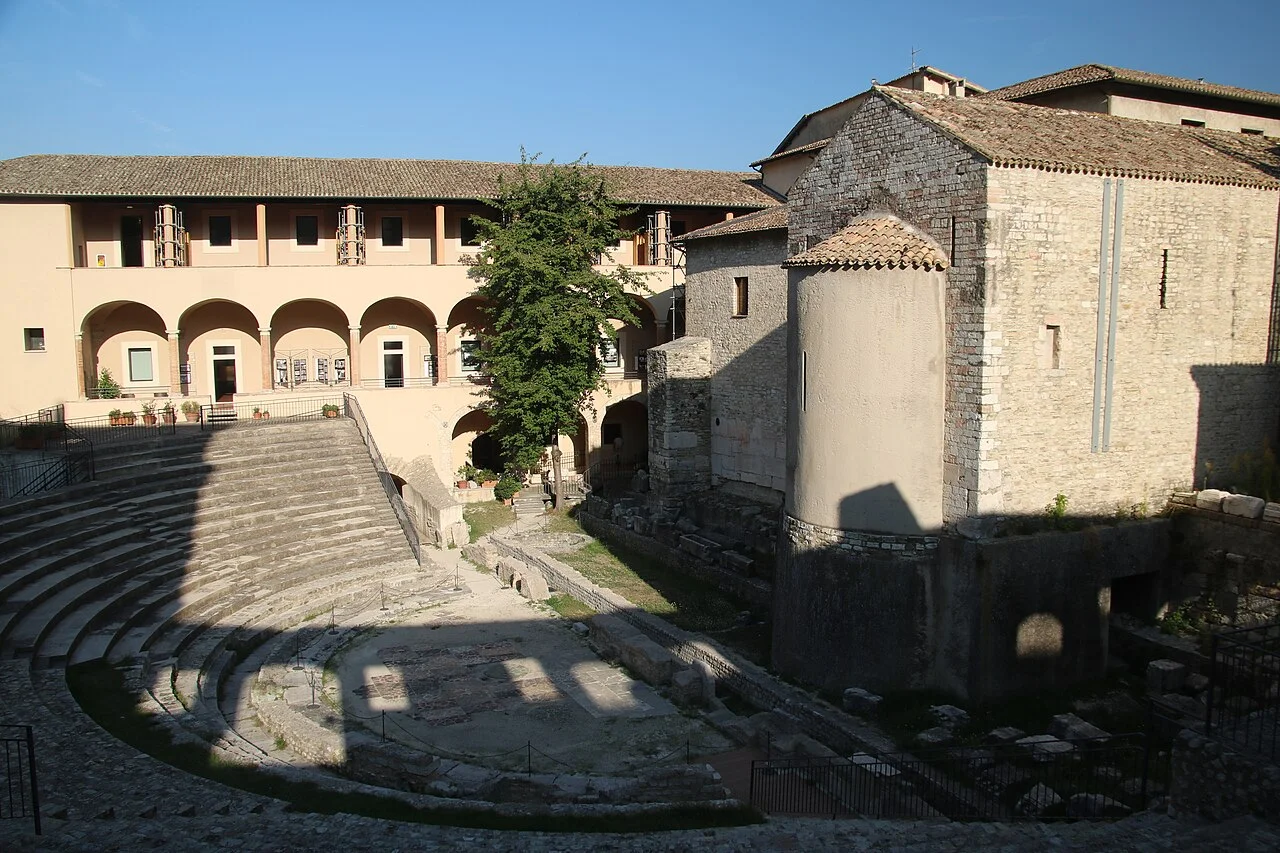
The Claim: The Ministry's accessibility page publishes a PEBA and a progress report for the National Archaeological Museum and Roman Theatre.
The Reality, step by step:
- Getting there: the Spoletosfera tunnel surfaces on Piazza della Liberta, which faces the Roman Theatre and the museum (Via Sant'Agata 18/A). From Posterna, Ina walked up Corso Mazzini from the Piazza Pianciani area to reach the same square.
- Entrance: the December 2021 PEBA says the wheelchair entrance is the ordinary visitor entrance, with a second access behind the open theatre area. It records a level entrance with a passage width of at least 75 cm.
- Inside: an accessible restroom, a lift that meets minimum cabin, door and landing dimensions, upper rooms reachable by lift, and a ticket desk designed for wheelchair users. The progress report adds two new platforms and a ground-floor ramp to overcome level changes, and a more convenient wheelchair entrance.
- The theatre: the PEBA says not all parts of the Roman Theatre can be visited by a person with reduced mobility, some exterior museum areas are not accessible, and the cavea remains difficult to traverse.
Our verdict:
🟡 Start here if you want a well-documented indoor museum visit. Use the lift and accessible museum route, but treat the theatre cavea as a partial visit rather than a fully accessible ruin walk.
5. Are Piazza del Mercato and Piazza della Liberta Wheelchair Accessible?
Short answer: Piazza della Liberta is officially accessible and easy to reach from the tunnels. Piazza del Mercato has no official accessibility label but can be reached from the Via A. Saffi tunnel exit. The streets between the two squares are the steep part.
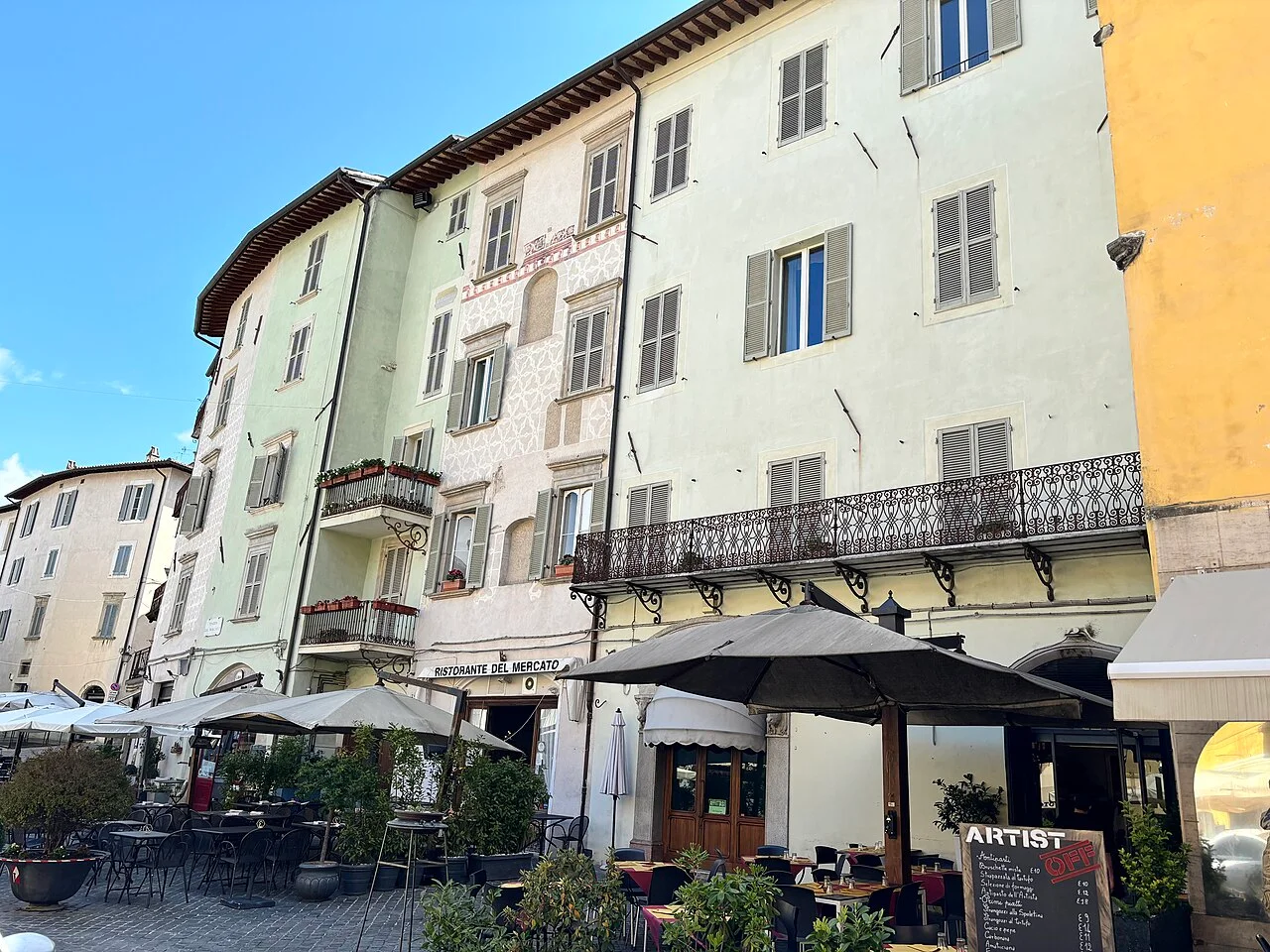
The Claim: The Comune di Spoleto marks Piazza della Liberta as accessible to disabled people and free to visit. It also explains that visitors can reach Piazza del Mercato by following Corso Mazzini and Via del Mercato, or by going up Via Brignone and Via Arco di Druso.
The Reality: The official page confirms the square's accessibility label but does not define it: no pavement condition, gradient, curb-cut locations or step-free route to Piazza del Mercato. Spoleto Cultura describes Piazza del Mercato as the ancient Roman forum but gives it no wheelchair label. Ina fills part of the gap:
- Piazza della Liberta: reached by walking Corso Mazzini uphill from Piazza Mentana, or by the Spoletosfera tunnel exit on the square.
- Piazza del Mercato: she went back into the tunnel and used the Via A. Saffi exit (about 50 metres from the square), because the climb up Via Brignone from Piazza della Liberta was particularly steep. She found cars interrupting the square but bars where you can sit by the fountain.
- The Corso Mazzini and Via del Mercato alternative: no wheelchair assessment exists for it.
Our verdict:
🟢 Piazza della Liberta: officially marked accessible and served by a lift-equipped tunnel exit.
🟡 Piazza del Mercato: reachable by the tunnel, but vehicles share the square.
🟠 Connecting streets: use the tunnel instead of the Via Brignone climb.
6. Is Palazzo Collicola Wheelchair Accessible?
Short answer: Yes, according to Spoleto Cultura and the museum itself. The museum is marked wheelchair accessible, has a lift to its floors and accessible toilets, offers free entry for disabled visitors and one companion, and is reached through the Posterna tunnel's Teatro Nuovo exit.
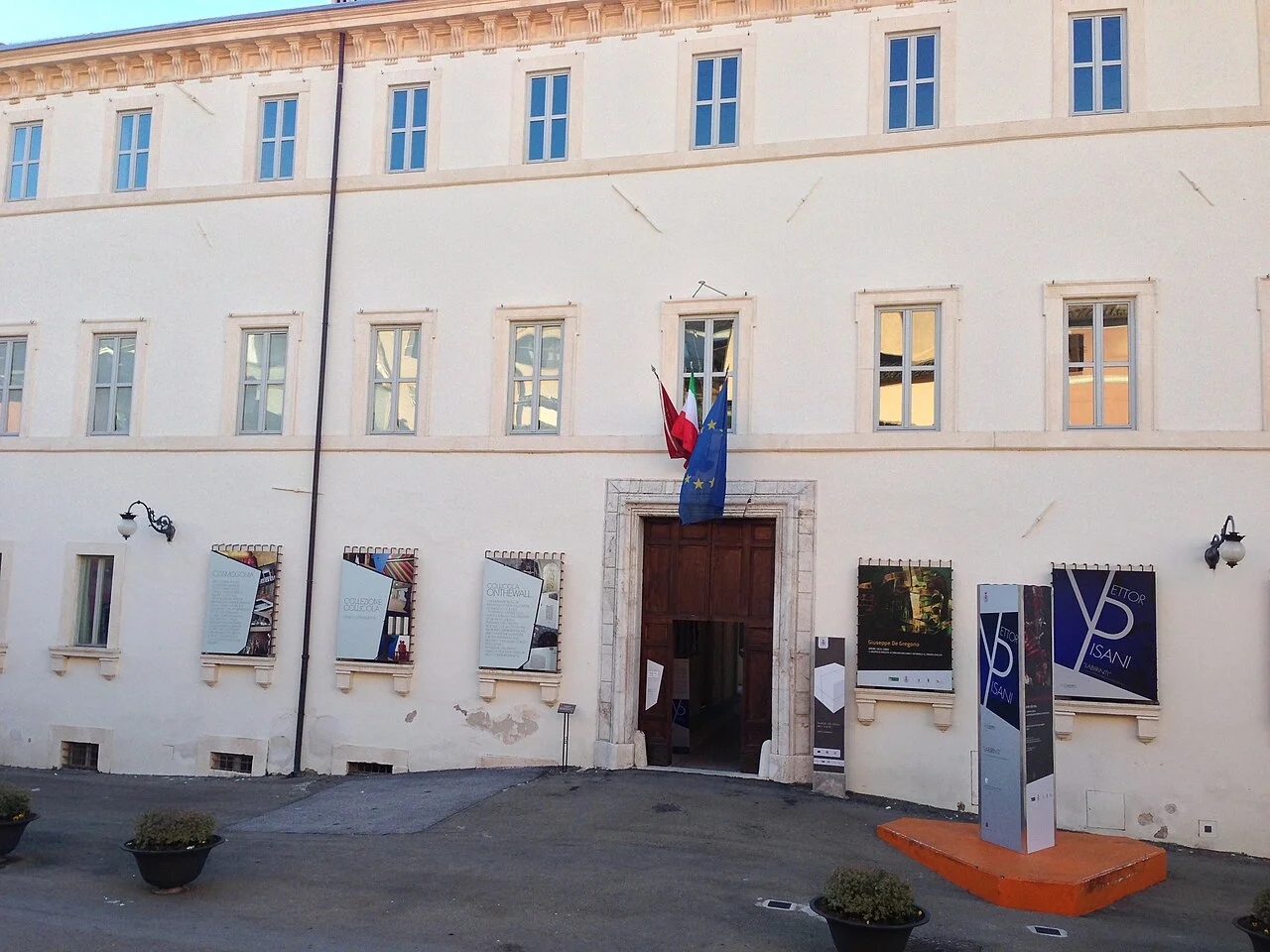
The Claim: The Spoleto Cultura page states "Wheelchair Accessibility: Yes" and says the museum is accessible to visitors with disabilities.
The Reality: The official page says Palazzo Collicola has three exhibition floors, including the Piano Nobile and the G. Carandente Gallery, and lists free entry for disabled visitors with the benefit extended to one companion. The museum's own ticket page lists a lift to the floors, and the Italian Spoleto Cultura page lists accessible bathrooms. Neither publishes the lift's cabin dimensions or door width, which matters if you use a large powered wheelchair.
Practical details:
- Getting there: park at Posterna and take the free tunnel to the Teatro Nuovo exit, as the museum itself advises. It does not describe the final street leg to Piazza Collicola, so ask when you call.
- Winter hours: Spoleto Cultura lists Thursday to Sunday from November to March. Listings differ on the morning opening time, so confirm your date.
Our verdict:
🟢 Palazzo Collicola is Spoleto's clearest officially wheelchair-accessible museum. Confirm lift operation and whether all three exhibition floors are open and accessible on your date (the contact is in the checklist).
Getting Around Spoleto in a Wheelchair
Spoleto is not flat, but it has more mobility infrastructure than many Umbrian hill towns. The key is to pick the right tunnel exit for each sight rather than trying to walk every historic street.
ZTL: how disabled badge holders report their vehicle
Spoleto's historic centre is a restricted-traffic zone. According to the Comune di Spoleto's 7 May 2026 ZTL notice, automatic recognition for vehicles registered in the European Disabled Parking Card system (CUDE) was expected to be activated during summer 2026.
- Current position: as of 22 November 2026 we found no later official Comune notice confirming that CUDE automatic recognition is live. Treat the manual notification procedure as the default.
- 72-hour post-entry rule: non-resident disabled badge holders must notify the Local Police of their ZTL entry within 72 hours after entering the zone by calling the toll-free number 800 332955. Advance registration is not listed as mandatory on the May 2026 notice, though calling ahead to check whether the procedure has changed is sensible.
- Why it matters: in March 2026 a tourist with a badge on display was fined because her plate had not been reported. The fine was cancelled after an appeal.
- Temporary permits: daily and temporary permits of up to three days are issued by the Local Police, according to the Comune's ZTL regulation notice.
Parking
- Posterna: Busitalia lists 454 spaces, including 9 reserved for disabled visitors. The parking fee still applies with a badge (Ina, January 2024).
- Rocca Albornoziana: the Ministry progress report says visitors with particular needs can use internal parking after contacting reception and security staff.
- National Archaeological Museum: the PEBA says the site has no parking area of its own, but vehicles with a disabled badge can reach the entrance and there is a dedicated space a few metres away.
Trains, station and taxis
Spoleto has a railway station below the historic centre, and the platforms are linked by an underpass, so ask Sala Blu how you will cross. Trenitalia says assistance for disabled passengers and people with reduced mobility is arranged through RFI's Sala Blu service, with wheelchair spaces subject to availability. See Trenitalia's assistance page.
For the last mile, Spoleto Link provides a bus connection between the station forecourt and the Posterna stop in about ten minutes for an extra EUR 1.30. Although launch coverage announced buses with a wheelchair ramp, confirm wheelchair boarding arrangements on your specific service directly with Busitalia before travel. We found no published information on wheelchair-accessible taxis in Spoleto.
Accessible restrooms to plan around
- Spoleto Cathedral: the Comune lists accessibility information but does not clearly publish a standalone accessible-restroom location.
- Rocca Albornoziana and Museo Nazionale del Ducato: Spoleto Cultura lists accessible bathrooms, and you need to ask staff for access.
- National Archaeological Museum and Roman Theatre: the Ministry PEBA records an accessible restroom.
- Palazzo Collicola: the Italian Spoleto Cultura page lists accessible bathrooms.
Other Stops and What We Could Not Verify
Worth knowing: Ina found that the Chiesa di San Filippo Neri has a secondary ramped entrance on Corso Mazzini and is accessible inside, and that the paved courtyard in front of the Basilica of Sant'Eufemia is easy to enter from street level (she does not describe the interior). She also notes that many shops and restaurants in the centre have entrance ramps.
Not accessible according to Spoleto Cultura: Casa Romana and the Museum of Textiles and Costume.
No verdict assigned: the Basilica of San Salvatore, Church of Santi Giovanni e Paolo, Diocesan Museum, and the Rocca's tower and rampart tours.
Where to Stay: Preliminary Leads Near the Walkways
Sleeping next to a tunnel exit saves the most effort. Two 4-star hotels on Viale Matteotti, near the Spoletosfera route, serve as preliminary leads based on third-party booking listings. Hotel dei Duchi (number 4) lists a "Double or Twin Room - Disability Access" with a mechanised walkway entrance across the street, while Albornoz Palace Hotel (number 16) shows wheelchair-accessible rooms, a lift and bathroom grab rails. Contact either hotel directly before booking to request exact measurements for the specific room offered, including door widths, bathroom turning space, roll-in shower access, grab-rail positions and lift cabin dimensions.
When to Go: Festival Crowds and Winter Opening Hours
- Festival dei Due Mondi: the festival runs from late June to mid-July, and the 2026 edition ran from 26 June to 12 July. Expect busier streets and museums. Teatro Stabile dell'Umbria says Teatro Nuovo has a barrier-free entrance and two stalls places reserved for reduced mobility, and asks wheelchair users to say so when booking.
- Winter (November to March): Palazzo Collicola opens Thursday to Sunday, the Cathedral closes at 18:00, and Busitalia's winter timetable for the mechanised routes has evening closing times, so plan to be back at your car park before then.
A Suggested One-Day Wheelchair Route in Spoleto
This route combines official accessibility records with the route a wheelchair user took in 2024. It uses the tunnels instead of the steepest streets and puts the best-documented sights first.
- Before you travel: confirm that the lifts and walkways are running, and note the Local Police ZTL toll-free number (800 332955) so you can report your plate within 72 hours of entering if you drive into the restricted zone.
- Palazzo Collicola: park at Posterna and take the tunnel to the Teatro Nuovo exit. It is open Thursday to Sunday in winter. Ask staff about the final street leg when you call.
- National Archaeological Museum: ride the tunnel to the Piazza Pianciani exit and follow Corso Mazzini uphill to Piazza della Liberta, as Ina did (or start from Spoletosfera car park). The museum is at Via Sant'Agata 18/A. Use the lift and level museum route, and view the Roman Theatre from the accessible sections rather than the cavea.
- Piazza del Mercato: re-enter the tunnel and use the Via A. Saffi exit for lunch beside the fountain. Skip the Via Brignone climb.
- Rocca and Museo del Ducato: ride to the last exit at Via Gattapone near Piazza Campello and take the lifts up. Expect gravel at the entrance, and skip the towers and ramparts unless staff confirm an accessible route.
- Ponte delle Torri: view it from the Rocca side and do not plan a crossing unless the Comune confirms the surface, gate width and approach.
- Spoleto Cathedral (separate optional visit): treat the Cathedral as a separate excursion rather than a step-free continuation from the Rocca. There is no lift or moving-walkway link between Piazza del Duomo and the fortress, and the step-free road approach is steep. Ask staff to direct you to the documented ramped entrance if you choose to add it.
Which Spoleto Sights Suit Your Wheelchair Type?
| Chair type | What the evidence supports | Confirm before visiting |
|---|---|---|
| Manual wheelchair | The Posterna and Spoletosfera tunnels with lifts, Palazzo Collicola and the National Archaeological Museum route. | The steep climbs (Via Brignone and the Cathedral approach) and the gravel at the Rocca entrance. |
| Power or power-assist wheelchair | The same tunnels and lifts, plus museums with documented lifts. | Current lift operation, cabin dimensions and door widths, and the Rocca gravel entrance. |
| Large or wide powered wheelchair | The PEBA documents minimum thresholds rather than exact installed dimensions at the National Archaeological Museum. | Door and lift dimensions at each venue and at the tunnel lifts. |
Spoleto vs Other Umbrian and Tuscan Hill Towns
If you are planning an Umbrian or Tuscan route, compare Spoleto with our Perugia wheelchair guide, our Assisi wheelchair guide, our Orvieto wheelchair guide, and our Gubbio accessibility review. Across the Tuscan border, see our Cortona accessibility review and Montepulciano wheelchair guide.
Compared with Cortona, where public escalators from the lower car park cannot carry wheelchairs, Spoleto gives wheelchair users a much stronger backbone through its free Posterna and Spoletosfera moving walkways and lifts. However, because there is no lift link between Piazza del Duomo and the Rocca, and the Ponzianina car park relies on escalators, Spoleto still requires careful exit-by-exit planning rather than spontaneous street exploring.
So, Is Spoleto Wheelchair Accessible? Our Verdict
Spoleto is not completely inaccessible for wheelchair users. Its free underground walkways and lifts, its museums with documented lifts and accessible restrooms, and the Cathedral's ramped entrance give it a workable backbone.
However, the streets above the tunnels are steep, there is no lift link between the Duomo and the Rocca, and Ponte delle Torri remains unconfirmed. Spoleto can be a worthwhile visit for wheelchair users who plan around the right tunnel exits and its accessible museums, but it is not a destination where you should expect to explore the historic streets independently without advance planning.
Before You Go: Spoleto Wheelchair Checklist and Contacts
- Report your ZTL entry: call the Local Police toll-free number 800 332955 within 72 hours after entering the ZTL (or call ahead to confirm whether CUDE automatic recognition is now active).
- Choose the car park by sight: Posterna (454 spaces, 9 disabled bays) for Palazzo Collicola, Piazza del Mercato and the Rocca, and Spoletosfera for Piazza della Liberta and the National Archaeological Museum. Avoid the escalator-based Ponzianina route, and budget for parking fees even with a badge.
- Confirm lifts and walkways: call the tourist office on +39 0743 218620 to ask whether they are working.
- Verify the Cathedral entrance: call +39 0743 231063 to find the ramped entrance and ask about your intended area.
- Ask about Rocca parking and the entrance surface: contact the Rocca on +39 0743 223055.
- Check Palazzo Collicola: call +39 0743 46434 about the lift, the final street leg from the Teatro Nuovo exit and winter opening hours (Thursday to Sunday).
- Do not assume Ponte delle Torri is accessible: the bridge is open 24 hours, but wheelchair access is unverified. Ask the Comune on +39 0743 2181 about the surface, gates and approach.
- Ask hotels for exact measurements: request door widths, bathroom turning space, roll-in shower access, grab-rail positions and lift cabin dimensions directly from the hotel.
- Ask for free companion tickets: the Cathedral's paid circuit, Palazzo Collicola and the National Archaeological Museum list free or reduced admission for disabled visitors and companions.
Spoleto Wheelchair Accessibility FAQ
Is Spoleto wheelchair accessible overall?
Spoleto is partly wheelchair accessible. A free network of underground walkways and lifts, plus museums with documented lifts and accessible toilets, makes the town workable, but the streets above the tunnels are steep and the historic centre is not a guaranteed step-free destination. Park at Posterna or Spoletosfera and confirm the Cathedral, Rocca and Ponte delle Torri routes before arrival.
Can wheelchair users use Spoleto's escalators?
No. Escalators are not suitable for wheelchair boarding. Use the underground walkways and lifts of the Posterna and Spoletosfera routes instead, and avoid the escalator-based Ponzianina route. There is no lift or walkway link between Piazza del Duomo and the Rocca.
Which car park is best for a wheelchair user in Spoleto?
Posterna suits most sights: it has 454 spaces (including 9 reserved disabled bays) and tunnel exits serving Palazzo Collicola, Piazza del Mercato, the Rocca and Corso Mazzini. Spoletosfera is the better choice for Piazza della Liberta, the Roman Theatre and the National Archaeological Museum. Parking at Posterna is paid even with a disabled badge.
Is Spoleto Cathedral wheelchair accessible?
Partly. The Comune di Spoleto documents a secondary entrance with a wheelchair ramp, but the step-free approach to Piazza del Duomo is a steep road shared with traffic, and the direct route down from the Via A. Saffi exit is a staircase. Confirm the entrance position and your intended area with the Cathedral before visiting.
Can a wheelchair access Ponte delle Torri?
Unverified. The Comune says the bridge reopened and is open 24 hours, but it does not publish wheelchair-specific details for the bridge surface, gates, approaches or turning space. Confirm current access with the tourist office or Comune before attempting a crossing.
How do disabled visitors enter Spoleto's ZTL?
According to the Comune di Spoleto's 7 May 2026 notice, non-resident disabled badge holders must notify the Local Police within 72 hours after entering the ZTL by calling the toll-free number 800 332955. Automatic CUDE recognition was expected in summer 2026, but no later notice confirming activation was located. A tourist with a badge on display was fined in March 2026 when her plate had not been reported.
Can I reach Spoleto by train in a wheelchair?
Yes, with advance confirmation. Trenitalia's Spoleto Link connects the station forecourt to the Posterna stop by bus in about ten minutes, though wheelchair boarding arrangements on your specific service should be confirmed with Busitalia before travel. Request station assistance through RFI's Sala Blu service, since platforms are linked by an underpass and wheelchair spaces on trains are subject to availability.
Explore More Wheelchair-Accessible Umbria and Tuscany Guides
For the wider picture beyond Spoleto, use our Europe Wheelchair Accessible Travel Guide, or read the nearby hill-town guides:
Discussion
No comments yet. Be the first to share your thoughts.
Leave a comment