
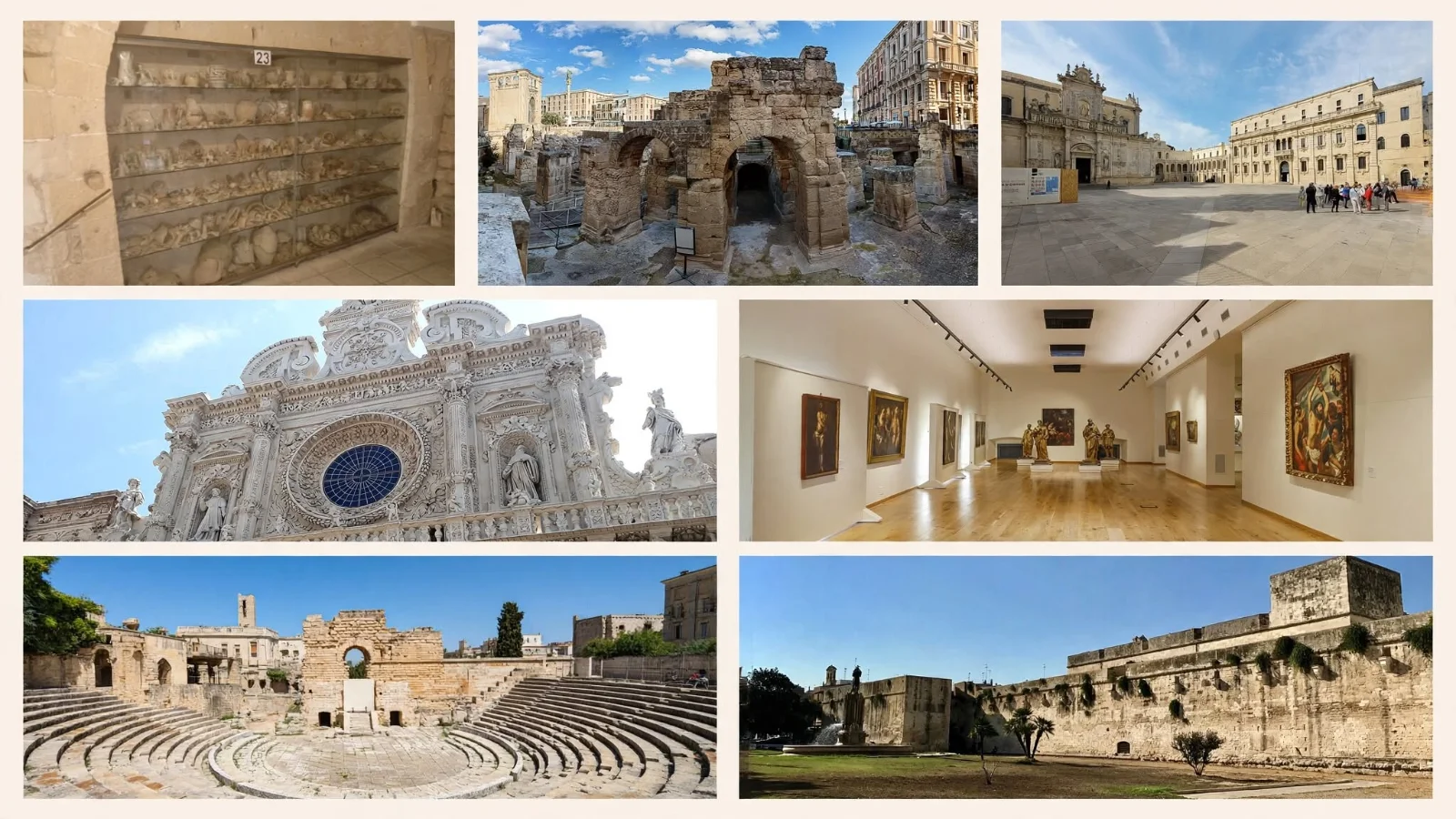
Is Lecce wheelchair accessible? Mostly yes. Sitting on a flat plain 49 metres above sea level, Lecce gains only 18 to 20 metres across a 6 km sightseeing loop, making it far easier than hill towns like Matera. Across seven key stops, smooth Baroque squares and Basilica di Santa Croce work well, while slick wet stone, summer heat and narrow side doors need planning.
Quick answer: Lecce is largely wheelchair accessible outdoors, with flat limestone squares, easy train-to-centre rolling and a wide, level nave at Basilica di Santa Croce. The main catches are inside: measure your chair for the Cathedral's narrow side door, confirm arena access at the Roman Amphitheatre and lift specs at Castello Carlo V, and skip Museo Faggiano's steep underground stairs.
Top 3 to prioritize
- Piazza Sant'Oronzo and Piazza del Duomo: flat, pedestrianised squares with unobstructed street-level views of the Roman Amphitheatre, Cathedral and bell tower.
- Basilica di Santa Croce: officially listed wheelchair entrance on Vico della Saponea leading into a wide, level Baroque nave.
- Museo Castromediano: listed accessible entrance, toilets and parking on wide modern pavements, plus cool indoor refuge from midday heat.
Confirm or skip
- Lecce Cathedral and Campanile: side entrance on Vico dei Sotterranei is narrow (doorway and lift sizes unpublished); crypt has stairs only.
- Roman Amphitheatre and Castello Carlo V: confirm the Amphitheatre's eased-step arena route and the castle's lift coverage before buying tickets.
- Museo Faggiano and Roman Theatre museum: Museo Faggiano uses steep underground stairs; the small Roman Theatre museum has reported entrance steps.
In this guide: At a Glance · Methodology · Streets and Terrain · 1. Piazza Sant'Oronzo & Roman Amphitheatre · 2. Piazza del Duomo, Cathedral & Campanile · 3. Basilica di Santa Croce · 4. Museo Castromediano · 5. Roman Theatre & Museum · 6. Castello Carlo V · 7. Museo Faggiano · Getting Around · Where to Stay · When to Go · One-Day Route · By Chair Type · Lecce vs Other Towns · Verdict · Before You Go · FAQs
At a Glance: Is Lecce Wheelchair Accessible? Verdicts by Sight
How to read the verdicts:
🟢 Accessible according to official records and traveler feedback.
🟡 Accessible with limitations, narrow clearances or advance confirmation.
🟠 Significant limitations: exterior view or partial access only.
🔴 Not wheelchair accessible for the described area.
| Sight or area | Wheelchair Accessible? Our Verdict | Key catch |
|---|---|---|
| 1a. Piazza Sant'Oronzo (square) | 🟢 Flat and open, with free views of the Amphitheatre. | Cafe tables, uneven stone joints and local excavation works. |
| 1b. Roman Amphitheatre interior | 🟡 Conditional: perimeter ramp plus eased-step arena walkway. | Stepped-ramp design, not a plain slope; no independent wheelchair report yet. |
| 2a. Piazza del Duomo (square) | 🟢 Flat and easy to cross. | One archway in and out; slippery when wet. |
| 2b. Cathedral & Campanile | 🟡 Nave and lift via a side entrance; 🔴 crypt has stairs. | Narrow side door; doorway width and lift cabin size unpublished. |
| 3. Basilica di Santa Croce | 🟢 Listed side entrance and wide, level nave. | Confirm the Vico della Saponea side door is unlocked. |
| 4. Museo Castromediano | 🟡 Entrance, toilets and parking listed; full galleries unconfirmed. | Regional register rates access as partial; official hours conflict. |
| 5a. Roman Theatre exterior | 🟢 Flat street-level viewing from Via Arte della Cartapesta. | Viewing from perimeter railings only. |
| 5b. Roman Theatre Museum interior | 🟠 Access unconfirmed; steps reported at entrance. | One 2026 traveler report notes steps; check temporary closure notices. |
| 6. Castello Carlo V | 🟡 Free courtyard; guided interior tour conditional. | Lift cabin size and tour room coverage unpublished. |
| 7. Museo Faggiano | 🔴 Not wheelchair accessible. | Underground archaeological route uses narrow, steep stairs. |
The Claim vs. The Reality: How We Checked Lecce
The Claim: Tourism brochures and tour platforms frequently label Lecce "completely flat" and bundle churches, Roman ruins and private museums under a single "wheelchair accessible" tag.
The Reality: We cross-checked primary institutional sources, including Comune di Lecce, Direzione Regionale Musei Nazionali Puglia, LeccEcclesiae, the Puglia region's CartaPuglia register, Castello Carlo V and Museo Faggiano, against wheelchair-user accounts, including an August 2026 trip report by Brakes Off Travel, an October 2026 accessibility guide by GoTripAble and an earlier iWheelTravel report. Where a venue does not publish a lift size or doorway width, we flag the exact detail to confirm before you go.
A note on prices and hours: Every price and opening time in this guide was checked on 22 November 2026 against official pages or recent local reporting. Where two official sources conflict, we note both and flag the contact to confirm directly.
Streets, Paving and Terrain: Why Lecce Feels Different
Unlike Puglia's hilltop towns such as Ostuni, Martina Franca or the sloping lanes of Alberobello, Lecce sits on flat ground at roughly 49 metres above sea level. Route elevation data from Komoot shows that a full 6 km sightseeing loop starting from Lecce's railway station gains only about 18 to 20 metres across the entire walk, putting it closer in ease of rolling to flat walled cities like Lucca.
What shapes your roll here is the surface, not the slope:
- Main streets and piazzas: Corso Vittorio Emanuele II, Via Palmieri, Piazza del Duomo and Piazza Sant'Oronzo are paved with large, smooth local limestone slabs (basolato or chianche). Wheelchair travelers describe them as far smoother than Rome's sanpietrini cobblestones, though worn joints still transmit vibration to small front casters.
- Slip risk when wet: Centuries of foot traffic have polished the pale stone. After a sudden rain shower, the slabs become noticeably slick, so take extra care when braking on manual rims or turning sharply in a power chair.
- Side alleys: Narrower Baroque lanes off the main arteries have rougher stone, occasional raised thresholds and parked scooters that pinch turning space. Stick to the main pedestrian spines where possible.
1. Are Piazza Sant'Oronzo and the Roman Amphitheatre Wheelchair Accessible?
Short answer: Yes for the square (🟢), and conditional for the Amphitheatre interior (🟡). After nearly two years of restoration, the monument reopened on 25 October 2025 with a curved perimeter ramp and an eased-step walkway toward the arena, though the arena route still lacks an independent wheelchair-user report.
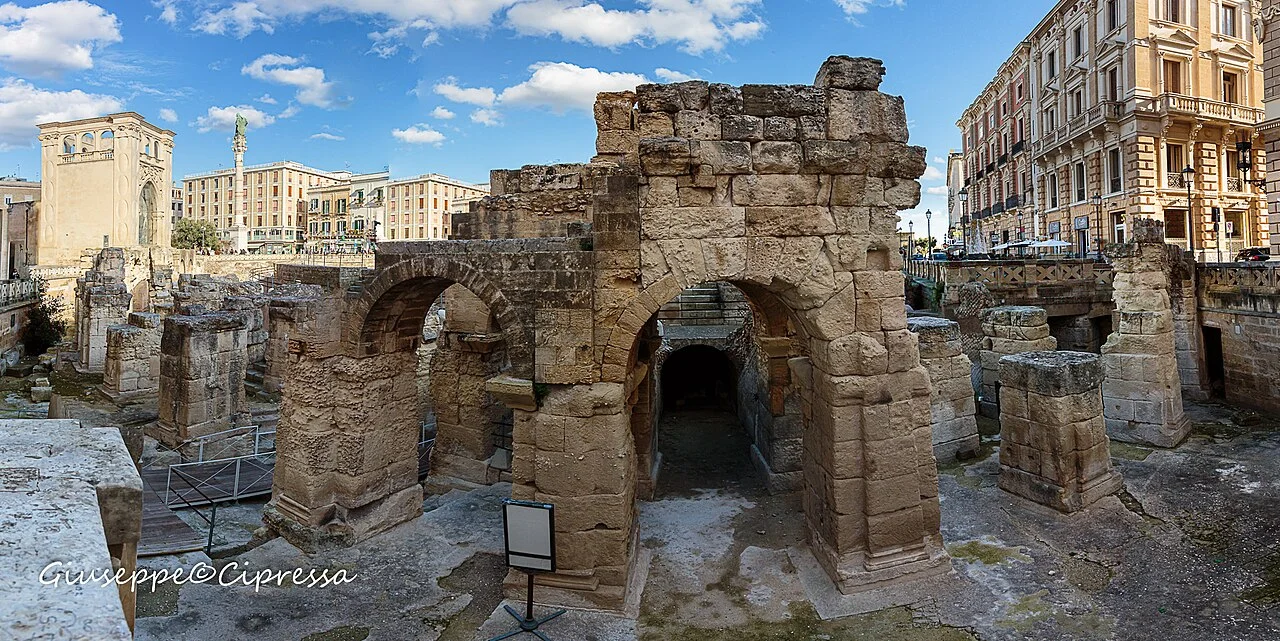
The Claim: Officials describe the reopened Amphitheatre in broad terms: the mayor spoke of "full accessibility" at the reopening, and Aditus lists disabled access with free entry for disabled visitors and a companion.
The Reality:
- Two separate features, not one plain slope: The Direzione Regionale Musei Puglia describes two distinct elements: a curved access ramp along the western retaining wall and a walkway with modular steps leading down to the arena. Architectural project notes on Archilovers specify that the arena descent uses a "gradino agevolato" (an eased-step design) rather than a continuous, step-free ramp.
- What that means for wheelchair users: While officials describe the route as practicable by wheelchair, no independent wheelchair-user report has yet verified the arena descent. Treat interior access as conditional rather than guaranteed. The upper stone tiers remain off-limits.
- Piazza Sant'Oronzo and local works: In August 2026, Brakes Off Travel found the square spacious, pedestrianised and mostly level, with clear free views of the sunken ruins from the perimeter railings. Note that in mid-November 2026 local reports flagged temporary safety closures on the pedestrian walkway (passerella) overlooking the adjacent Piazza Sant'Oronzo and Via Alvino excavations, so expect occasional barriers around the square's edges.
- Hours and tickets (checked November 2026): The Direzione Regionale's monument page lists winter hours (1 October to 31 March) as Tuesday to Sunday 10:00 to 17:00 (last entry 16:30) and summer hours (1 April to 30 September) as Tuesday to Sunday 10:00 to 13:00 and 17:00 to 21:00, with tickets at EUR 5 (reduced EUR 2). Separate Ministry and regional ticket schedules show differing seasonal windows (including 09:00 to 15:30 in winter and 15:00 to 21:00 in summer), so confirm opening times on arrival.
Our verdict:
🟢 Piazza Sant'Oronzo: An easy, flat starting point with excellent free views over the ruins.
🟡 Amphitheatre interior: Conditional access. Check at the Info-Point in the Sedile building on the square that the perimeter ramp and eased-step arena walkway are open and suit your chair before buying a ticket.
2. Are Piazza del Duomo, Lecce Cathedral and the Campanile Wheelchair Accessible?
Short answer: The square is easy (🟢), the Cathedral nave and Campanile lift are reached through a narrow side entrance with unpublished dimensions (🟡), and the crypt is not wheelchair accessible (🔴).
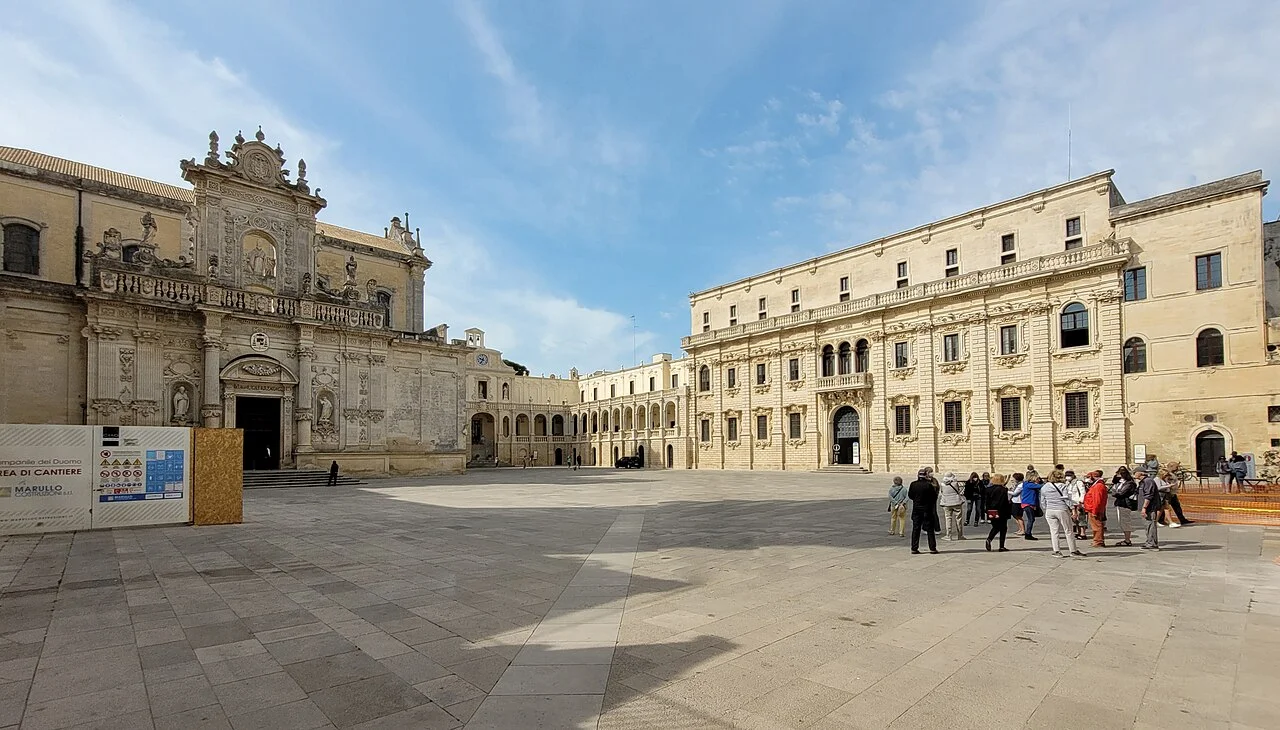
The Claim: The official church circuit LeccEcclesiae states that visitors with motor disabilities can reach both the Duomo and the Campanile from Vico dei Sotterranei, while the adjacent Palazzo dell'Antico Seminario and MuDAS (Sacred Art Museum) are accessible from Vicolo Santa Venera.
The Reality:
- Piazza del Duomo: Both Brakes Off Travel (August 2026) and GoTripAble (October 2026) describe the enclosed square as flat, smooth and easy to explore independently. It has only one main archway in and out, so you exit the same way you enter.
- The side entrance: The main doors facing the square have steps, so wheelchair users enter via the ramp on Vico dei Sotterranei. In August 2026, Brakes Off Travel rolled comfortably inside the spacious nave. An earlier iWheelTravel report warns that the entrance is tight: the writer's chair, about 60 cm wide, barely fitted. That figure is one user's chair width, not a measured doorway clearance, and the undated page appears several years old. Measure your chair and call ahead.
- The Crypt: Accessible only by stairs; wheelchair users cannot enter the crypt.
- The Campanile lift: A panoramic lift carries visitors, including wheelchair users, to the third level of the tower, where four balconies at 43 metres give 360-degree views, according to CityNext's 2026 guide to the circuit. Cabin size, door width and wheelchair capacity are not published, so suitability for wide or heavy chairs is unconfirmed. Ask LeccEcclesiae before buying a lift ticket.
- Tickets and hours (checked November 2026): The single LeccEcclesiae ticket covers the Cathedral and crypt, Santa Croce, Santa Chiara, San Matteo, MuDAS and the Antico Seminario cloister. It costs EUR 11 (reduced EUR 5, family EUR 24) and stays valid for 15 days. The Campanile lift (UP!) is a separate EUR 12 ticket, described on the official UP! page. Sites open daily 09:00 to 21:00 (April to September) and 09:00 to 18:00 (October to March). Ask the ticket desk about concessions for visitors with disabilities.
Our verdict:
🟢 Piazza del Duomo: Essential, flat outdoor stop.
🟡 Cathedral nave & Campanile: Worth visiting if your chair clears the narrow side entrance (doorway width and lift cabin size unpublished; 60 cm was one traveler's chair width, not an official doorway measurement). Call LeccEcclesiae to confirm lift availability and side-door access.
🔴 Cathedral Crypt: Stairs only.
3. Is Basilica di Santa Croce Wheelchair Accessible?
Short answer: Yes (🟢). The main front portal has steps, but an officially documented wheelchair entrance on Vico della Saponea leads directly into a wide, level Baroque nave.
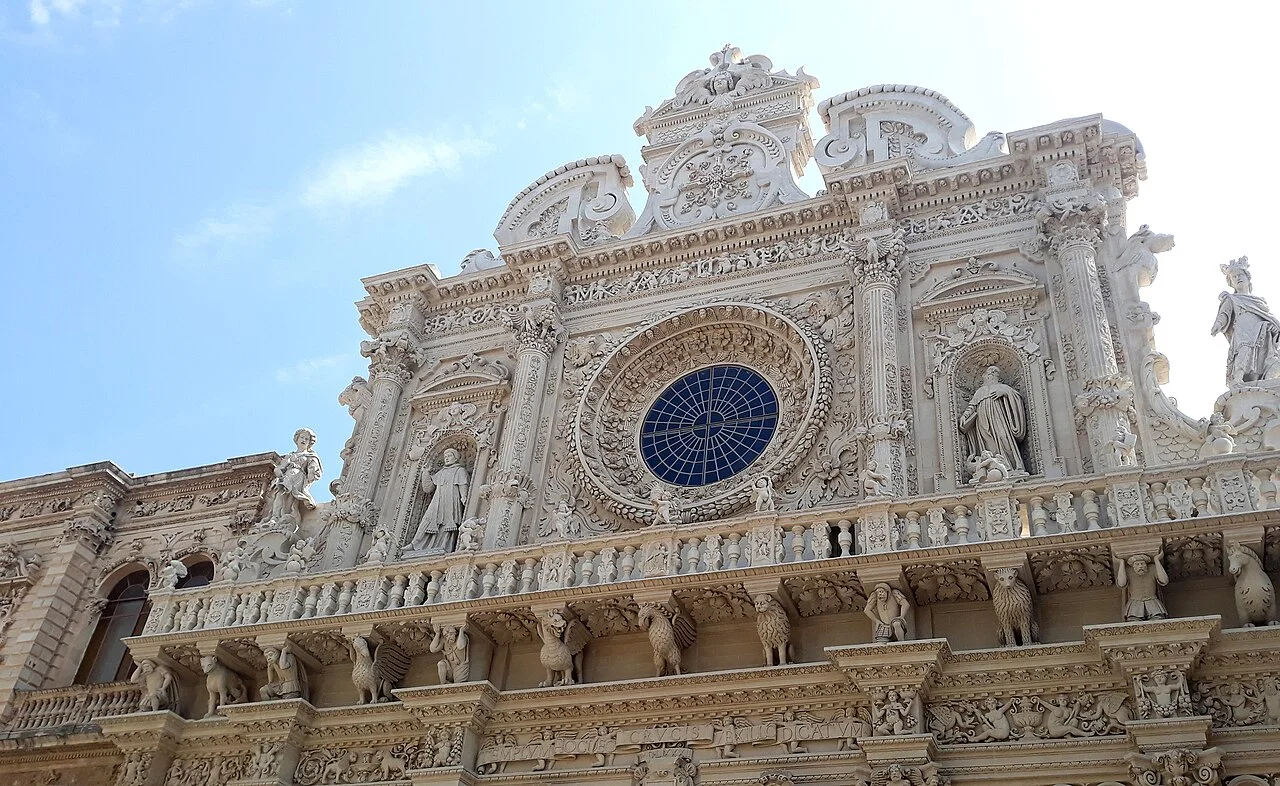
The Claim: LeccEcclesiae lists the basilica as accessible for visitors with motor disabilities via Vico della Saponea, just to the right of the main facade. Entry is included in the LeccEcclesiae ticket (see section 2).
The Reality:
- Real user experience: In August 2026, Brakes Off Travel used the Vico della Saponea entrance without difficulty and praised the wide central aisle, noting that the interior was easy to navigate independently.
- What to expect outside: Via Umberto I in front of the basilica is flat and pedestrianised, giving you unobstructed views of the rose window and carved figures even if you skip the interior.
- Practical tip: Buy the ticket at the Santa Croce desk, and ask staff on arrival to make sure the Vico della Saponea side door is unlocked. Churches pause tourist visits during religious services.
Our verdict:
🟢 One of Lecce's most rewarding wheelchair-accessible interiors. Pair it with a slow roll along Via Umberto I to take in the adjacent Palazzo dei Celestini facade.
4. Is Museo Sigismondo Castromediano Wheelchair Accessible?
Short answer: Partly (🟡). Puglia's oldest public museum, on Viale Gallipoli just outside the old town, lists an accessible entrance, toilets and reserved parking. The regional register rates overall physical access as partial, so full gallery access is unconfirmed.
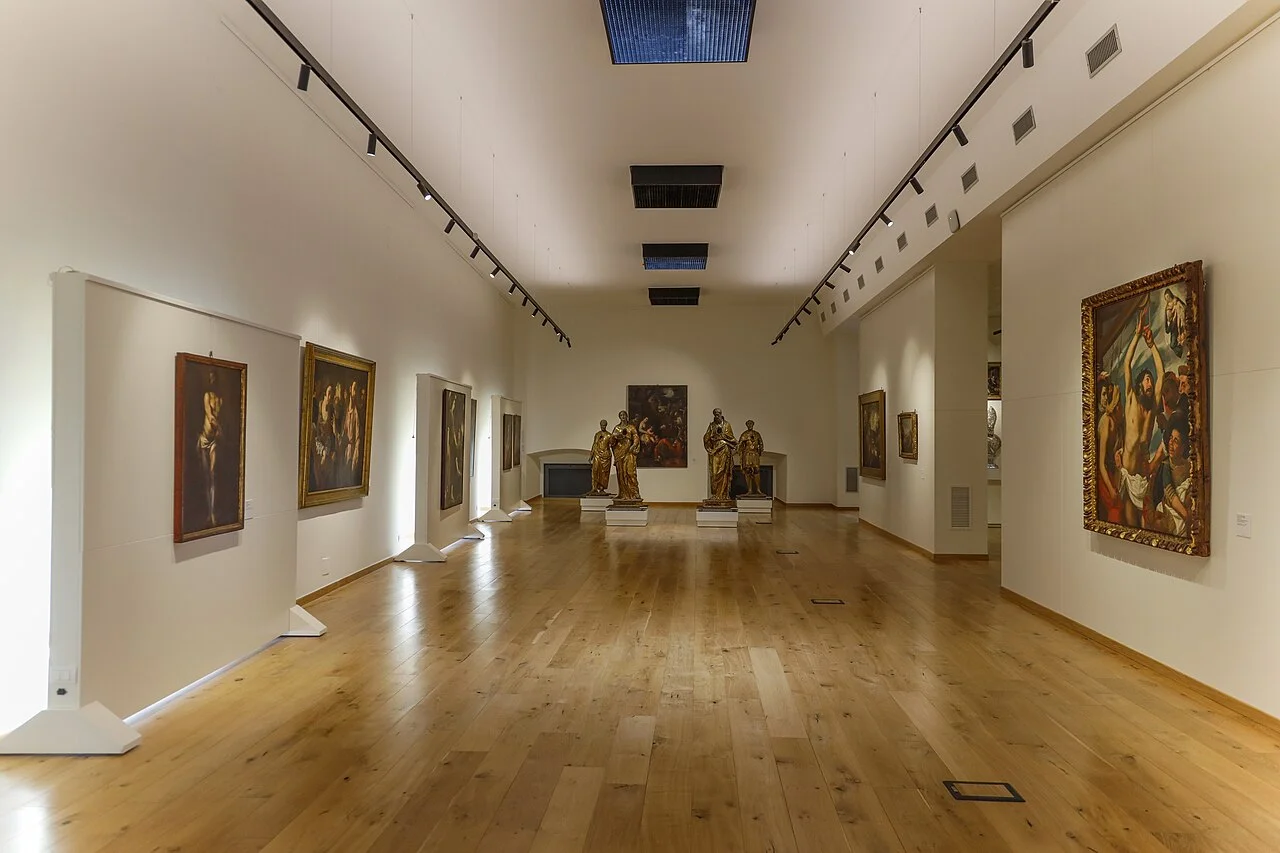
The Claim: A local tourism guide, Salentome, says the free entry makes the museum "accessible to all". Free admission says nothing about physical access, which is why we checked the regional register.
The Reality:
- What the register lists: The Puglia region's CartaPuglia entry records a disabled entrance from both the main and secondary entrances, reserved disabled parking and toilets reserved for disabled visitors. The same entry marks accessibility for physically disabled visitors as "in part" (in parte) and notes that admission is free.
- What stays unconfirmed: Complete gallery access and step-free routes between floors are not documented, so ask at the desk which rooms and levels you can reach.
- Inclusive programming: The museum was the first in Salento to host an accessible tactile path, created by Eurisko APS with the Polo Biblio-Museale and the Italian Union of the Blind in the "Visioni Museali" project.
- Conflicting official opening hours (checked November 2026): Official sources disagree. The Ministry of Culture's listing gives Tuesday to Sunday 09:00 to 19:00 from October to May and 09:00 to 22:00 from June to September (closed Mondays, last entry 30 minutes before closing). However, Comune di Lecce and Polo Biblio-Museale 2026 listings show Tuesday to Sunday 09:00 to 20:00 (closed Mondays). Confirm exact closing hours directly with the museum by phone before visiting.
- Location: It sits between the railway station and the old town, on wide modern pavements rather than medieval alleys, roughly 600 metres south of Piazza Sant'Oronzo.
Our verdict:
🟡 Overall: A useful stop with a confirmed entrance, toilets and parking, though complete gallery access and inter-floor step-free routes remain unconfirmed. Its air-conditioned galleries still make it a strong midday refuge when the historic centre bakes.
5. Are the Roman Theatre and Museum Wheelchair Accessible?
Short answer: Easy from the street for the Roman Theatre (🟢), and unconfirmed with reported entrance steps for the small adjacent museum (🟠).
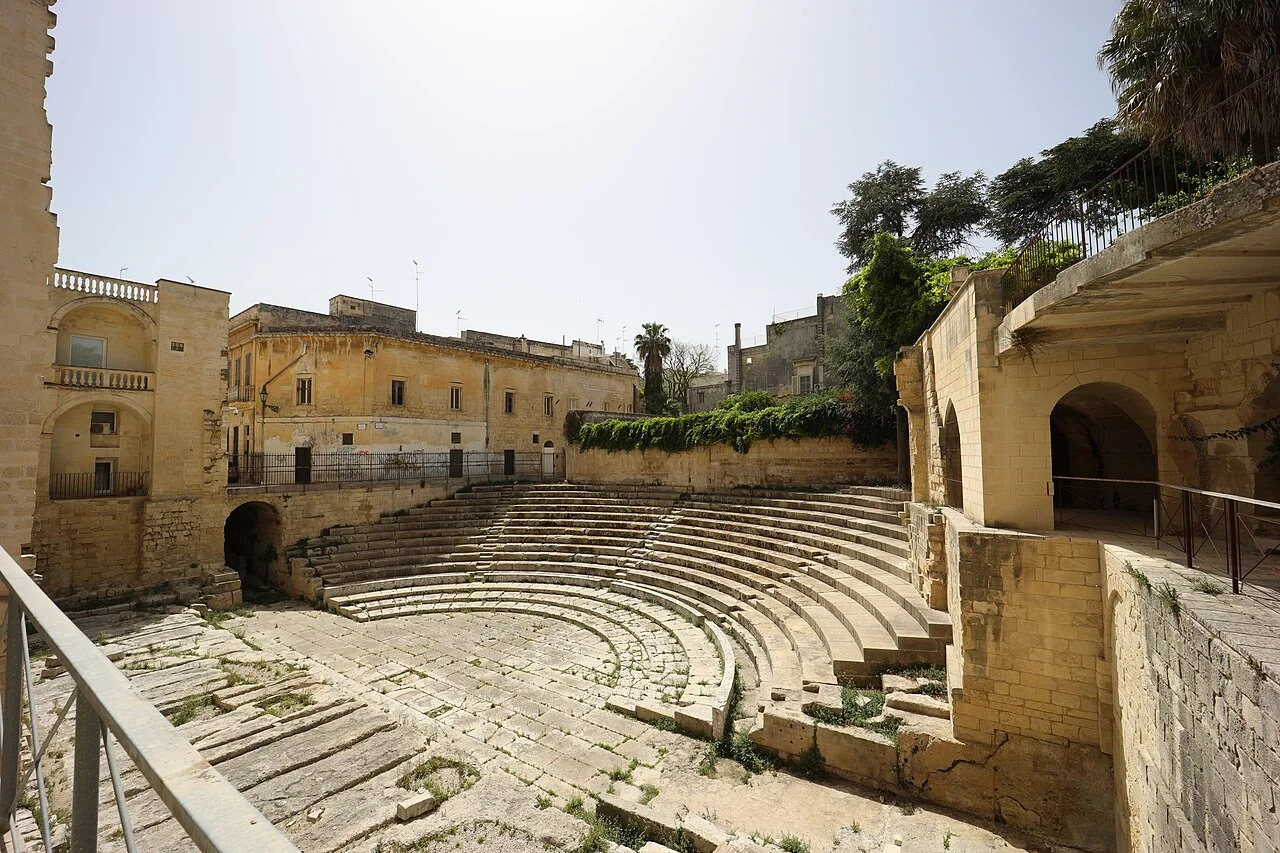
The Claim: Some tour aggregators bundle the Roman Theatre into "wheelchair-accessible Lecce" walking tours, while the Museo del Teatro Romano manages guided visits to the theatre and its small adjoining artefact collection.
The Reality:
- Roman Theatre exterior: Tucked along Via Arte della Cartapesta just south of Piazza Sant'Oronzo, the theatre sits right beside a flat pedestrian lane. In August 2026, Brakes Off Travel confirmed that you get clear views down into the ancient stone seating directly from the street.
- Museum interior: The same August 2026 traveler report notes steps leading into the small museum building. Because no official statement documents step-free access, the museum's interior accessibility remains unconfirmed. In addition, Aditus Culture has carried notices of temporary closures for rearrangement works, so check status before planning an interior visit.
Our verdict:
🟢 Roman Theatre exterior: Worth a 10-minute detour for the free, level street-level view.
🟠 Roman Theatre Museum interior: Access unconfirmed, with entrance steps reported by a 2026 traveler. Skip the museum ticket unless staff confirm both current opening status and a step-free entrance (+39 0832 279196).
6. Is Castello Carlo V Wheelchair Accessible?
Short answer: Partly (🟡), and conditionally. The courtyard is free and level, but the exhibition rooms open only on a guided tour. Whether a wheelchair user can follow the full tour depends on lift access that the castle does not describe in detail.
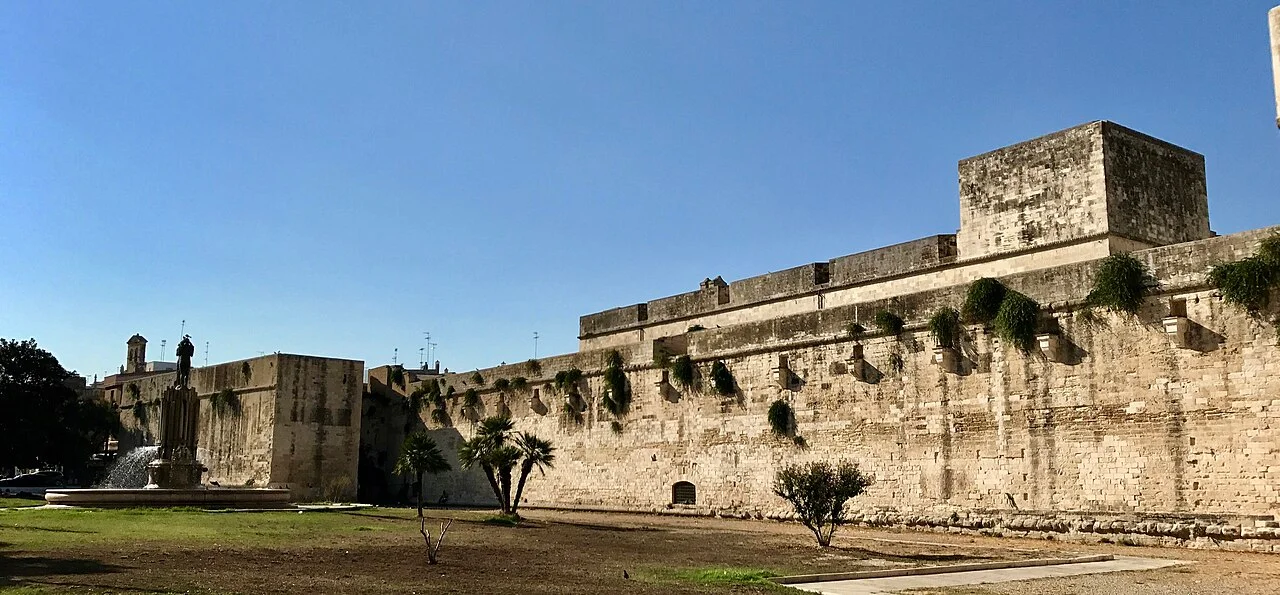
The Claim: FAI (Fondo Ambiente Italiano) marks the castle as an accessible site (Luogo Accessibile), and Italian Ministry of Culture public-works records document a ramp and lift for the castle and its Museo della Cartapesta. The official castle site describes its tour as covering the most significant restored and accessible rooms.
The Reality:
- How you get in: The central courtyard is free to enter. The exhibition rooms open only on a guided tour of about 50 minutes, according to the Ministry of Culture listing and the official site.
- What "accessible rooms" does and does not tell you: It means the tour route uses restored spaces. It does not state which floors a lift serves, how many tour rooms a wheelchair user can enter, or what happens if the lift is out of service. Thick historic walls, uneven courtyard stonework and upper-floor rooms make that an essential check.
- Unpublished specs: Neither the castle website nor FAI publishes lift cabin dimensions or door widths.
- Tour times (official site, checked November 2026): Tuesday to Sunday only. October to May: 10:30, 11:30, 12:30, 16:00, 17:00, 18:00 and 19:00. June to September adds a 15:00 tour.
- Prices: EUR 10 full, EUR 6 reduced, free up to age 11. A Ministry event listing also notes free admission for visitors with disabilities, so confirm when you book. Showing a Roman Amphitheatre ticket reduces the tour to EUR 8, according to Leccesette.
Questions to ask when you call +39 351 4941192:
- Which floors can a wheelchair user reach, and which areas does the lift connect?
- How many rooms of the guided tour can I visit in my chair, and what is the lift's cabin size?
- What is the alternative if the lift is out of service?
Our verdict:
🟡 Worth adding only after you receive clear answers to those three questions. Otherwise, enjoy the free courtyard and monumental walls on your way between Piazza Sant'Oronzo and the Villa Comunale.
7. Is Museo Faggiano Wheelchair Accessible?
Short answer: No (🔴). It is not wheelchair accessible: the underground archaeological route requires navigating narrow, steep staircases descending through excavated cisterns, tombs and medieval passages.
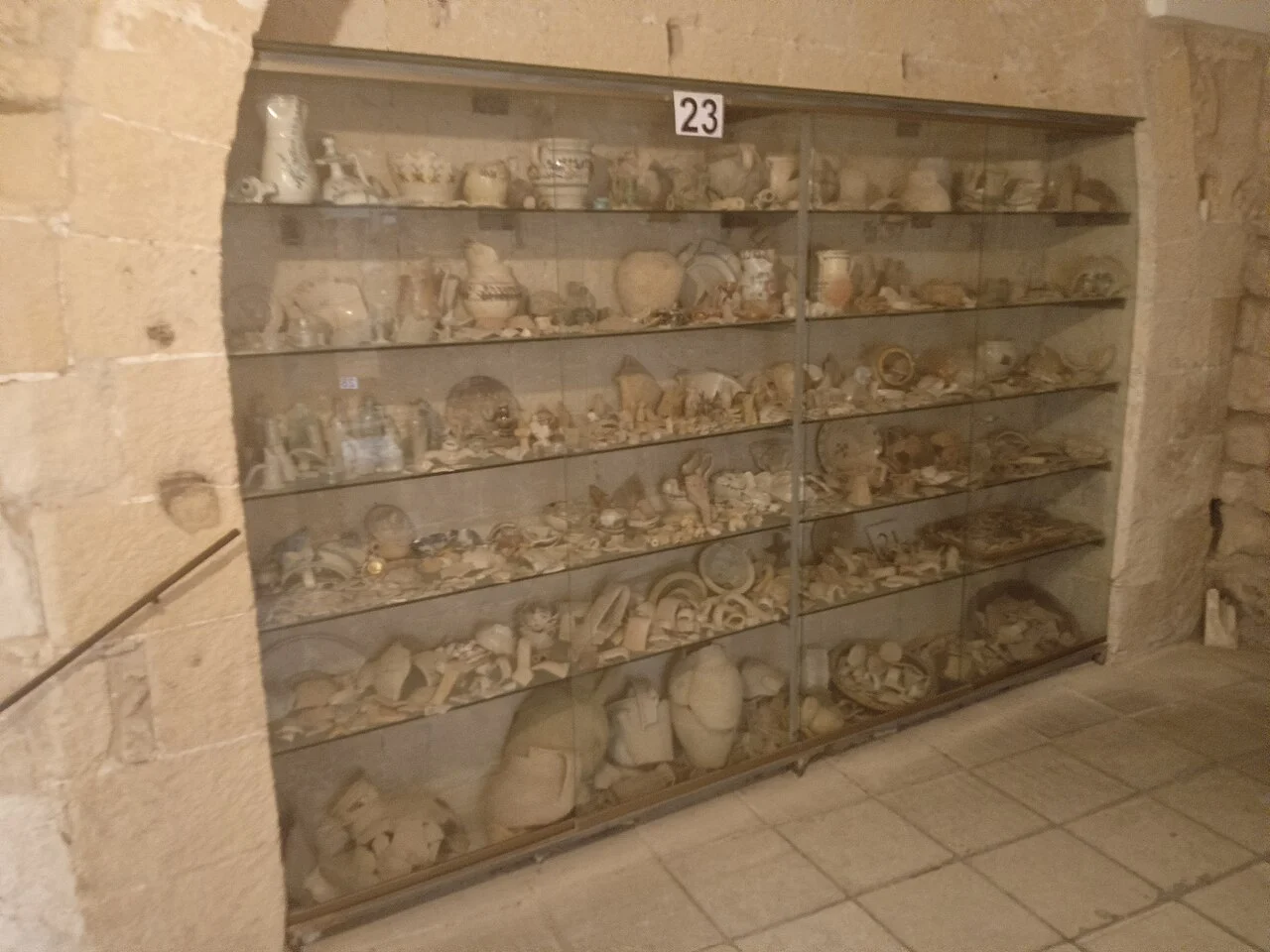
The Claim: City-wide walking tours on booking platforms occasionally display Museo Faggiano alongside wheelchair-accessible itineraries. One shared Lecce tour on Ebookers, for example, includes a Faggiano Museum ticket and carries a "wheelchair accessible" tag, which can mislead visitors into assuming the house-museum itself is step free.
The Reality:
- Building layout: On its official website, Museo Faggiano explains that it is a private historic residence on Via Ascanio Grandi 56 where plumbing repairs uncovered 2,000 years of Messapian, Roman and medieval layers beneath the floor.
- User and guide feedback: Dedicated visitor guides, including Nomads Travel Guide and Viator's attraction page, warn that the route involves narrow stairs and tight underground spaces unsuitable for wheelchair users.
- Virtual alternative: The museum's homepage offers a free interactive 3D Tour, letting you explore the underground layers without tackling the stairs.
Our verdict:
🔴 Not wheelchair accessible: the underground archaeological route requires navigating narrow, steep staircases. Leave Museo Faggiano off your wheelchair itinerary and put that time into Museo Castromediano or Piazza Sant'Oronzo instead.
Getting There and Getting Around Lecce in a Wheelchair
Airports: Brindisi vs Bari
- Brindisi Airport (BDS, Salento Airport): By far the better gateway, roughly 40 km north of Lecce (40 to 50 minutes by road). Airport assistance (Sala Amica) can be pre-booked through your airline. While coach shuttles run to Lecce's Airport City Terminal near Hotel Tiziano, wheelchair users should pre-book an adapted private van transfer (operators such as Accessible Italian Holiday and Holiday Taxis cover the route).
- Bari Airport (BRI): About 150 km away (1.5 to 2 hours by car or train), useful if you need more international flight options, but expect a longer onward transfer.
Trains and Getting from Lecce Station to the Old Town
- Rail assistance: Trenitalia connects Lecce directly with Brindisi, Bari, Rome and Milan. Book assistance at least 12 to 24 hours ahead via RFI's Sala Blu service through Trenitalia's disability assistance page. In August 2026, Brakes Off Travel reported platform-ramp boarding from Brindisi and staff waiting on arrival at Lecce station.
- Station to historic centre: The station sits on flat ground just southwest of the old town. It is a straightforward 1 km (12 to 15 minute) roll along Viale Oronzo Quarta and Via Bari/Via Palmieri to reach Porta San Biagio or Piazza del Duomo, passing close to Museo Castromediano on Viale Gallipoli.
Local Buses and Park-and-Ride
- Park-and-ride: SGM, the city transport company, runs three interchange car parks (Ex Foro Boario, Largo Cimitero and Torre del Parco) linked to the centre by urban bus lines. Foro Boario and Largo Cimitero connect via lines M1, C2 and C3; Torre del Parco via C2, C3 and R6. The combined parking and bus formula costs EUR 2 per day, per Fleet Magazine's parking guide.
- Before you rely on a bus: Ask SGM to confirm that the bus on your line carries a working ramp. If the schedule is tight, roll in from the edge of the centre, where flat streets keep distances manageable.
- Taxis: Ask your hotel to book an adapted taxi or van in advance rather than hailing one on the street.
Driving, ZTL and Parking with a Disabled Badge (CUDE and UK Blue Badge)
Lecce's historic centre is camera-enforced. Under the city's ZTL regulation, vehicles serving a person with a recognised disabled parking badge need no separate authorisation, but during electronic enforcement hours they may enter only if their plate is on the authorised list. How you get on that list depends on your badge:
- Italian CUDE holder with a plate on the national platform: Lecce joined Italy's national CUDE platform in June 2023, so your plate may already be recognised. Because database gaps still happen, confirm with the Comune before driving in.
- Foreign visitor with an EU disability parking card: The Comune's CUDE application form states that plates of holders resident elsewhere in the EU are entered on explicit request. Submit your details before you travel by PEC (
protocollo@pec.comune.lecce.it) or in person at Palazzo Carafa. - UK Blue Badge holders: Under Italy's 28 September 2026 ministerial circular (applying ECMT/CEMT Resolution 97/4), valid original UK Blue Badges are recognised for disabled parking in Italy. However, UK plates are not automatically linked to Italian ZTL cameras, so confirm vehicle plate registration and ZTL entry requirements with the Comune di Lecce before driving into the restricted zone.
- Rental cars or unrecognised plates: Report the vehicle plate to the Comune in advance and confirm how they want your badge copy submitted.
For every situation, confirm directly with the Comune before entering the ZTL. The old transiti.ztl@comune.lecce.it address has been permanently discontinued.
- The 48-hour rule is not a shortcut: If you enter the ZTL by accident, you must submit the Dichiarazione di transito in ZTL form with your badge copy within 48 hours to avoid an automatic camera fine. It reports an accidental entry; it does not replace registering your plate in advance.
- Hours keep changing: The city approved experimental ZTL measures in March 2026, including round-the-clock restrictions in some zones, so check the Comune's ZTL update for current hours.
- Skip the paperwork: Park just outside the ring road (Viali), at Ex Foro Boario or near Viale De Pietro and Piazza Mazzini. You then roll 10 to 15 minutes on flat pavements to Piazza Sant'Oronzo.
Accessible Public Toilets
Dedicated street-level public toilets are limited in Lecce's old town, so plan around indoor venues:
- Museo Sigismondo Castromediano: Toilets reserved for disabled visitors are listed in the regional CartaPuglia register and available during museum hours. Internal dimensions (transfer space, grab rails) are unconfirmed.
- Villa Comunale (Public Gardens): Just east of Castello Carlo V; local disability guide SFIDA Lecce notes public toilets in the park. Whether the accessible stall is step-free, equipped and open on your day is unconfirmed, so do not rely on it as your only stop.
- Cafes and restaurants: Many modern cafes around Piazza Sant'Oronzo and Corso Vittorio Emanuele have level outdoor seating, though older historic interiors often have tight restroom doors. Ask before ordering if you need a full roll-in toilet.
Other Stops Worth Knowing
- Porta Napoli: Lecce's grand 1548 triumphal arch at the northern edge of the old town sits on a flat square (Piazzetta Bottazzi) and makes an easy, step-free photo stop.
- Palazzo dell'Antico Seminario & MuDAS: Officially accessible via Vicolo Santa Venera per LeccEcclesiae, including tactile models with Braille descriptions of Santa Croce's rose window.
- Chiesa di Santa Chiara & Chiesa di San Matteo: Wheelchair travelers report steps at the entrance of these churches, so enjoy their facades from the street unless the LeccEcclesiae ticket desk confirms a side ramp.
Where to Stay: Accessible Hotel Leads in Lecce
Historic palazzi inside the old town often have narrow doorways, mezzanines or tiny lifts, and an officially advertised "accessible room" label does not guarantee that a room suits your chair. Two properties publish an adapted room, though actual wheelchair clearances and suitability at both are independently unverified:
- La Fiermontina Luxury Home (old town edge): Officially advertises a 19 m² Superior Accessible Room with two bathrooms, one featuring an open shower for wheelchair access. Door widths, grab rails, bed clearance and lift size are not published and remain independently unverified.
- Mercure Hotel President Lecce: Officially advertises an accessible Superior room of 35 m². Bathroom layout, shower type and door specifications are not listed and remain independently unverified.
Before paying a deposit, email the hotel for five exact numbers: bedroom door width, bathroom door width, shower lip height (confirm true roll-in vs stepped tray), grab-rail placement and lift cabin depth.
When to Go: Beat the Summer Heat
- Best months (May to June and September to October): Warm, dry days, manageable crowds and full opening hours across museums and churches, well below peak summer heat.
- Peak summer (July to August): As GoTripAble warns, summer heat is Lecce's hidden accessibility barrier. Climate records put average July highs around 32°C, with a record of 43°C in 2007, and open Baroque squares offer little shade. Schedule outdoor sights before 11:00 and after 18:00, and spend midday inside air-conditioned Museo Castromediano.
- Festa di Sant'Oronzo (24 to 26 August): Lecce's biggest patron-saint festival packs Piazza Sant'Oronzo with stalls, lights and crowds. The Comune di Lecce provided dedicated festival accessibility measures in August 2026 (including an event shuttle and loan wheelchairs), and SGM ran free shuttle lines from 23 to 26 August. Dense evening crowds still make rolling through the centre slow.
- Winter (November to March): Quiet and mild, though churches close at 18:00 and the Roman Amphitheatre runs shorter winter hours.
- Mondays: Castello Carlo V, Museo Castromediano and the Roman Amphitheatre are closed, so build your route for Tuesday to Sunday.
A Suggested One-Day Wheelchair Route in Lecce
This loop works Tuesday to Sunday and covers about 2.5 km of rolling on flat ground. Distances are approximate, and times separate rolling from visiting. Allow a full day, or split it into two half-days.
- 09:30 Piazza del Duomo, Cathedral and Campanile (visit 60 to 75 min): Arrive while the light is soft and temperatures are cool. Measure your chair before attempting the narrow side entrance on Vico dei Sotterranei, skip the stepped crypt and take the Campanile lift only after confirming cabin dimensions. Plan B: if the side door or lift does not suit your chair, enjoy the flat Piazza del Duomo exterior and visit the nearby Palazzo dell'Antico Seminario and MuDAS via Vicolo Santa Venera.
- Roll to Santa Croce (short, flat, about 5 min along Via Libertini), visit 45 min: Admire the carved facade from Via Umberto I, then enter the wide, level nave via the Vico della Saponea side entrance. Your LeccEcclesiae ticket already covers it.
- Roll to Piazza Sant'Oronzo (about 350 m down Via Umberto I, 6 to 8 min), visit 30 to 45 min: Stop at the railings to view the Roman Amphitheatre. Descend into the arena only if the Sedile Info-Point confirms the perimeter ramp and eased-step walkway are open and suit your chair. Plan B: skip the ticketed interior and take in the full ruin from the flat street-level railings.
- Roll to the Roman Theatre (about 250 m, 4 to 5 min), view 10 to 15 min, then lunch (60 min): Roll down Via Arte della Cartapesta for level street views and skip the stepped museum entrance. Choose a restaurant with level outdoor seating and shade.
- Rest at the Villa Comunale (45 min): Cool down in the shaded gardens beside the castle and check whether the park's accessible toilet is open.
- Castello Carlo V guided tour (50 min): Book the 15:00 slot from June to September, or 16:00 from October to May, only after confirming lift coverage by phone. Plan B: if the lift does not suit your chair, enjoy the free courtyard and spend extra time at the Villa Comunale and Museo Castromediano.
- Roll to Museo Castromediano (about 700 m, 10 to 12 min), visit 60 min: Finish in cool galleries with listed accessible toilets and parking on your way back toward the railway station. Confirm closing time on the day (official listings vary between 19:00, 20:00 and 22:00 depending on source and season).
Which Lecce Sights Suit Your Wheelchair Type?
| Wheelchair type | What works well | What to watch out for |
|---|---|---|
| Manual wheelchair (solo) | Flat basolato main streets, both major squares and Santa Croce's side entrance. | Wet polished stone makes braking tricky; worn joints rattle small front casters. |
| Manual wheelchair (with companion) | A companion can ease you over occasional thresholds at older cafes and assist if you attempt the Amphitheatre's eased-step walkway. | Do not assume a companion can lift you into stepped churches (Santa Chiara, San Matteo) or Museo Faggiano's underground stairs. |
| Compact power wheelchair | Long museum days and the whole old-town loop without fatigue. | Small front casters on worn joints; measure the Cathedral side door; confirm lift size at the Campanile and castle. |
| Wide or heavy power wheelchair | Outdoor Baroque squares, street-level Roman Theatre viewing and Santa Croce's wide nave. | The Cathedral's narrow side entrance; lift capacity and weight limits at the Campanile and castle are unpublished, so call ahead. |
Lecce vs Other Italian Wheelchair-Accessible Towns
Planning a wider Italian itinerary? Do not assume Lecce's flat terrain carries over to neighbouring regions, especially Matera, which sits across the regional border in Basilicata, not Puglia.
| Destination | Region | Mobility advantage | Main catch | Our full guide |
|---|---|---|---|---|
| Lecce | Puglia | Flat historic centre with smooth limestone squares and Santa Croce's level nave. | Narrow church side doors, slippery wet stone and summer heat. | You are here |
| Alberobello | Puglia | Compact trulli zones with accessible upper viewpoints and adapted tour options. | Sloping cobbled lanes in Rione Monti and stepped trullo doorways. | Explore Alberobello in a Wheelchair |
| Matera | Basilicata | Spectacular panoramic viewpoints along the upper rim road. | Steep Sassi staircases and cliffside alleys restrict the lower quarters. | Explore Matera in a Wheelchair |
| Lucca | Tuscany | Flat walled city with a wide, paved 4 km Renaissance rampart loop. | Occasional cobblestones and stepped historic churches inside the walls. | Is Lucca Wheelchair Accessible? |
| Spoleto | Umbria | Free underground moving walkways and lifts connecting lower car parks to upper museums. | Steep surface streets and no lift link between the Duomo and the Rocca. | Is Spoleto Wheelchair Accessible? |
So, Is Lecce Wheelchair Accessible? Our Verdict
Mostly yes. With realistic expectations, Lecce is one of southern Italy's easiest historic cities to visit in a wheelchair. Unlike hill towns that rely on mechanical systems such as Spoleto, you do not need lifts, funiculars or a car to enjoy Lecce's headline Baroque architecture. Flat limestone squares, Santa Croce's side-ramped nave and Museo Castromediano give you a full, rewarding day.
Just do not take blanket "100% accessible" tour claims at face value. Measure your chair against the Cathedral's narrow side entrance, treat the Roman Amphitheatre's arena descent as conditional until checked on the day, skip Museo Faggiano's underground stairs, get clear answers on the castle lift before booking a tour, and sort out your ZTL plate before driving in.
Before You Go: Lecce Wheelchair Checklist and Verified Contacts
Four things to do before you travel:
- Sort out your ZTL plate: Confirm registration with the Comune before driving into the historic centre (whether using an Italian CUDE, EU card or UK Blue Badge).
- Book Sala Blu rail assistance: Reserve at least 12 to 24 hours ahead via Trenitalia before taking the train from Brindisi or Bari.
- Plan around Mondays: Castello Carlo V, Museo Castromediano and the Roman Amphitheatre are closed.
- Confirm hotel room dimensions: Request exact bedroom door width, bathroom door width, shower lip height, grab-rail placement and lift cabin depth directly from your hotel.
| What to confirm | Contact |
|---|---|
| ZTL, CUDE and UK Blue Badge plate registration | Comune di Lecce ZTL & CUDE Permits Office, +39 0832 682786 (Viale Rossini 110; PEC: protocollo@pec.comune.lecce.it) |
| Local accessibility updates | Comune di Lecce switchboard +39 0832 682111; Municipal Accessibility Laboratory laboratorioaccessibilita@comune.lecce.it |
| Cathedral side door, Campanile lift cabin size and Santa Croce access | LeccEcclesiae +39 0832 1827289 (info@chieselecce.it, Piazza Duomo 5) |
| Roman Amphitheatre ramp, eased-step route and current hours | Lecce Info-Point at the Sedile on Piazza Sant'Oronzo, +39 0832 242099; Direzione Regionale Musei Puglia (Bari) +39 080 5285231 |
| Museo Castromediano opening hours and step-free galleries | +39 0832 373572 (museocastromediano.lecce@regione.puglia.it, Viale Gallipoli) |
| Roman Theatre museum status and access | Museo del Teatro Romano +39 0832 279196 or +39 333 3634326 |
| Castello Carlo V lift, tour rooms and booking | +39 351 4941192 (info@ilcastellodilecce.it, Via XXV Luglio); give your chair's dimensions |
| Museo Faggiano (stairs and virtual 3D tour) | +39 0832 300528 or +39 360 722448 (info@museofaggiano.it, Via Ascanio Grandi 56) |
Lecce Wheelchair Accessibility FAQ
Is Lecce flat for wheelchair users?
Yes. Lecce's historic centre sits on a flat plain at roughly 49 metres above sea level, and a 6 km sightseeing loop from the railway station gains only about 18 to 20 metres. The main rolling catch is the surface rather than hills: polished limestone slabs turn slippery after rain, and worn stone joints vibrate small front casters.
Can wheelchair users enter Lecce Cathedral and the Campanile?
Often, depending on your chair width. Both the Cathedral nave and the Campanile panoramic lift are reached via a side ramp on Vico dei Sotterranei. Because doorway and lift dimensions are unpublished and one traveler's roughly 60 cm chair barely cleared the entry, measure your chair and confirm with LeccEcclesiae first. The Cathedral crypt has stairs only.
Is Lecce's Roman Amphitheatre wheelchair accessible?
Conditionally. You can view the ruins free from flat Piazza Sant'Oronzo, and the 2025 restoration added a curved perimeter ramp plus an eased-step walkway toward the arena. Because the route uses modular steps rather than a plain ramp and has no independent wheelchair-user report yet, confirm current arena access at the Sedile Info-Point before buying a ticket.
Can wheelchair users visit Castello Carlo V?
Partly. The central courtyard is free and level, but the exhibition rooms open only on a 50-minute guided tour. Although official records note a ramp and lift, the castle does not publish cabin dimensions, door widths or full room coverage. Call +39 351 4941192 with your chair's measurements before booking a tour slot.
Can a wheelchair user visit Lecce without hiring an accessible taxi?
Yes, once you reach Lecce. Trenitalia trains connect directly from Brindisi and Bari with pre-booked Sala Blu boarding assistance, and the railway station sits just 1 km (a flat 12 to 15 minute roll) from the historic centre. Inside the old town, all seven main stops sit along flat pedestrian routes, though Brindisi Airport transfers still work best by pre-booked adapted van.
Is Lecce suitable for a wheelchair user travelling independently?
Mostly yes for confident manual or compact power-chair users. Flat pedestrian squares, smooth limestone arteries and Basilica di Santa Croce's level nave are straightforward without assistance. Independent visitors should still plan carefully around wet paving, summer heat, limited street-level accessible toilets and narrow side doors, while wide or heavy power chairs need advance lift checks at the Campanile and Castello Carlo V.
Can I drive into Lecce's ZTL with a disabled parking badge?
Often, provided your vehicle plate is registered first. Lecce joined Italy's national CUDE platform in June 2023, while EU badge holders and UK Blue Badge holders (recognised under Italy's 28 September 2026 ministerial circular) should confirm plate registration with the Comune di Lecce before driving in. The 48-hour declaration only covers accidental entries; parking outside the Viali ring road avoids paperwork.
Explore More Wheelchair-Accessible Italy Guides
For wider trip planning across the continent, start with our Europe Wheelchair Accessible Travel Guide, or read our neighbouring Italian destination guides:
Discussion
No comments yet. Be the first to share your thoughts.
Leave a comment